The first thing we tell anyone asking about a photography tour Sri Lanka operators run is this: it isn’t a sightseeing trip with a camera in the bag. It’s a schedule built around light, and everything else in the day bends to fit it. That single change is why the photographs look different.
We’ve led shoots on the Sigiriya rock at 6:10 in the morning. We’ve sat four hours in a Yala jeep for one leopard to stand up. We’ve watched a whole group miss breakfast because the mist over the tea fields was too good. This page explains exactly how our photography tour Sri Lanka itineraries work, what they cost, and what you should refuse to accept from any operator selling you one.
Table of Contents
- Photography Tour Sri Lanka — What You’re Actually Booking
- Sri Lanka Photo Tour — How a Shooting Day Is Built
- Landscape Photography Sri Lanka — Where the Best Frames Are
- Wildlife Photography Sri Lanka — Parks, Permits and Patience
- Sri Lanka Photography Holidays — Season, Monsoon and Light
- Sri Lanka Photo Tour Itinerary — 6, 9 and 12 Days
- What This Photography Tour Sri Lanka Costs — 2026 Indicative Prices
- What’s Included and What Isn’t
- Camera Kit, Permits and the Rules Nobody Tells You
- Frequently Asked Questions
- Plan Your Photography Tour Sri Lanka With Us
Photography Tour Sri Lanka — What You’re Actually Booking
A photography tour Sri Lanka travellers book with us is a private, light-led journey. Your driver-guide knows when each location looks its best, and every stop gets dedicated shooting time.
You get the vehicle, the timing, the local access and the fixes when something goes wrong. You don’t get a bus that leaves at 9am sharp. A photography tour Sri Lanka booking buys timing, not transport.
The difference shows up in the itinerary. A normal 8am departure puts you at Sigiriya at 9:30, when the light is flat and the car park is filling. A photography tour Sri Lanka schedule has you at the entrance gate at 6:15, on the rock by 7:00, and back at the hotel for breakfast while everyone else queues.
Who These Tours Suit — and Who They Don’t
Most of our guests are hobbyists with a mirrorless body and two lenses, plus a decent number of working photographers who want logistics handled. Both get the same thing: no wasted hours, and no apologising for stopping the car.
If you want a checklist holiday where each temple takes twenty minutes, this isn’t the product. A photography tour Sri Lanka photographers love is slower by design. One location at the right hour beats five locations at the wrong one, and we build the days that way. That is the difference between a photography tour Sri Lanka guests remember and one they forget.
Solo Photographers, Couples and Small Groups
Roughly half the people who book a photography tour Sri Lanka with us travel alone. A surprising share of those are women over fifty who shoot seriously and don’t want a group bus. Private departures are the reason that works.
Couples with one photographer and one patient partner are the other common shape. We build the day so the non-shooter has a viewpoint, a tea break and a book, rather than four hours of standing behind a tripod in the heat.
Groups of four to six friends who shoot together get the best value, because the vehicle and guide cost divides cleanly. Beyond six, a photography tour Sri Lanka group splits into two cars, and we’d rather tell you that than cram you in.
The group size stays small because a convoy can’t do this. Our private photography tour Sri Lanka departures run for solos, couples and groups of up to six, and beyond that we split into two vehicles with two guides. Small groups are a photography tour Sri Lanka requirement rather than a marketing line.
What a Private Guide Changes
A driver-guide who shoots themselves knows the difference between “good view” and “good frame”. They’ll tell you which side of the rock gets the first light, and where the tripod goes without blocking someone’s path.
They also handle the unglamorous parts. Park permits, jeep bookings, train seat reservations, and the quiet word with a tea estate supervisor that turns a roadside snap into twenty minutes inside the rows. On every photography tour Sri Lanka we run, that access is worth more than the camera gear you bring.
Sri Lanka Photo Tour — How a Shooting Day Is Built
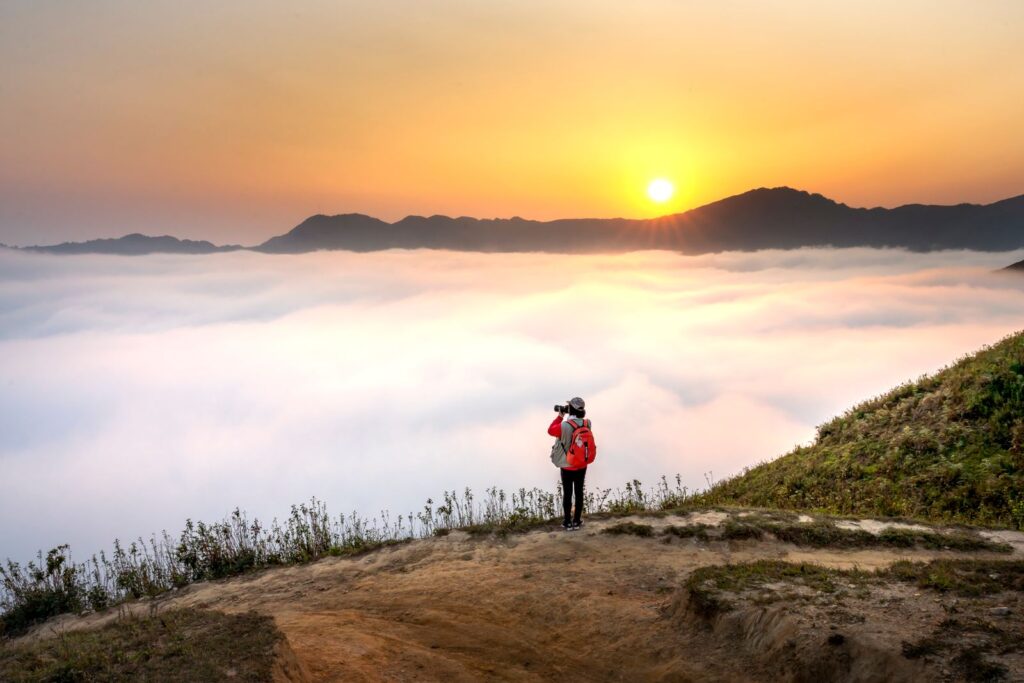
A Sri Lanka photo tour day has three fixed points: first light, the flat middle of the day, and last light. Shooting happens at the ends. Driving, transfers, editing and eating happen in the middle, because that’s when the light is doing nothing for anybody.
We plan backwards from sunrise and sunset. Once you know those two times, the day almost writes itself. The only variable is how far you’re willing to drive in the dark. On every Sri Lanka photo tour we build, that’s the first number we ask you about.
The Light-First Itinerary
Sunrise in Sri Lanka sits somewhere between 5:50 and 6:25 all year, which surprises people who expect seasonal swings. That means a 4:45 alarm is normal on a Sri Lanka photo tour, and coffee gets made before the bags go in the car.
Morning sessions run three hours. We shoot, break for a proper breakfast, then move. Afternoon sessions start about ninety minutes before sunset and run until the colour goes.
In between, we transfer, edit, rest, or visit somewhere that works in harsh light — a market under awnings, a temple interior, a tea factory floor. That flat middle block is what makes a photography tour Sri Lanka day survive a 4:45 alarm.
What a Guided Shoot Day Looks Like, Hour by Hour
| Time | What happens | Why it works |
|---|---|---|
| 04:45–05:15 | Wake, coffee, kit check in the lobby | No fumbling in the dark at the location |
| 05:15–05:55 | Drive to the first location | Arrive before the gate opens, not after |
| 05:55–09:00 | Main morning session | Blue hour through to directional light |
| 09:00–10:30 | Breakfast, backup and card offload | Two cards in rotation, never one |
| 10:30–15:30 | Transfer or indoor subject | Harsh overhead light is unkind to everything |
| 15:30–17:00 | Rest, edit, charge everything | Batteries die at the worst possible moment |
| 17:00–19:00 | Evening session to last colour | Golden hour plus the twenty minutes after |
We don’t hold rigidly to those clock times, because weather beats planning every time. If the cloud breaks at 11am over Ella Gap, we go. A photography tour Sri Lanka is a plan with room to abandon it.
Landscape Photography Sri Lanka — Where the Best Frames Are
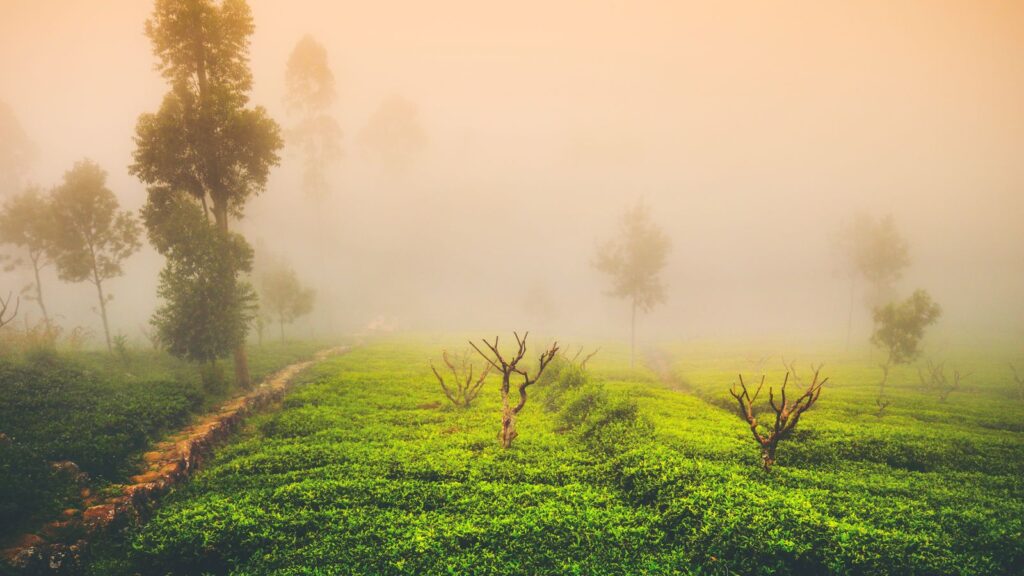
Landscape photography Sri Lanka rewards three landscapes above all: the rock outcrops of the Cultural Triangle, the tea country ridges, and the southern coast. Each one has a narrow window where it looks the way you imagined it.
Before you go, look at the official Sri Lanka Tourism gallery. It’s a useful calibration exercise. The frames that get picked are almost all early-morning or late-evening images, which tells you something about the hours that matter on a photography tour Sri Lanka.
Distances matter here. The island is 65,610 square kilometres, roughly the size of Ireland, so hill country to coast is a half-day drive rather than a flight. That’s why our landscape photography Sri Lanka routes never need internal flights. Judge a photography tour Sri Lanka route on drive time, not on how many pins are on the map.
Sigiriya and the Cultural Triangle at First Light
Sigiriya is the single most photographed subject on the island, and almost every shot you’ve seen of it was taken from Pidurangala rock at sunrise. The walk up Pidurangala takes about 30 minutes in the dark with a headtorch, and the last section is a scramble over boulders.
From the top you get Sigiriya silhouetted against the eastern sky, with the jungle canopy still holding mist. Get there 45 minutes before sunrise to claim a spot. It’s the frame most photography tour Sri Lanka portfolios open with, and for good reason. Our Sigiriya day tour from Colombo is the standard route, and we shift its start time for photographers.
Prefer the fortress itself? Then you’re shooting the water gardens and the frescoes at opening time, not the rock. The mirror wall and the lion’s paw terrace both work in low side light, and by 8:30 the crowds make tripods impossible. If a photography tour Sri Lanka itinerary puts you there at nine, the itinerary is wrong.
Tea Country, Ella and the Nine Arch Bridge
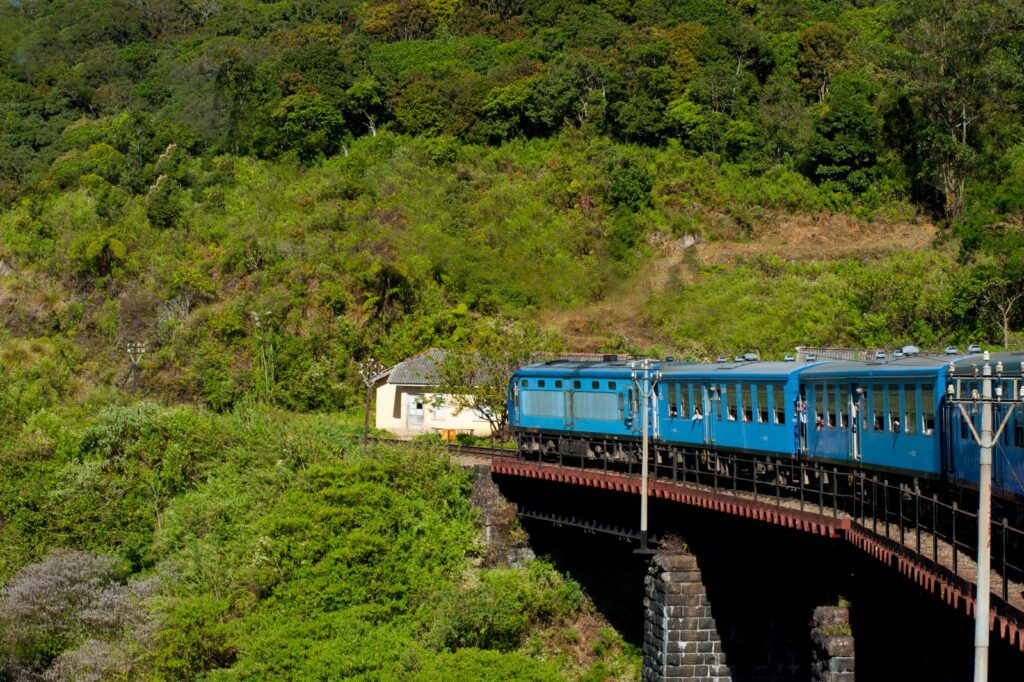
The hill country gives you three reliable landscape subjects: tea terraces, the Kandy to Ella railway, and the ridges around Ella Gap. The railway is the hardest to time and the most rewarding when it lands.
Trains cross the Nine Arch Bridge roughly eight times a day, and the schedule is not something we’d trust from a blog written three years ago. We check the running order the day before and build the morning around it. A photography tour Sri Lanka that doesn’t check the timetable is simply guessing. A Nuwara Eliya tea plantation tour covers the estate side of the same trip, including the factory interiors that work in flat midday light.
Tea terraces photograph best between 6:00 and 7:30, when mist sits in the folds of the hills and pluckers are already working. By 10am the mist has burned off and the contrast is gone. Anyone selling you a photography tour Sri Lanka with a 7am departure is selling a car journey. For more on where the walks and viewpoints sit, see our adventure tours Sri Lanka page, which maps the ridge trails.
Waterfalls, Coasts and the Stilt Fishermen
Waterfall photography needs cloud, not sun. Overcast days are a gift in the hill country, because the water goes silky without a ten-stop filter and the forest stops blowing highlights. St Clare’s and Devon Falls are both roadside, which means no long walk with a heavy bag. Overcast is the weather a photography tour Sri Lanka photographer actually prays for.
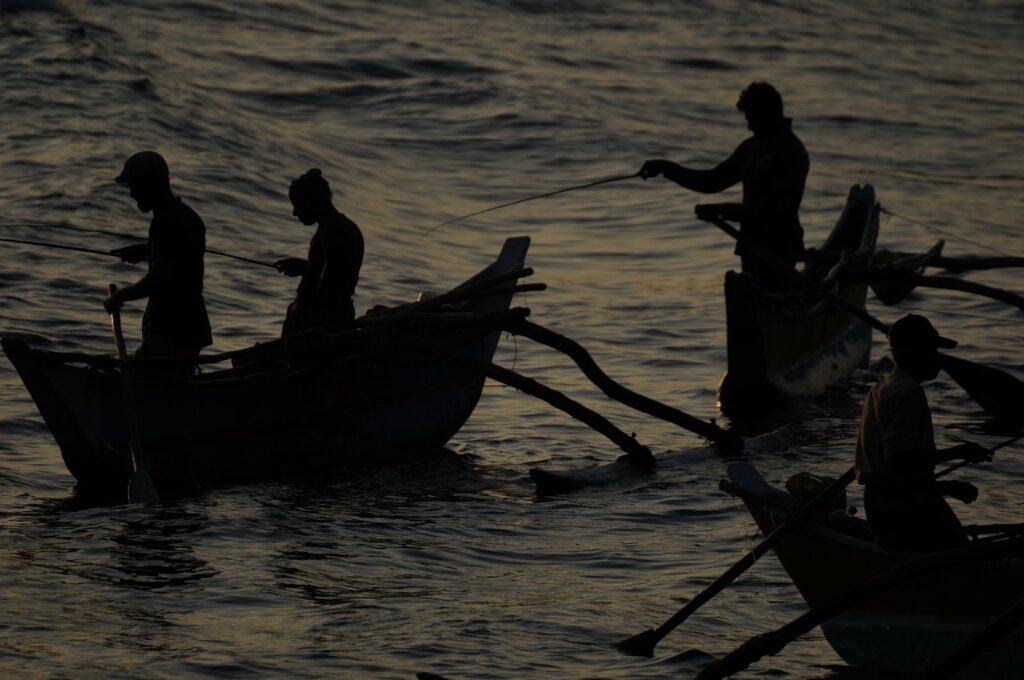
The south coast is the other half of the landscape story. Stilt fishermen at Koggala and Weligama work the poles at first and last light, and the silhouettes are the reason photographers keep coming back to that stretch of road. It’s also the easiest extra morning to bolt onto a photography tour Sri Lanka at short notice. A Galle Fort walking tour adds the colonial architecture in the same afternoon.
Wildlife Photography Sri Lanka — Parks, Permits and Patience
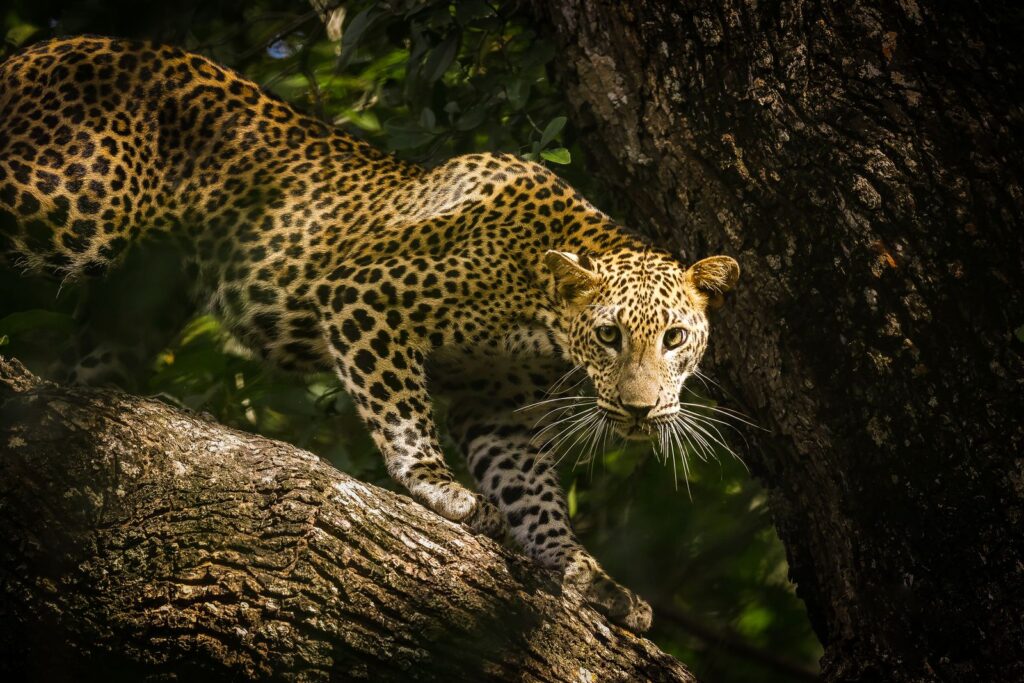
Wildlife photography Sri Lanka is a different discipline from landscape work. You’re not choosing a viewpoint, you’re waiting in a vehicle for an animal to choose one. The parks are excellent for it and the rules are strict.
Yala holds one of the highest densities of leopards anywhere in the world, which is why every wildlife photographer ends up there. The block you book, the gate you enter by and the hour you arrive decide everything. Get them wrong and you photograph a distant spotted shape behind a bush.
Leopards in Yala and Wilpattu
Leopard sightings in Yala cluster around rock outcrops and dry riverbeds in the early morning and late afternoon. Full-day permits let you stay in when everyone else is queuing at the gate. That midday gap is when the cats move to shade and the crowds go home. On a photography tour Sri Lanka with wildlife in it, the permit is the upgrade we push hardest.
Our Yala safari tour package can be booked as a photographic departure with a jeep to yourselves. Wilpattu is the quieter alternative, with fewer vehicles per sighting and far more room to work. On a photography tour Sri Lanka where someone wants animals inside a wide frame, it beats Yala most weeks.
Elephants, Birds and Wetlands
Elephants are the reliable subject. Minneriya and Kaudulla gather herds in the dry season, and Udawalawe delivers sightings most mornings without the lottery of a leopard. For birds, the island punches well above its size, which is why our bird watching tours Sri Lanka page sits alongside this one.
Wetlands near Colombo and the rainforest at Sinharaja add endemics and low-light forest species. Bring a long lens and accept high ISO. A wildlife photography Sri Lanka day rarely rewards a wide-angle.
If you want to see the scale of what the island holds before you choose parks, the Wildlife and Nature section of Sri Lanka Tourism lists the reserves by region. It’s a better starting point than a list of “best parks”, because it shows how close the alternatives sit to each other.
Park Rules Every Photographer Should Know
National park entry is controlled by the Department of Wildlife Conservation, and every vehicle needs a tracker or guide from the department. You cannot self-drive into a park, and no legitimate operator will offer it. Any photography tour Sri Lanka quote that promises self-drive access is telling you something about the seller.
Rules we follow on every departure: engines off at sightings, no getting out of the jeep, no flash on animals at night, and no playback of bird calls. Drones are not permitted in national parks. Full park regulations sit on the Department of Wildlife Conservation site.
Sri Lanka Photography Holidays — Season, Monsoon and Light
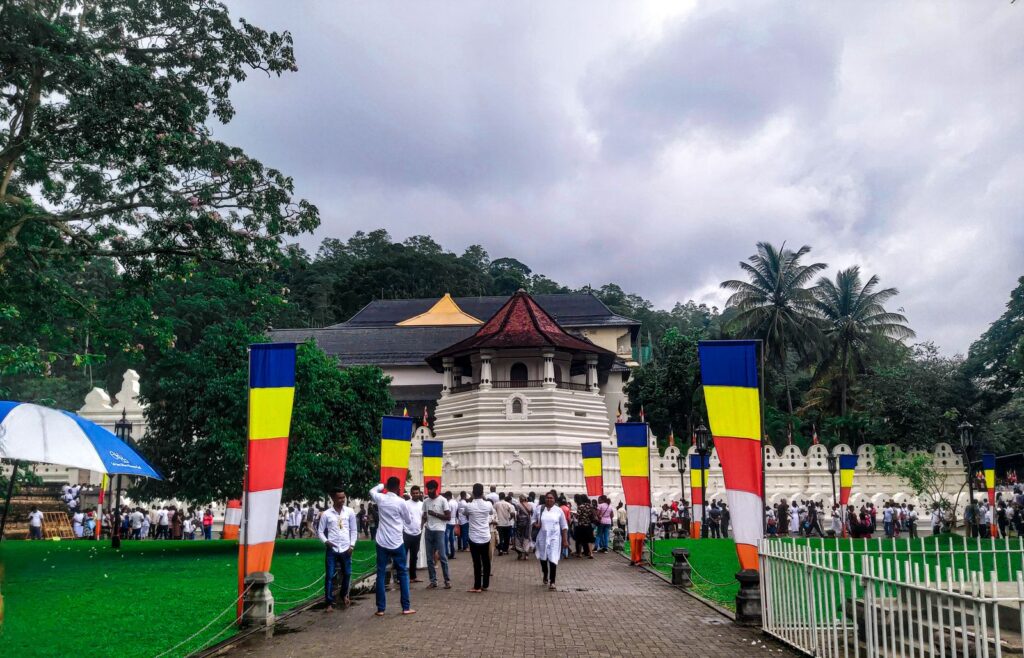
Sri Lanka photography holidays are governed by two monsoons, not one. The southwest monsoon runs roughly May to September and soaks the west and south coasts. The northeast monsoon runs roughly October to January and hits the north and east.
Because the island is small, you can nearly always find dry light somewhere. That’s the single most useful planning fact for anyone booking a photo trip here. Choose the coast last, after you’ve chosen the month. Almost every photography tour Sri Lanka date problem we see starts with the coast being booked first.
Best Months for the Cultural Triangle
The Cultural Triangle — Sigiriya, Polonnaruwa, Anuradhapura, Dambulla — is driest from December through to April, with clear mornings and reliable sunrise light. January and February are the safest months for a Sigiriya silhouette.
March and April get hot, with temperatures over 34°C by midday, so the middle-of-day break matters more. Nobody shoots good landscapes at 1pm in April anyway.
Hill Country Mist and the South Coast
Nuwara Eliya and Ella are at their clearest from January to March, when the ridges come out and Ella Gap opens up. Mist is present year-round in the early morning, so the tea terrace shots are less seasonal than people think. Mist is the one thing a photography tour Sri Lanka in the hills can nearly guarantee.
The south coast — Galle, Mirissa, Tangalle — is best from November to April. Surf photography has its own season, and the bigger swells arrive between May and September on the east coast around Arugam Bay.
Festivals Worth Planning Around
Two cultural events justify rearranging a trip. The Esala Perahera in Kandy, usually late July or early August, fills the streets with torch-lit processions and elephants in ceremonial dress. Vesak in May turns every town into a lantern display after dark.
Both are technically hard. Low light, moving subjects, dense crowds. Our advice is to shoot them with a fast prime and no tripod, then treat the whole session as a documentary exercise.
Festival nights are the hardest brief on any photography tour Sri Lanka, and the most fun. The Sri Lanka Tourism events calendar confirms the current dates each year.
Sri Lanka Photo Tour Itinerary — 6, 9 and 12 Days
A Sri Lanka photo tour itinerary should be judged by how many first-light sessions it contains, not how many towns it names. Six days gives you three useful mornings. Twelve days gives you nine.
That ratio is the honest measure of what you’re buying. It’s also why a cheap-looking 6-day photography tour Sri Lanka quote can still be poor value per sunrise.
All three routes below start and end at Bandaranaike International Airport and can be inverted. We adjust them for your arrival time, because landing at 3am and shooting sunrise the same day never works.
6-Day Frame-First Route
Day one is arrival and Colombo street work, if your flight lands in the morning. Day two moves to Sigiriya for Pidurangala at sunrise and the rock gardens the following morning. Day three adds Polonnaruwa in the afternoon light.
Days four and five shift to Kandy and the tea country, with the Nine Arch Bridge timed around a real train. Day six returns to Colombo for departure. It’s tight but honest, and it’s the shortest photography tour Sri Lanka first-timers should attempt.
9-Day Route With Wildlife
Add three days and the itinerary opens up properly. Sigiriya and Polonnaruwa stay, then Kandy, Nuwara Eliya and Ella get two nights each with real morning sessions. Days six to eight are Yala, with a full-day permit inside the park.
The final day is a coast run through Mirissa and Galle. This is the sweet spot for most guests, and the version we recommend when someone asks for one Sri Lanka photo tour itinerary and no more choices.
12-Day Full Island Route
Twelve days lets you put Wilpattu or Udawalawe next to Yala, keep two full mornings in the tea country, and add Sinharaja rainforest for endemics. You also get a buffer day, which matters because one washed-out morning shouldn’t cost you the trip.
At this length we build in an editing afternoon as well. Sitting with a guide while your first three days of images get reviewed is worth more than another temple. It’s the part of a long photography tour Sri Lanka that people mention afterwards. Details of custom routing are on our custom tour itinerary page.
What This Photography Tour Sri Lanka Costs — 2026 Indicative Prices
We publish price bands rather than a single number, because a landscape-only 6-day trip and a wildlife-heavy 12-day trip aren’t the same product. The bands below are per person, land only, sharing a twin room, and they’re indicative planning figures rather than a fixed rate card.
Judge any quote by the day. That’s the only line that lets you compare a 6-day and a 12-day offer honestly, and it’s the number most operators hide behind a total. Every photography tour Sri Lanka price we send leads with that row for exactly this reason.
| Tier | What you get | Per person, per day | 6 days | 9 days | 12 days |
|---|---|---|---|---|---|
| Budget | 3-star hotels, shared vehicle up to 6, driver-guide, park jeeps shared | US$145 | US$870 | US$1,305 | US$1,740 |
| Comfort | 4-star hotels, private car and driver-guide, photographer-guide days, private jeep | US$228 | US$1,368 | US$2,052 | US$2,736 |
| Premium | Boutique and 5-star stays, specialist photographer-guide throughout, permits and access handled | US$380 | US$2,280 | US$3,420 | US$4,560 |
Per Person, Per Day — How the Bands Compare
Independent price tracking puts the average photography tour in Sri Lanka at about US$229 per person per day across eight tours analysed, with daily costs ranging from US$79 to US$477. Our comfort band lands almost exactly on that average, which is deliberate. It’s what a fair photography tour Sri Lanka price looks like at four-star level.
At the top of the market, a 12-day specialist photo tour with a named photographer-leader is published at US$5,650 per person, or roughly US$471 per day. Our premium band sits below that, because you’re paying for the guide and the access rather than a brand name. That’s the premium argument on any photography tour Sri Lanka, and it’s easy to test in a quote.
What Moves the Price
Four things swing a photography tour Sri Lanka quote more than anything else. Hotel class is the biggest, vehicle privacy is second, and park permits and jeep exclusivity are third. The fourth is season, because December and January rates in the Cultural Triangle run above April. Ask which of the four is moving your photography tour Sri Lanka total, and expect a clear answer.
Park entry fees and jeep hire are passed through at cost and itemised on your quote, so you can see exactly what the park charges and what we charge. We’d rather send a photography tour Sri Lanka total that adds up than one that hides its parts. We don’t fold them into a headline number to make the per-day figure look smaller.
How We Choose Hotels That Work for Photographers
Hotel choice on a photography tour Sri Lanka is not about star ratings. It’s about how quickly you can leave in the dark. It’s whether there’s a table wide enough for a laptop and two card readers. And it’s how much daylight gets into the room at 5am.
We favour hotels with a 24-hour front desk that will pack a breakfast box. We want parking that doesn’t mean a ten-minute walk with a tripod bag. We also want a generator that keeps the power on when the grid drops. Those three things matter more than a pool.
In the tea country we deliberately book two-night stays. One-night stops in the hills mean you arrive after the good light and leave before the next one. It’s the most common mistake in a self-built photography tour Sri Lanka route.
What’s Included and What Isn’t
Every photography tour Sri Lanka booking we confirm includes the vehicle, the driver-guide, accommodation with breakfast, and all transfers from the airport. The list below is the version we put in writing before you pay a deposit. It’s the same list we check on a photography tour Sri Lanka quote from anyone else.
Included
- Private air-conditioned vehicle with a driver-guide for the full itinerary
- Accommodation in the tier you book, with breakfast daily
- Airport transfers on arrival and departure
- Photographer-guide days in the comfort and premium tiers
- National park entry fees and jeep hire, itemised at cost
- Reserved train seats where the route includes the hill country line
- Drinking water in the vehicle every day
- Pre-trip planning call to fix your shot list and route
Not Included
- International flights and the ETA visa, which you apply for directly
- Travel and camera equipment insurance — please don’t travel without both
- Lunch and dinner unless your quote says otherwise
- Drone permits and specialist access fees outside the standard parks
- Tips for guides, trackers and jeep drivers
- Anything you break, drop or drown, which is what insurance is for
If a quote you receive from anyone, including us, doesn’t separate park fees from the tour price, ask why. On a photography tour Sri Lanka the park component can be a meaningful chunk of the total, and it should never be invisible.
Camera Kit, Permits and the Rules Nobody Tells You
The kit question has a boring answer: a body you know, a wide lens, a telephoto, and a tripod you’ll actually carry. The rules question has a more interesting one, because Sri Lanka restricts a few things photographers assume are fine.
What to Pack for the Light You’ll Meet
Bring a 16–35mm equivalent for landscapes, a 70–200mm for details and people at a distance, and a 100–400mm or longer if you’re serious about wildlife. A fast 35mm or 50mm prime covers temples, markets and festivals after dark.
Two bodies beat one body and a lens change in a dusty jeep. Bring more cards than you think you need, two chargers, and a rocket blower. Sensor dust in the dry zone is not a rumour. On a photography tour Sri Lanka the two bodies you bring will both need blowing off by day three.
Tripods, Drones and Temple Etiquette
Tripods are fine at viewpoints and on hotel grounds, but some temples restrict them and a few prohibit them inside shrine areas. Ask before you set up, and always take the shot barefoot where the site requires it. On a private photography tour Sri Lanka the guide has that conversation so you don’t have to.
Drone use in Sri Lanka needs prior approval and is not permitted inside national parks or near heritage sites. We don’t fly drones on our tours and won’t pretend a permit is a formality. Check the current position with the Civil Aviation Authority of Sri Lanka before you pack one.
Visas, Insurance and the Paperwork
Most visitors need an ETA before arrival, applied for online through the official government portal. Apply through eta.gov.lk and not through a lookalike agency that charges a service fee for the same form.
Insure your gear separately from your trip. A single dropped 70–200mm costs more than most people’s holiday insurance limit for valuables. Photograph your serial numbers before you fly.
Editing, Backup and End-of-Day Discipline
Every evening we run the same routine: cards copied to a laptop, then to a portable drive, and the card only reformatted once both copies are verified. It takes twelve minutes. Losing three days of Yala images takes longer than that to get over.
Bring a card reader, not just a cable. Bring a drive you can leave in the hotel safe as the second copy. If you shoot tethered, tell us in advance so the vehicle has a power point that works with your inverter.
Editing is optional on our trips and we never turn a photography tour Sri Lanka into a workshop unless you ask for one. If you do want reviews, say so when you book, because it changes how the evenings are scheduled.
Frequently Asked Questions
How much does a photography tour Sri Lanka trip cost?
Indicative 2026 bands run from about US$145 per person per day at the budget tier to US$380 at the premium tier, land only and sharing a twin room. A 6-day budget departure therefore starts around US$870 per person, while a 12-day premium trip sits near US$4,560.
When is the best time for a Sri Lanka photo tour?
December to April gives the driest light in the Cultural Triangle and on the south coast. For the east coast and Arugam Bay, run May to September instead. Because the island has two monsoons, some part of it is always in season.
Do I need a professional camera for landscape photography Sri Lanka?
No. A recent mirrorless body with a kit lens and a tripod will produce excellent landscapes at Sigiriya and in the tea country. Wildlife photography Sri Lanka benefits far more from a long lens, and that’s the one place we’d advise renting if you don’t own one.
How many people are on your Sri Lanka photography holidays?
Our departures are private, so the group is whoever you book for, up to six people per vehicle. Beyond six we split into two vehicles with two guides so nobody is shooting over a shoulder.
Can you guarantee a leopard sighting on a Sri Lanka photo tour itinerary?
No, and you should distrust anyone who does. Yala has one of the highest leopard densities in the world, and a full-day permit improves your odds considerably, but wildlife is wildlife. We build in multiple park sessions so one quiet morning doesn’t define the trip.
Are drones and tripods allowed on these tours?
Tripods are welcome at most outdoor locations, with restrictions at some temples. Drones need prior government approval and are banned inside national parks, so we don’t fly them and can’t arrange permits for you.
What if it rains for two days straight?
We reroute. Sri Lanka’s two monsoons mean the dry side of the island is usually a four-hour drive away. A photography tour Sri Lanka itinerary we build always keeps one movable day. Rain also opens up subjects that don’t work in sun, including waterfalls and forest.
How far in advance should I book a photography tour Sri Lanka itinerary?
Two to three months is comfortable for comfort and premium tiers in peak season, and four months if you want specific boutique properties in December or January. The train seats on the Kandy to Ella line are the tightest booking of the whole trip.
Plan Your Photography Tour Sri Lanka With Us
Tell us three things and we can build your route: what you shoot most, when you can travel, and how many mornings you’re willing to get up in the dark. From there we’ll send a day-by-day plan with the sunrise and sunset times already marked.
Our photography tour Sri Lanka bookings start from around US$870 per person for six days at the budget tier. The itemised quote you receive is the price you book against, with park fees and jeep hire shown separately.
We’re a Sri Lankan operator, not a reseller. The guide who plans your route is the guide who drives it, which is why the light-first structure survives contact with real weather.
Request your custom photography itinerary →
About the author: Dhanushika Hewa Paththinige is a senior travel consultant at Amazing Escapes Tours. She has more than a decade of planning private itineraries across Sri Lanka’s Cultural Triangle, hill country and southern coast. She has led photographic departures to Sigiriya, Yala and the tea estates around Nuwara Eliya, and writes the operator’s guides to timing, routes and honest pricing.