Our first Sri Lanka tea plantation tour began with a wrong turn above Kandapola. We’d left Nuwara Eliya before six to catch the mist rolling off the hills, and we ended up in a row of waist-high bushes with a plucker called Kumari who laughed at us and handed over her basket. Twenty minutes later we were inside the Pedro factory, watching green leaf turn copper on the withering troughs.
That morning is why we still run tea country the slow way. A Sri Lanka tea plantation tour isn’t a stop-off between Kandy and Ella — it’s the part of the island most guests remember longest.
This guide is everything we tell travellers before they book. You’ll get the estates worth the detour, what a factory tour actually shows you, what 2026 prices look like, and how to build the hill country days properly. We’ve been routing people through the tea districts for eight years, and we still find new corners of them.
Table of Contents
- Sri Lanka Tea Plantation Tour — The Honest Local Guide.
- Why Ceylon Tea Country Is the Heart of the Hill Country.
- The Four Tea Regions of Sri Lanka — A Ceylon Tea Country Tour by Area.
- What Happens on a Tea Factory Tour in Sri Lanka.
- Which Tea Estates and Factories You Can Actually Visit.
- A Sri Lanka Tea Estate Stay — What a Plantation Bungalow Feels Like.
- The Kandy to Ella Train — Tea Country by Rail.
- Building a Sri Lanka Tea Plantation Tour Itinerary — 2, 3 and 5 Days.
- What a Sri Lanka Tea Plantation Tour Costs — 2026 Prices.
- What’s Included and What Isn’t.
- Best Time to Visit Sri Lanka’s Tea Country — Month by Month.
- Practical Tips, Photos, Buying Tea and Common Mistakes.
- Frequently Asked Questions.
- Plan Your Ceylon Tea Country Tour With Us.
Sri Lanka Tea Plantation Tour — The Honest Local Guide
A Sri Lanka tea plantation tour is a half-day to full-day visit to a working tea estate and its factory in the hill country. You walk the fields, watch the leaves go through the factory, taste the finished tea, and buy it at estate prices rather than airport prices. Most tours are built around Nuwara Eliya, Ella, Haputale or Kandy.
The best versions also move you between those towns by road or rail, so the tour becomes the journey rather than a stop on it. That’s the difference between a coach that pulls into a car park and a Sri Lanka tea plantation tour that you’ll still be talking about five years later.
You don’t need to be a tea expert. We’ve taken honeymooners, families with young kids, photographers and one retired tea broker from Assam. Everyone leaves knowing more than they arrived with.
Why Ceylon Tea Country Is the Heart of the Hill Country
Ceylon tea is one of the island’s biggest export earners and one of the few things Sri Lanka has been world-famous for since the 1870s. Sri Lanka Tea Board reported production of about 62 million kilograms and export revenue of US$371 million in the first quarter of 2025 alone. That’s a lot of leaf, and every Sri Lanka tea plantation tour runs through the southern highlands where most of it grows.
Tea didn’t start here until 1867, when a Scot named James Taylor planted the first commercial bushes at Loolecondera near Kandy. Coffee had just collapsed, and tea replaced it — estate by estate, ridge by ridge — for the next forty years.
The landscape that grew out of that change is now protected. Central Highlands of Sri Lanka gained UNESCO World Heritage status in 2010, covering Horton Plains, the Peak Wilderness and the Knuckles range. Much of what you cross on a Sri Lanka tea plantation tour is this protected highland, or the forest that feeds its rivers.
In our experience, travellers who skip the hills miss the version of Sri Lanka that locals actually love. The coast is wonderful and the ruins are extraordinary, but a Sri Lanka tea plantation tour is where the island slows down.
The Four Tea Regions of Sri Lanka — A Ceylon Tea Country Tour by Area
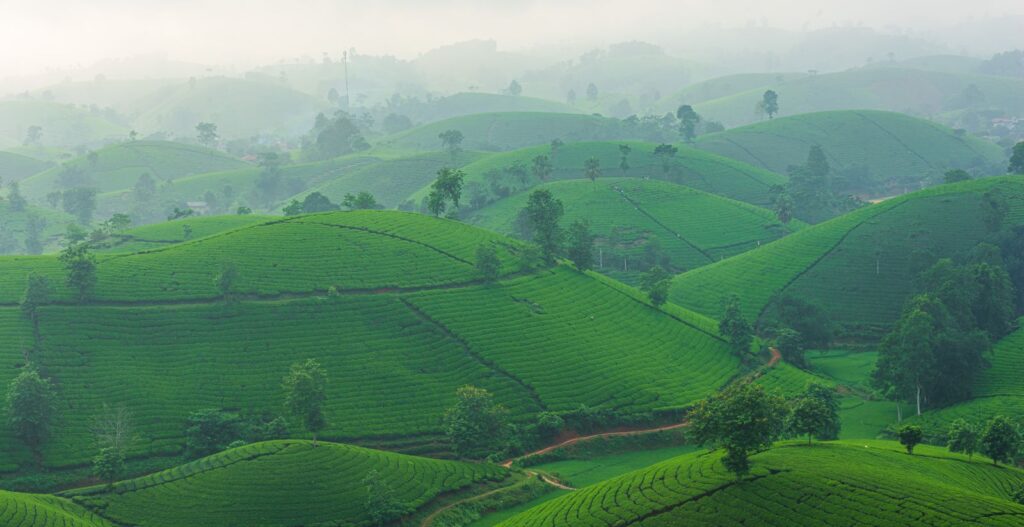
A good Ceylon tea country tour doesn’t pretend the island has one tea region. Sri Lanka grows tea in four distinct belts, and each one produces a different cup. For a Sri Lanka tea plantation tour, altitude drives everything: the higher the estate, the slower the leaf grows and the finer the flavour.
| Region | Elevation | Key towns | Character of the tea | Best for |
|---|---|---|---|---|
| Nuwara Eliya (high grown) | 1,200–1,900 m | Nuwara Eliya, Kandapola, Talawakele | Light, bright, floral, golden | Classic factory tours and “Little England” scenery |
| Uva (high grown) | 1,000–1,700 m | Haputale, Bandarawela, Ella | Crisp, brisk, menthol-cool | Quiet estates, Amba and Dambatenne |
| Kandy / mid-country | 600–1,200 m | Kandy, Gampola, Pussellawa | Fuller body, brisk finish | A tea stop on the way up from Kandy |
| Ruhuna (low grown) | below 600 m | Galle, Matara, Ratnapura | Strong, dark, robust | Brisk iced tea and everyday blends |
Nuwara Eliya — Sri Lanka’s High Grown Heartland
Nuwara Eliya sits at roughly 1,900 metres and is the most visited tea town on the island. It’s also the coldest, which surprises people who packed only for the beach. Bring a fleece and you’ll enjoy it far more. Most guests put it at the centre of their Sri Lanka tea plantation tour, and we keep a dedicated Nuwara Eliya tea plantation tour guide for the detail.
Ella and Uva — The Misty East Side
Ella gets the views, but the estates around Haputale and Bandarawela are the connoisseur’s stop. Thomas Lipton built his fortune on these slopes, and Dambatenne still shows you the factory he put up. Pair it with our Ella tour package; a Sri Lanka tea plantation tour that skips Uva is only half a tour.
Kandy and the Mid-Country
The mid-country is the easiest tea region to reach, an hour or so from Kandy. It’s where we send guests who want a Sri Lanka tea plantation tour without committing two days to the hills. If you’re basing yourself there, our Kandy tour packages already fold in a tea stop.
Low Grown Ruhuna — A Note
The southern lowlands rarely feature on a Sri Lanka tea plantation tour, and that’s fine. Ruhuna produces strong, dark tea for blending, not scenery. Save that curiosity for the supermarket shelf.
What Happens on a Tea Factory Tour in Sri Lanka
A tea factory tour in Sri Lanka takes 30 to 90 minutes and follows the same five steps wherever you go. Understanding them makes the whole estate suddenly readable, and it’s the part of a Sri Lanka tea plantation tour guests tell us they enjoyed most.
From Leaf to Cup — Plucking, Withering, Rolling, Fermenting, Firing
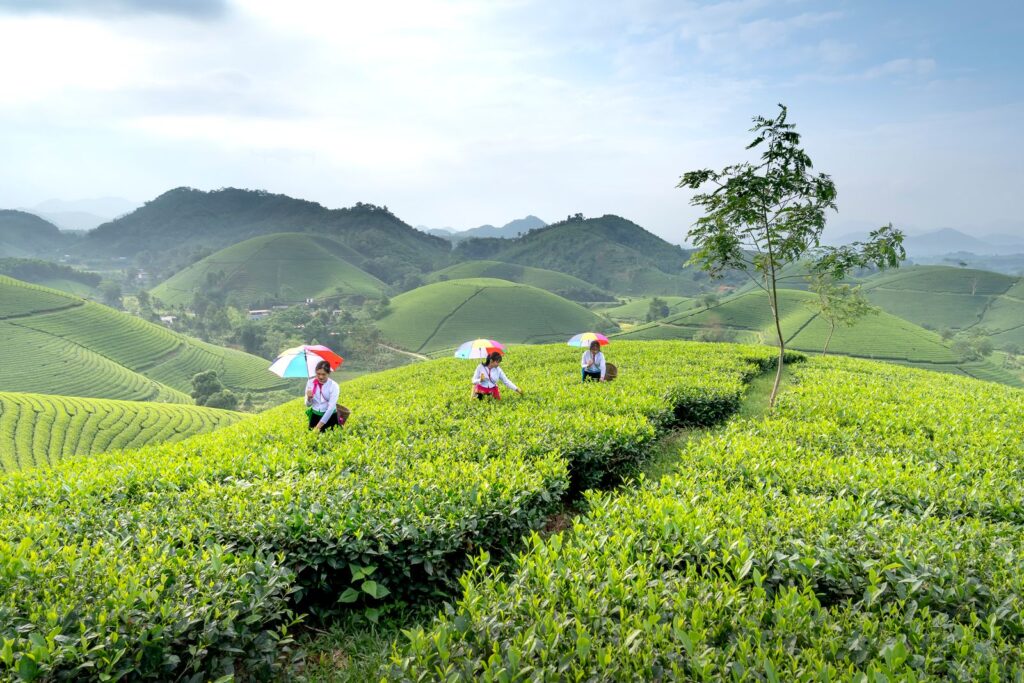
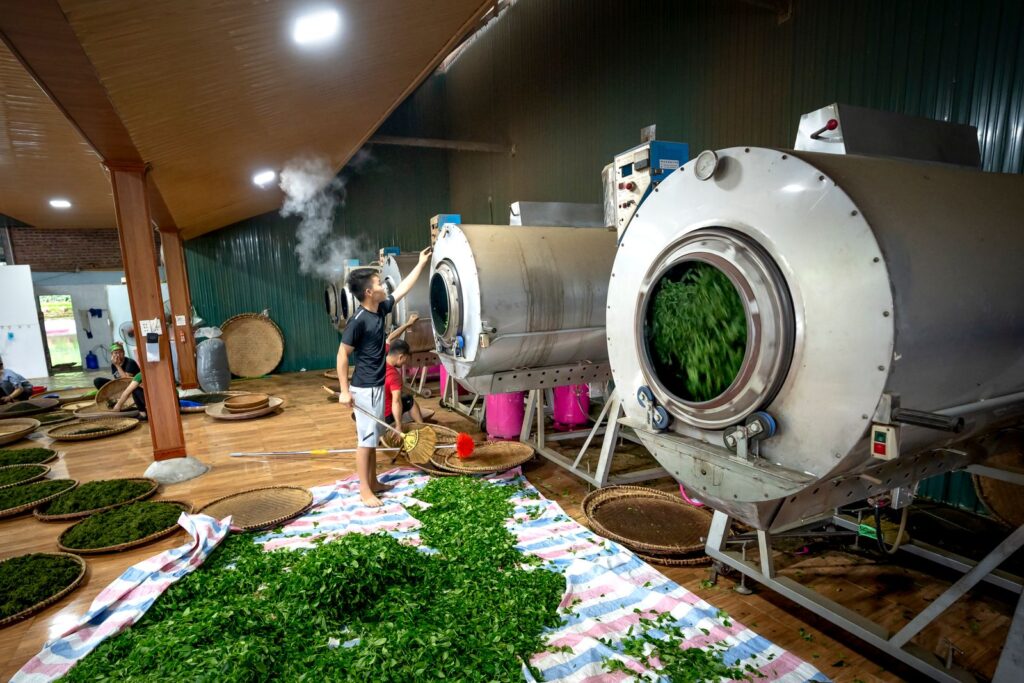
First comes plucking: two leaves and a bud, done by hand, usually by women who can fill a 20-kilo basket before lunch. Then the leaf is spread on long troughs with warm air blowing through to remove moisture — the withering stage. Rolling breaks the leaf cells so the juices oxidise, which is often still called fermentation even though it isn’t one.
After oxidation the leaf is fired, or dried, until it’s crisp and black. Finally it’s graded by size, and that’s what separates a Broken Orange Pekoe from an Orange Pekoe from a Dust.
Grading and a Ceylon Tea Tasting
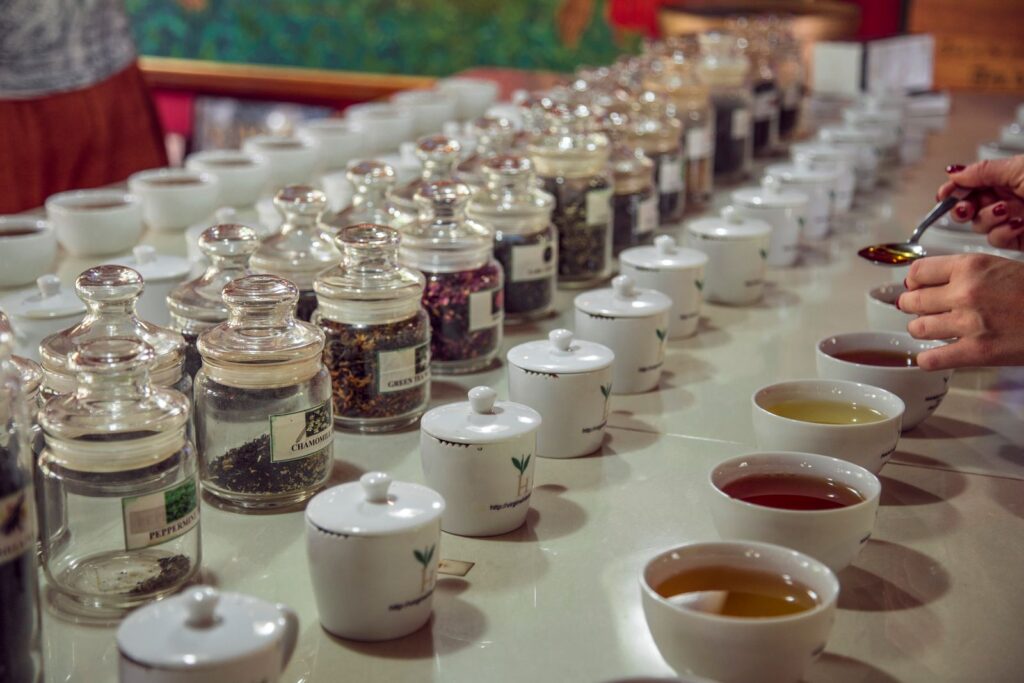
Every proper visit ends with a tasting. You’ll usually try two or three grades side by side, and the difference is genuinely obvious once someone points it out. A Ceylon tea tasting isn’t a wine tasting — you’ll be offered it with or without milk, and nobody minds if you prefer it sweet.
If you’re buying, buy at the factory. The mark-up in town shops and at the airport is real, and the factory shop is the only place you can guarantee the leaf was grown on the estate your Sri Lanka tea plantation tour just walked through. The official Ceylon Tea site is worth a browse before you choose what to bring home.
Which Tea Estates and Factories You Can Actually Visit
Dozens of estates exist; only a handful welcome visitors properly. These six are the ones we book on a Sri Lanka tea plantation tour, and between them they cover history, scenery and a genuinely good cup.
| Estate / factory | Region | Typical 2026 entry | Time needed | Best for |
|---|---|---|---|---|
| Pedro Tea Estate | Nuwara Eliya | about LKR 1,000 (~US$3.50) | 30–40 min | History, oldest working factory near town |
| Damro Labookellie | Nuwara Eliya | free entry | 30 min | Easiest first visit, café and big shop |
| Dambatenne Tea Factory | Haputale | about LKR 500–1,000 | 30 min | Lipton’s factory and the Lipton’s Seat view |
| Geragama Tea Estate | near Kandy | about LKR 500–1,000 | 45 min | A tea stop without the long hill drive |
| Amba Estate | near Ella | about US$25–35 | 1.5–2 h | Small-batch artisan tea and a long tasting |
| Heritance Tea Factory | Nuwara Eliya | chargeable mini factory | 30 min | Atmosphere and a converted 1936 factory hotel |
Fees above are the rates we saw through 2025 and early 2026; estates do revise them, and cash in rupees is still the safest bet. Your driver will usually know the day’s price before you arrive, and we confirm it again when we build your Sri Lanka tea plantation tour.
Pedro Tea Estate
Pedro is the one most guests start with, three kilometres east of Nuwara Eliya on the Kandapola road. It has been producing since 1885, and the factory still sits in the same valley. Morning tours catch the mist at its best.
Damro Labookellie
Labookellie is the island’s second-oldest estate and the most visitor-friendly. Entry is free, the tour is brisk, and the café view over the valley is the reason so many Sri Lanka tea plantation tour itineraries begin here.
Dambatenne Tea Factory
Dambatenne is where Thomas Lipton built his first factory, and the tour is refreshingly unpolished. Combine it with the walk up to Lipton’s Seat, where the view opens across seven provinces on a clear morning.
Geragama Tea Estate
Geragama, just outside Kandy, is our answer when a guest wants a factory visit but can’t spare the hill country days. It’s a working low-country estate with an informative, well-paced walk-through.
Amba Estate
Amba is a small artisan estate near Ella that makes tea in tiny batches, partly by hand. The tour costs more and is worth it, especially if you care about how tea can taste when it isn’t blended for volume, and the Ceylon tea tasting at the end runs long.
Heritance Tea Factory Hotel
Heritance is a 1936 factory converted into a hotel, with a mini factory still working inside. Even non-guests can visit, and it’s the most atmospheric single stop in Nuwara Eliya.
A Sri Lanka Tea Estate Stay — What a Plantation Bungalow Feels Like
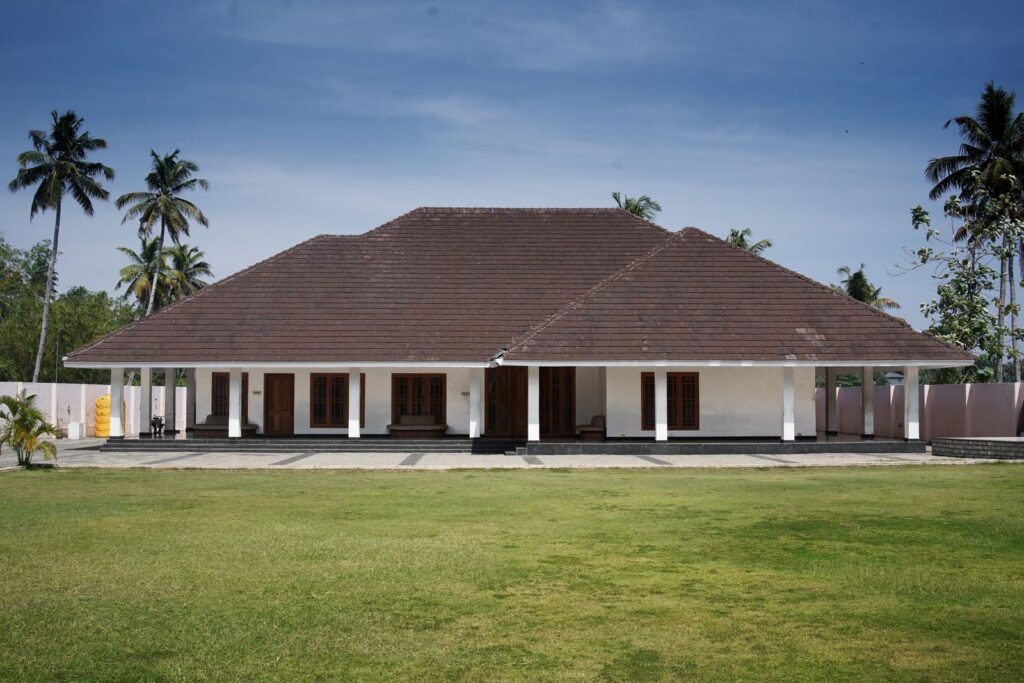
A Sri Lanka tea estate stay means sleeping inside a colonial planter’s bungalow, usually with four to eight rooms, a fireplace and a cook. Ceylon Tea Trails above Hatton is the famous luxury version. Smaller converted bungalows around Haputale and Ella cost a fraction of that and are just as quiet.
Expect log fires at night, early mist, and food that arrives when it’s ready rather than when you ordered it. Wi-Fi is patchy on purpose and by accident. If you want to slow a Sri Lanka tea plantation tour right down, one night in a bungalow does more than any extra sight.
The Kandy to Ella Train — Tea Country by Rail
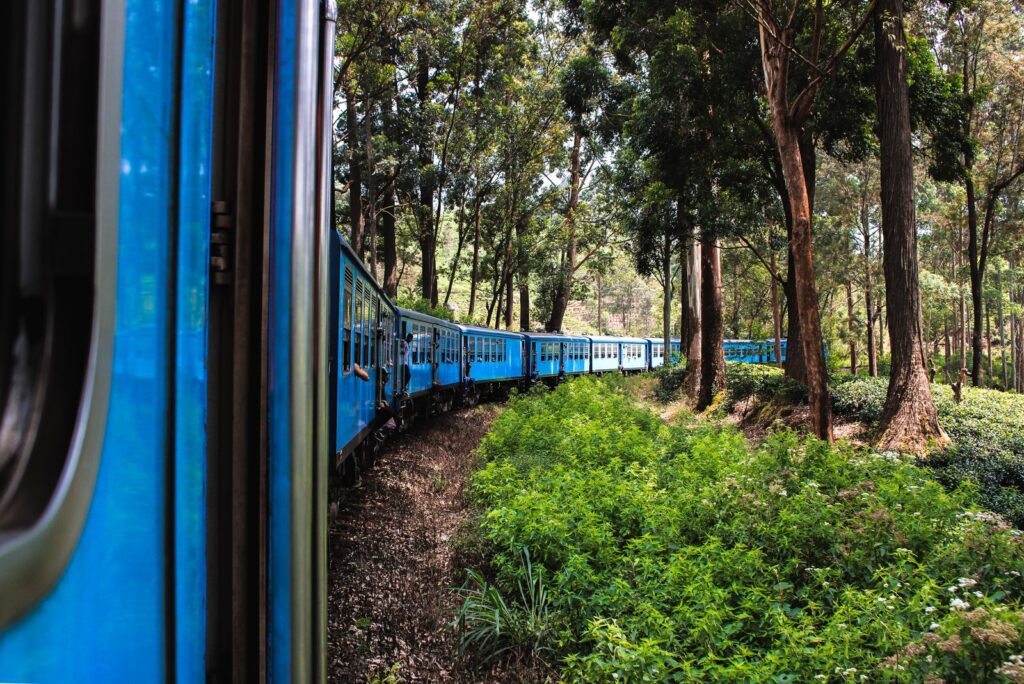
The Kandy to Ella train is one of the world’s great rail journeys, and it is pure tea country from the moment it climbs past Gampola. It takes roughly six to seven hours, and the best scenery is the last two hours into Ella.
Second class is comfortable and cheap; first class observation cars sell out weeks ahead in high season. Reserved seats open online in advance, and unreserved carriages are first-come, first-served. We book reserved seats for guests whenever the dates allow.
Sit on the right side heading towards Ella for the valley views, and keep a jumper in your bag. The doors stay open for photos between stations, which is why every Sri Lanka tea plantation tour we run includes this leg where possible.
Building a Sri Lanka Tea Plantation Tour Itinerary — 2, 3 and 5 Days
How long you spend in the hills depends on how much tea you want versus how much driving you’ll accept. These three shapes cover almost every Sri Lanka tea plantation tour request we get.
| Days | Shape | Best for | Indicative land-only cost per person |
|---|---|---|---|
| 2 days / 1 night | Kandy → Nuwara Eliya (or train to Ella) | A taste of tea country inside a short trip | from about US$185 |
| 3 days / 2 nights | Kandy → Nuwara Eliya → Ella by train | The classic first-timer route | from about US$270 |
| 5 days / 4 nights | Kandy → Nuwara Eliya → Haputale → Ella → Yala | Tea, hikes and a safari without rushing | from about US$455 |
A workable three-day running order starts with an afternoon drive from Kandy to Nuwara Eliya and a factory visit the next morning. Day two adds Pedro and Damro Labookellie, then a wander around Victoria Park or Gregory Lake. Day three takes the train to Ella via Nanu Oya and Bandarawela, arriving for sunset at the Nine Arch Bridge. It fits neatly into our 7-day Sri Lanka itinerary if you’re building a longer trip.
We build every Sri Lanka tea plantation tour around one rule: no more than three hours in the vehicle between stops. The hills are beautiful, but they’re also winding, and nobody enjoys them from a hot back seat. If you want to finish in the low country, we can roll the route into a Yala safari tour package.
What a Sri Lanka Tea Plantation Tour Costs — 2026 Prices
There is no single price for a Sri Lanka tea plantation tour, because almost everything is private and custom-built. What we can give you is honest planning bands, so you know whether a quote is sane before you book anything.
The table below shows typical land-only costs per person sharing a double room. It excludes international flights, and it assumes 2026 rates. Final quotes depend on hotel class, group size and how much of the route you take by reserved train.
| Duration | Budget | Comfort | Premium |
|---|---|---|---|
| 2 days / 1 night | US$185–235 | US$275–345 | US$420–560 |
| 3 days / 2 nights | US$270–340 | US$410–520 | US$640–850 |
| 5 days / 4 nights | US$455–570 | US$690–880 | US$1,080–1,450 |
Three things move the number on a Sri Lanka tea plantation tour more than anything else: the class of hotel, whether you travel by private car or shared transport, and how many factory visits and tastings you add. A single supplement of around 30 to 45 per cent is normal, since most hill country rooms are doubles.
If you’d rather see the arithmetic against your own dates, the team can rebuild the numbers in a couple of hours through our custom tour itinerary service.
What’s Included and What Isn’t
Every quote we send is itemised, because “included” means different things to different operators. Here’s the honest split for a Sri Lanka tea plantation tour.
Normally included
- Private air-conditioned vehicle with an English-speaking driver-guide
- Hotel or bungalow accommodation on the agreed board basis
- All estate and factory entry fees on the itinerary
- Reserved train seats where the dates allow
- Bottled water, fuel, parking and driver costs
- Route planning, booking support and a 24-hour local contact
Normally not included
- International flights and visa fees
- Lunches and dinners unless the board basis says otherwise
- Alcohol, spa treatments and personal shopping
- Optional activities such as Horton Plains tickets or a safari add-on
- Tips — around LKR 1,000–2,000 a day for a driver-guide is a kind gesture
Best Time to Visit Sri Lanka’s Tea Country — Month by Month
The hill country has its own weather, and it doesn’t follow the coast. Rain arrives on a different schedule up here, so a Sri Lanka tea plantation tour can work in almost any month if it’s planned around the showers. For the island as a whole, see our best time to visit Sri Lanka guide.
| Window | Weather in the hills | Crowds | Verdict |
|---|---|---|---|
| January–March | Clear, cool mornings, light rain | Peak | Best all-round; book hotels early |
| April–June | Warm, afternoon showers | Moderate | Good value, lush green fields |
| July–September | Windy, misty, occasional heavy rain | Moderate | Atmospheric; pack a rain shell |
| October–December | Wettest in the west hills | Low, then rising | Cheapest; watch the Ella side |
Our own favourite month for a Sri Lanka tea plantation tour is February. The mornings are crisp, the tea fields are bright, and the train to Ella runs on time more often than not.
Practical Tips, Photos, Buying Tea and Common Mistakes
A few small things make a Sri Lanka tea plantation tour noticeably better, and most of them are about packing and timing rather than money.
- Dress in layers. Nuwara Eliya can sit near 10°C at dawn and 22°C by noon.
- Wear closed shoes. Factory floors are damp, and estate paths are uneven.
- Ask before photographing pluckers. A smile and a small thank-you goes a long way.
- Skip the formal tea ceremony idea. Ceylon tea is relaxed — milk and sugar are perfectly normal.
- Buy at the source. Factory shops sell fresher leaf than any town boutique.
- Don’t rush the drive. Road distances in the hills mean nothing; times are everything.
- Cash still matters. Some estate gates don’t take cards, and ATMs are scarce above 1,500 metres.
- Avoid the midday factory tours if you can — mornings are cooler and the light is better.
The most common mistake we see on a Sri Lanka tea plantation tour is treating the hills as a transit day. Guests book a single night between Kandy and Ella, arrive after dark and leave before breakfast. Give tea country two nights at least, and it stops being a stop.
Frequently Asked Questions
What is a Sri Lanka tea plantation tour?
A Sri Lanka tea plantation tour is a guided visit to a working tea estate and factory, usually in the hill country around Nuwara Eliya, Ella or Kandy. You tour the fields, follow the leaf through the factory, taste the finished tea and can buy it on site.
How much does a Sri Lanka tea plantation tour cost?
Factory entry is typically LKR 500 to 1,000 (roughly US$2 to US$3.50), while full guided experiences such as Amba Estate run about US$25 to US$35. A 2-night private Sri Lanka tea plantation tour starts from around US$270 per person sharing, land only.
Which is the best tea factory to visit in Sri Lanka?
Damro Labookellie is the easiest for a first visit, Pedro is the best for history, and Dambatenne in Haputale is the best for story. Amba Estate near Ella is the pick if you care most about the tea itself.
Can you do a Sri Lanka tea plantation tour in one day?
Yes, from Kandy. Geragama Tea Estate is under an hour away, so a half-day Sri Lanka tea plantation tour fits easily. Full day trips from Colombo are possible but long, and we usually recommend staying in the hills instead.
Is the Kandy to Ella train worth it for tea country?
The Kandy to Ella train is the single best way to see tea country, and it takes six to seven hours. Book reserved seats in advance, sit on the right heading to Ella, and treat the journey as the day’s main event.
What is a Sri Lanka tea estate stay like?
A Sri Lanka tea estate stay is a night or two in a converted planter’s bungalow among the tea fields. Expect log fires, quiet evenings, home-cooked food and very little Wi-Fi. It’s the slowest and most memorable way to do tea country.
What is the best time of year to visit Sri Lanka’s tea country?
January to March gives the clearest, coolest weather in the hills and is our first choice. April to June is greener and cheaper, while October to December is wettest and quietest.
Do I need to book a factory tour in advance?
Most estate factories accept walk-in visitors on their normal working days, but they close on some public holidays. Amba Estate and anything with a private tasting should be booked ahead, especially in peak season.
What should I wear on a tea plantation tour?
Wear layers, closed shoes and something you don’t mind getting damp. Nuwara Eliya is cold at dawn, so a fleece or light jacket is essential even in the dry season.
Can I buy Ceylon tea directly from the estate?
Yes, and you should. Every estate in this guide sells its own tea at the factory shop, usually far cheaper and fresher than town boutiques or the airport. Cash in rupees is the safest option.
Plan Your Ceylon Tea Country Tour With Us
If you’d like a Sri Lanka tea plantation tour built around your dates, we’ll put it together properly. We’re a local Sri Lankan operator, we’ve been running Sri Lanka tea plantation tour routes through the hill country for eight years, and we know which factories are working on the day you arrive.
What’s included when you book with us:
- A private, custom-built tea country itinerary — not a fixed coach route
- Hand-picked estates, factories and a bungalow stay where it fits
- Reserved Kandy to Ella train seats, booked as early as your dates allow
- An English-speaking driver-guide who knows the estates by name
- Honest, itemised pricing with no hidden extras
Send us your travel dates and how many nights you want in the hills. We’ll come back with a route, a cost and a straight answer on what’s worth your time on a Sri Lanka tea plantation tour.
Request Your Custom Tea Country Itinerary →
About the Author: Dhanushika Hewa Paththinige is a senior travel consultant at Amazing Escapes Tours and has been planning Sri Lankan itineraries for more than eight years. She specialises in hill country and tea country routes, and has walked the fields of most estates between Kandapola and Haputale.