The first mixed-species flock we followed in Sinharaja came through at 06:40 and lasted eleven minutes. In that window we counted orange-billed babblers, a pair of Sri Lanka blue magpies, an ashy-headed laughingthrush and a grey hornbill all working the same fig. Then the forest went quiet and we walked on.
That’s the honest shape of bird watching tours Sri Lanka style. You aren’t buying a checklist. You’re buying the right hours in the right habitat, with someone who knows which fig tree the flock is using this week.
This page covers what these trips really are, which site delivers which endemic, the month-by-month season, and the 2026 price bands almost nobody publishes. We’ve been routing birders around this island for eight years, and we’d rather you plan from facts than from brochure photos.
Table of Contents
- Bird Watching Tours Sri Lanka — What You’re Actually Booking.
- Why Sri Lanka Packs So Much Birding Into One Island.
- Endemic Birds Sri Lanka — The Species Everyone Comes For.
- Sinharaja Bird Watching — The Rainforest That Does the Work.
- Kumana Bird Sanctuary — The Mangrove Swamp That Fills With Birds.
- Beyond the Two Big Names — Kitulgala, Horton Plains and Bundala.
- Best Time for Birding Sri Lanka — The Month-by-Month Truth.
- A Guided Bird Tour with Naturalist — Why the Guide Decides the Trip.
- Bird Watching Tours Sri Lanka Itineraries — 3, 7 and 12 Days.
- What Bird Watching Tours Sri Lanka Cost — 2026 Indicative Prices.
- What’s Included and What Isn’t.
- Permits, Ethics and the Rules That Actually Get People Fined.
- Packing for Bird Watching Tours Sri Lanka.
- Frequently Asked Questions.
- Plan Your Bird Watching Tours Sri Lanka With Us.
Bird Watching Tours Sri Lanka — What You’re Actually Booking
A bird watching tour in Sri Lanka is a private vehicle, a driver-guide or specialist naturalist, dawn starts and park permits. That’s it. The birds are wild and unscheduled, so what you’re buying is access to habitat at the hour it works.
Good operators structure the day around light and bird activity. Bad ones treat it like a sightseeing tour with binoculars, which is why so many people come home with 60 species instead of 160.
Every bird watching tours Sri Lanka operator will tell you they start early. Far fewer explain why the 06:00 to 09:30 window matters more than the rest of the day combined.
This is the daily rhythm we build every bird watching tours Sri Lanka itinerary around:
| Time | What happens | Why it matters |
|---|---|---|
| 04:45–05:15 | Wake, tea, pack the vehicle | You must be inside the gate before first light |
| 05:30–06:00 | Permit desk, entrance formalities | Paperwork eats the best 30 minutes of the day if you’re late |
| 06:00–09:30 | Prime birding session | Roughly 70% of your day list comes from these three hours |
| 09:30–10:30 | Breakfast back at the hotel | Bird activity collapses as the forest dries out |
| 10:30–15:30 | Transfer, rest, or a wetland stop | This is when we move between sites rather than waste good light |
| 15:30–18:00 | Second session | Mixed flocks reform and raptors start moving |
That table is the single most useful thing on this page, because it tells you what to demand from any operator. If a proposed itinerary has you driving between 06:00 and 09:00, you’re paying for kilometres instead of birds. Everything else in bird watching tours Sri Lanka planning follows from that one habit.
The second thing to demand is the right vehicle. A standard car is fine for wetland sites with roads. Forest tracks, jeep routes and the Sinharaja access roads need something with clearance, and a jeep with an open side beats air conditioning every time.
Who These Trips Suit
Our bird watching tours Sri Lanka guests fall into four rough groups, and each needs a different pace. Dedicated listers want five sites in twelve days and don’t care about hotels. Photographers want fewer sites and more time at each, plus permission to sit still for an hour.
Couples usually want one birder and one non-birder to both enjoy the week, which is where a beach or tea country day earns its place. Families need shorter sessions and a guide who is good with children, and that’s a real skill rather than a nice extra.
Be honest with yourself about which group you’re in before you enquire. It’s the difference between a trip that fits and a trip you endure. It’s also the first question we ask, because bird watching tours Sri Lanka built for photographers frustrate listers and the reverse is just as true.
Why Sri Lanka Packs So Much Birding Into One Island
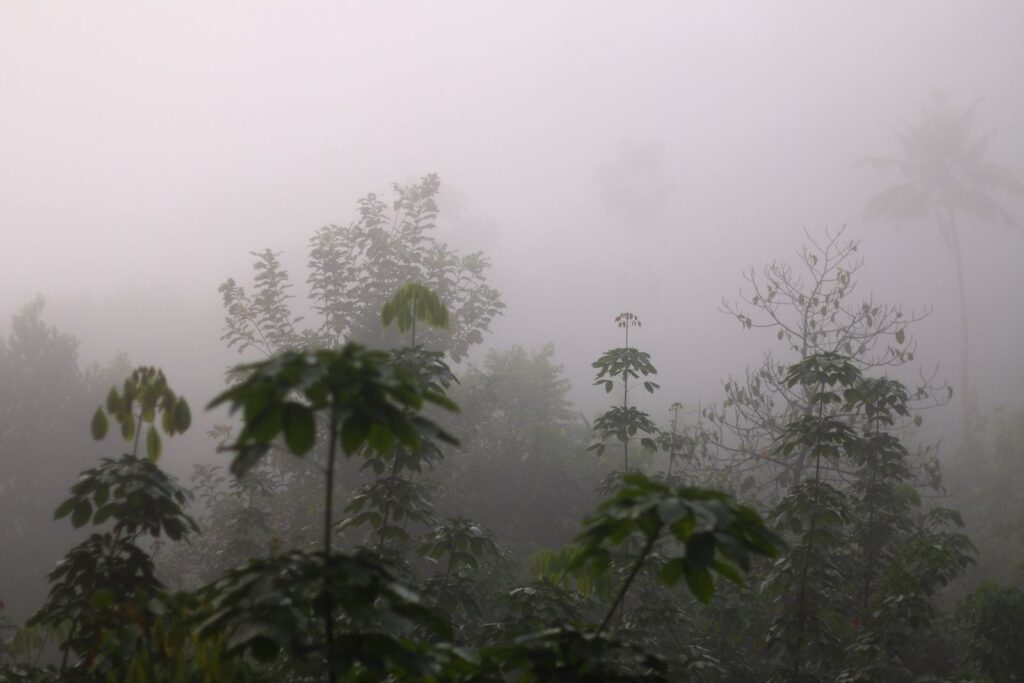
Because four completely different habitats sit within a day’s drive of each other. Wet-zone rainforest, dry-zone thorn scrub, highland cloud forest and coastal lagoons all fit inside an island you can cross in seven hours.
The Department of Wildlife Conservation administers a network of protected areas under the Fauna and Flora Protection Ordinance. Sri Lanka Tourism counts 26 national parks and wildlife sanctuaries among them. BirdLife International identifies 70 Important Bird Areas across the country, which is remarkable density for an island this size.
Resident and endemic birds are present all year. There’s no closed season, no frozen ground and no month when the forest goes silent. That’s why bird watching tours Sri Lanka operators can run trips in every month of the calendar, even when the weather is awkward.
The upshot is that a bird watching tours Sri Lanka trip is never out of season the way a European birding holiday is. You choose the month for the site you want, not for whether the birds are there at all.
Migrants add a second layer from October. Waders, terns, ducks and passerines arrive from northern Asia along the Central Asian flyway, and the coastal wetlands go from quiet to crowded within weeks.
The Endemic Question Nobody Answers Properly
Sri Lanka’s endemic bird count is quoted as 30, 33, 34 or 35 depending on who you read, and almost nobody explains why. The answer is taxonomy, not confusion. The Ceylon Bird Club national list recognises 33 endemics out of 463 recorded species.
The IOC world list splits a few more and lands at 34. BirdLife’s global taxonomy is more conservative and counts 30.
What matters for your trip is simple. Every serious list includes the same core birds, so build your target list from one source, stick to it, and don’t waste a morning arguing about a split.
We use the Ceylon Bird Club list because it’s the national record and it’s what Sri Lankan guides work from. It’s also free to download and genuinely useful on the road.
Endemic Birds Sri Lanka — The Species Everyone Comes For
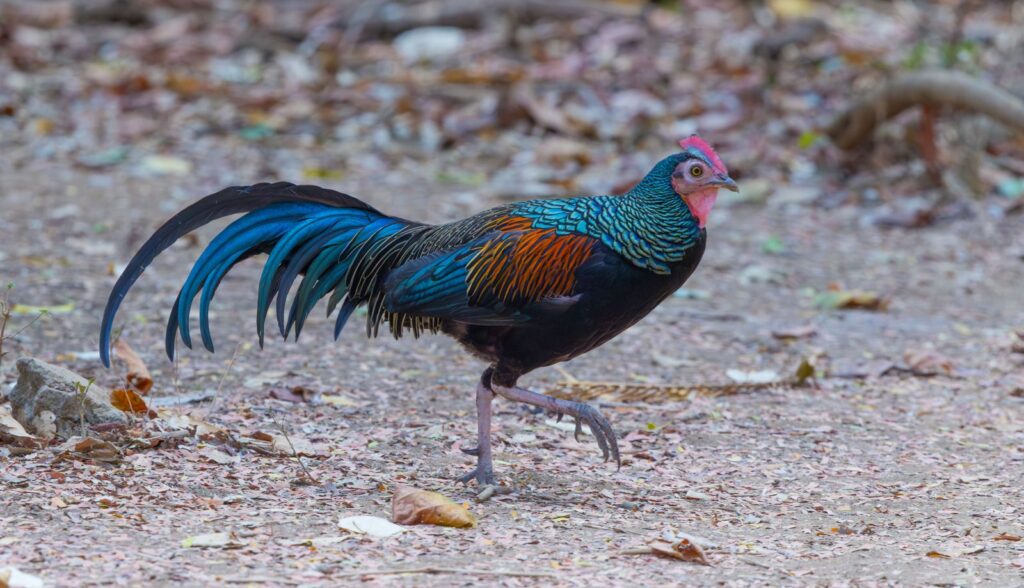
Most birders arrive with a target list of roughly 33 endemic birds Sri Lanka recognises, plus a handful of near-endemics shared with southern India. You won’t get all of them on a short trip, and any operator who promises you will is selling something. That’s worth remembering when you compare bird watching tours Sri Lanka offers.
What you can control is which sites you visit, because the endemics divide cleanly by habitat. Wet-zone forest specialists live in Sinharaja and Kitulgala. Highland specialists live on Horton Plains and around Nuwara Eliya. Dry-zone species live in the parks of the south-east.
Here’s the honest table we give guests before they book, with difficulty based on our own trips rather than on optimism. Every row is a genuine endemic birds Sri Lanka target.
| Species | Best site | Difficulty | Sessions needed |
|---|---|---|---|
| Sri Lanka Junglefowl | Sinharaja, Kitulgala | Easy | 1 |
| Orange-billed Babbler | Sinharaja flocks | Easy | 1 |
| Sri Lanka Hanging Parrot | Wet zone gardens | Easy | 1 |
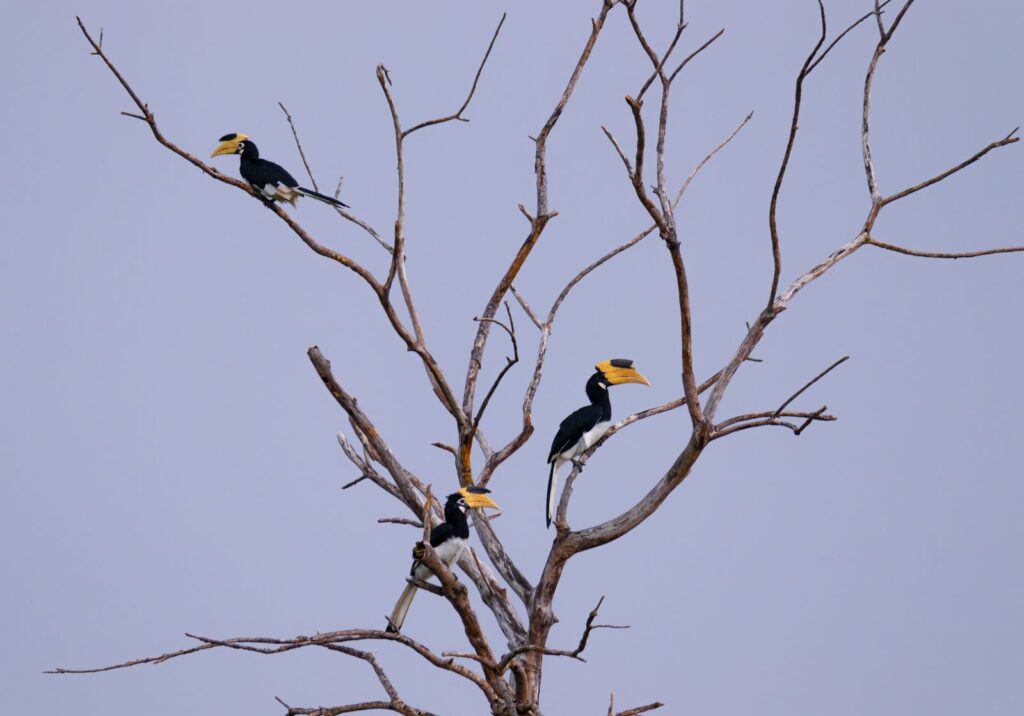
| Sri Lanka Grey Hornbill | Sinharaja, Kitulgala | Moderate | 1–2 |
| Sri Lanka Blue Magpie | Sinharaja, Horton Plains edge | Moderate | 1–2 |
| Ashy-headed Laughingthrush | Sinharaja flocks | Moderate | 2 |
| Sri Lanka Spurfowl | Sinharaja forest floor | Moderate | 2 |
| Green-billed Coucal | Sinharaja, Kitulgala | Moderate | 2 |
| Sri Lanka Whistling Thrush | Horton Plains dawn | Hard | 2–3 |
| Serendib Scops Owl | Kitulgala | Very hard | 2–3 |
In our experience a well-planned twelve-day trip finishes with 25 to 30 endemics. A seven-day trip usually lands between 18 and 24, and a three-day Sinharaja-only visit gives you 12 to 16. Those are real numbers from our own guest lists, and they’re what bird watching tours Sri Lanka guests should plan around.
If a bird watching tours Sri Lanka itinerary promises all 33 endemics in ten days, ask how many of their last five groups managed it.
The Serendib Scops Owl deserves a warning. It was only described to science in the early 2000s, it’s known from very few sites, and repeated playback is genuinely damaging. We don’t guarantee it, and we don’t chase it at the expense of everything else.
Sinharaja Bird Watching — The Rainforest That Does the Work
Sinharaja is the reason most people book bird watching tours Sri Lanka in the first place. It’s the country’s last viable area of primary tropical rainforest, a UNESCO World Heritage Site since 1988, and more than 60% of its trees are endemic. It’s also where most bird watching tours Sri Lanka itineraries begin.
The reserve covers roughly 8,864 hectares of the south-west lowland wet zone. UNESCO also notes that it holds over half of Sri Lanka’s endemic mammals and butterflies. That tells you how much biodiversity is packed into a forest you can cross in a day.
What makes Sinharaja bird watching different from forest birding anywhere else is the mixed-species feeding flock. A wave of a dozen or more species moves through the canopy together, and you get ten minutes of chaos followed by twenty of silence. Learn to read the wave and your list grows fast.
There are three practical entrances — Kudawa in the north-west, Pitadeniya in the south and Morningside in the east. Kudawa is the busiest and the easiest for a first visit. Morningside is quieter, steeper and better for photographers who want the flock to themselves.
What a Sinharaja Day Really Feels Like
You’ll be on the trail before seven, and the first two hours are cool and loud. The path climbs in steps through fern and bamboo, and the canopy closes overhead so the light stays flat all morning.
Expect five to seven hours of slow walking, with long stops. Bring leech socks, because the south-west wet zone is genuine rainforest and leeches are part of the deal between May and December. Anyone selling bird watching tours Sri Lanka as an easy forest stroll hasn’t walked Kudawa in the rain.
A licensed guide is compulsory inside the reserve, and permits are issued at the entrance. We book both in advance, because turning up without them is how a morning gets wasted at a desk. It’s the one part of a bird watching tours Sri Lanka booking we never leave to the client.
Guides here know which fig trees are fruiting, and that changes week to week. Ask yours what’s in fruit before you plan the morning, because it decides where a bird watching tours Sri Lanka group should stand at dawn.
Camera settings matter more here than most places. It’s dark under the canopy, so push ISO and accept grain, or you’ll come home with sharp photographs of blur.
Kumana Bird Sanctuary — The Mangrove Swamp That Fills With Birds
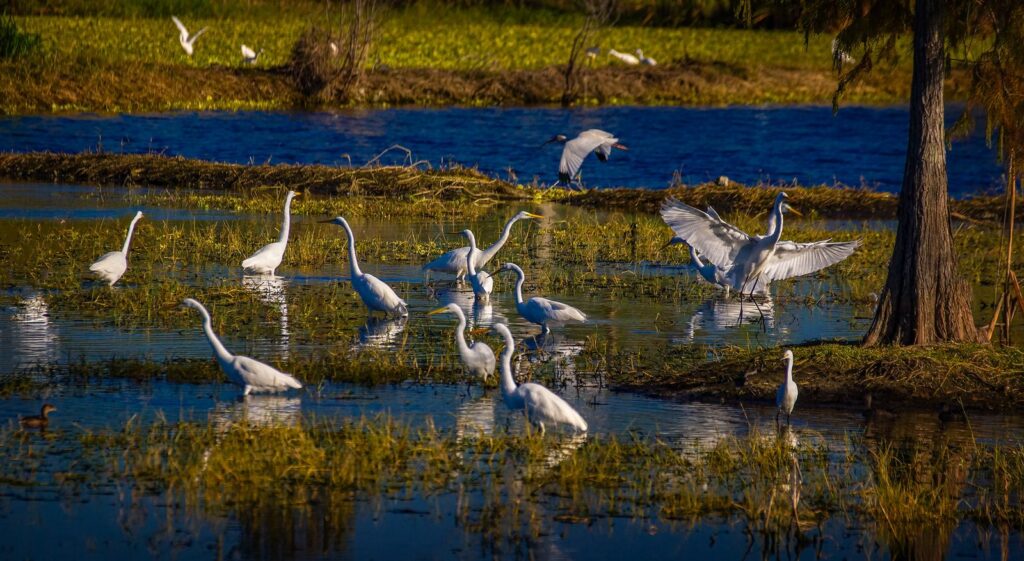
Kumana Bird Sanctuary sits inside Kumana National Park on the south-east coast, and it holds one of Asia’s great waterbird spectacles. It was declared a sanctuary in 1938, the park covers around 35,664 hectares, and 255 bird species have been recorded there. For bird watching tours Sri Lanka planning, it’s the best single waterbird site on the island.
The engine of the whole thing is Kumana villu, a mangrove swamp that floods with seawater and turns into a nesting colony. Around 20 lagoons and tanks support the surrounding birdlife, and the wetland cluster was designated a Ramsar site in 2010.
April to July is the breeding season, when thousands of birds nest in the villu. Pelicans, painted storks, spoonbills and ibis all gather, and the noise carries across the water before you see anything. That window is why Kumana bird sanctuary trips are worth planning a year ahead.
Outside the breeding season Kumana is quieter but not empty. Raptors, dry-zone endemics and elephants make it a strong safari stop even in the leaner months. That seasonality is why we set bird watching tours Sri Lanka departure dates around April rather than around price.
Getting There and Doing It Properly
Kumana is about 390 kilometres south-east of Colombo, near Arugam Bay and contiguous with Yala. That geography is useful, because you can pair it with a Yala safari tour and cover two very different habitats in one loop. Most bird watching tours Sri Lanka routes pair the two rather than running Kumana as a day trip.
You need a jeep and a tracker, both arranged through the park. Dawn entry matters most here, because the colony is active early and the light on the water is at its best before eight. We book both, since a bird watching tours Sri Lanka morning lost to jeep logistics is unrecoverable.
Our advice is to give Kumana two mornings rather than one. A single morning in a wetland this size leaves too much to luck, and the second visit is when the birds start making sense.
Beyond the Two Big Names — Kitulgala, Horton Plains and Bundala
A serious bird watching tours Sri Lanka itinerary never stops at Sinharaja and Kumana. Three other sites carry species the big two can’t reliably deliver, and each adds less than a day of driving.
Kitulgala — Lowland Forest Two Hours From Colombo
Kitulgala is lowland wet-zone forest on the Kelani river, and it’s the most accessible serious birding in the country. It’s also where the Serendib Scops Owl was found, and the forest holds green-billed coucal, Sri Lanka spurfowl and Layard’s parakeet.
Because it’s close to Colombo and the airport, Kitulgala works brilliantly as a first or last morning. We often build it into a hill country route rather than treat it as a separate stop. It’s where a lot of bird watching tours Sri Lanka itineraries start.
It’s also the rafting town, so non-birding partners have something to do while you’re in the forest. Our adventure tours Sri Lanka page covers the river side of that day.
Horton Plains — Highland Endemics in Half a Day
Horton Plains sits above 2,000 metres and delivers the highland endemics in one walk. Sri Lanka whistling thrush, yellow-eared bulbul and Sri Lanka white-eye are all realistic before nine in the morning.
The catch is the cold. Dawn on the plains is genuinely freezing, and the mist can close in by mid-morning. Come layered, and start at first light rather than after breakfast.
It pairs naturally with the tea country, so we usually route it alongside our Nuwara Eliya tea plantation tour rather than as a standalone day. That combination is the best-value highland leg in most bird watching tours Sri Lanka routes.
Bundala — Sri Lanka’s First Ramsar Wetland
Bundala became Sri Lanka’s first Ramsar site in 1991 and was upgraded to a national park in 1993. It holds 197 recorded bird species, and the greater flamingo is the headline act when the lagoons are right.
It’s a dry-zone park with brackish lagoons behind the dunes, which means easy driving and short walks. For anyone who struggles with steep forest trails, Bundala delivers a big list without the climbing.
It also sits next to Yala, so a southern loop can combine both without extra travel days. If you want the big-game side of that loop explained, our best safari in Sri Lanka guide compares the blocks properly.
Best Time for Birding Sri Lanka — The Month-by-Month Truth
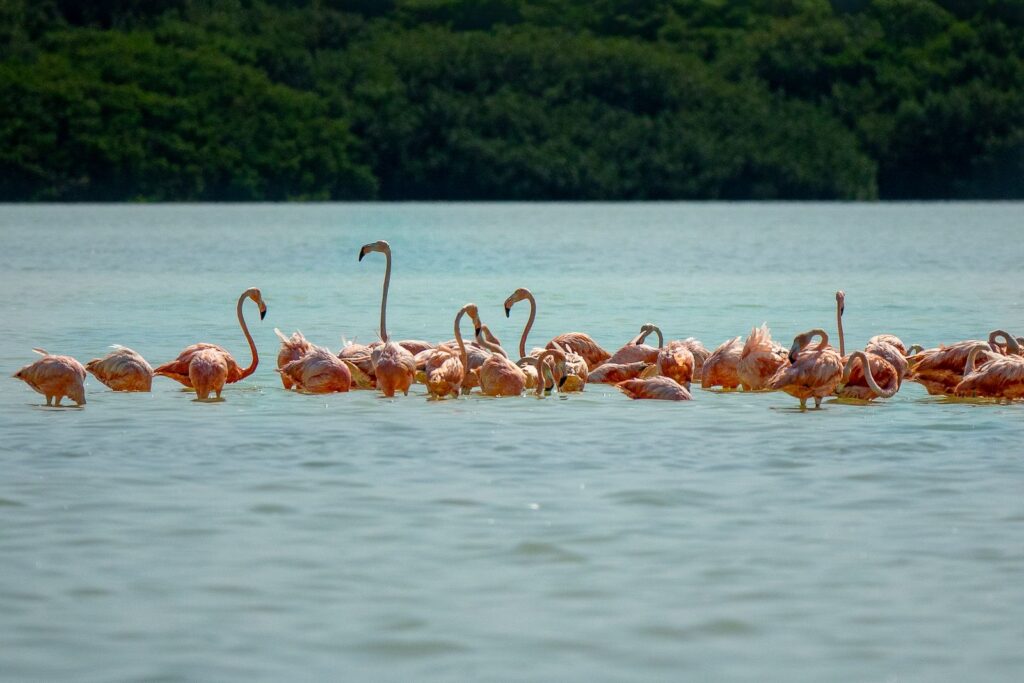
The short answer is November to April if you want residents and migrants together. The longer answer is that the best time for birding Sri Lanka depends entirely on which habitat you’re targeting, because two monsoons hit different halves of the island.
The south-west monsoon wets the west and south coasts from roughly May to September. The north-east monsoon wets the east, the north and much of the hill country from October to January. That’s the whole planning puzzle, and the Department of Meteorology publishes the rainfall data if you want to check it yourself.
So the wet-zone rainforest is driest from January to April, with a second decent window in August and September. The highlands are clearest from January to March. The south-east dry zone, including Kumana and Bundala, is at its best from May to September.
Migrants arrive from October and stay until April, with numbers peaking between November and March. If your trip is about endemic forest birds rather than waterfowl, that peak matters less than the rain. For most bird watching tours Sri Lanka bookings, January to March is the safest single answer.
| Month | Wet zone (Sinharaja, Kitulgala) | Highlands | South-east wetlands | Migrants |
|---|---|---|---|---|
| January–March | Best window | Best window | Wet, quiet | Peak |
| April | Good, warming up | Good | Drying, nesting starts | Tail end |
| May–July | Wettest, hard going | Misty, cool | Best window | Absent |
| August–September | Second window | Good | Drying out | Arriving late |
| October–December | Wet again | Wettest | Wet | Arriving, then peak |
October and November are the awkward months. Both monsoons overlap, the hill country is at its wettest, and yet it’s when a lot of operators push discounts. We’ll still run trips then, but we re-route rather than pretend the weather isn’t happening.
One more thing worth knowing: rain doesn’t stop birding, but it does stop photography. If you’re travelling for images, weight your bird watching tours Sri Lanka dates towards the dry windows in the table.
If your dates are fixed and land in that window, spend more time in the south-east and less in the highlands. That single change rescues most wet-season bird watching tours Sri Lanka itineraries.
A Guided Bird Tour with Naturalist — Why the Guide Decides the Trip
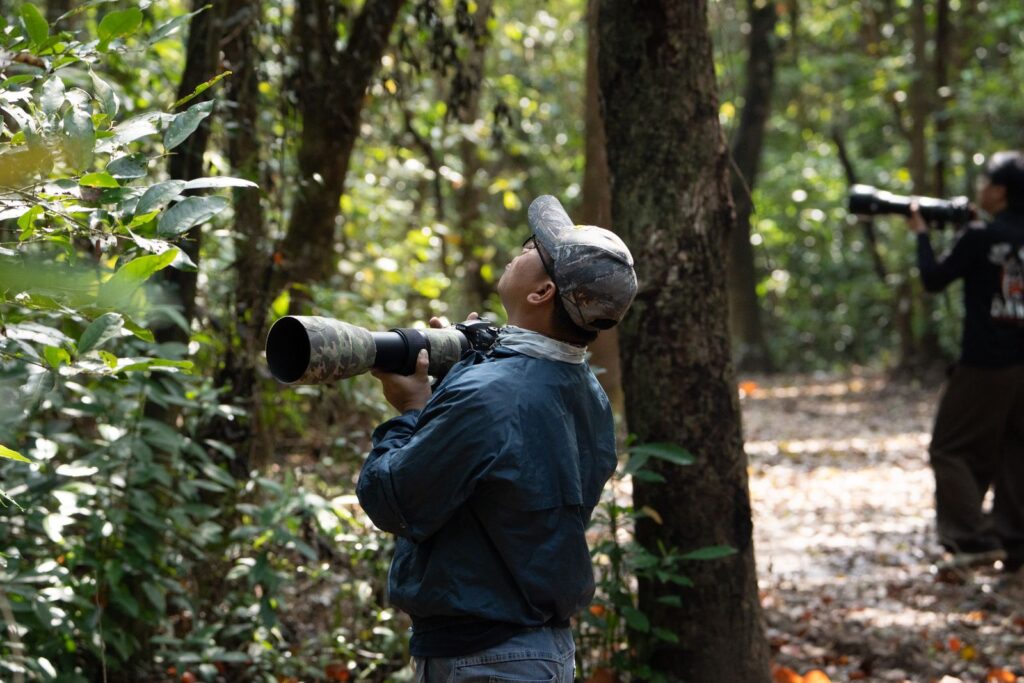
Two trips to the same forest with the same weather can differ by eighty species, and the variable is the person in front. A guided bird tour with naturalist standard means someone who can call, identify by sound and read a flock, not someone who drives and reads signs. That’s what a real bird watching tours Sri Lanka guide is paid for.
Sri Lanka makes this unusually important, because five babblers and three thrushes look alike, several endemics skulk in undergrowth, and half your list will come from calls. A driver-guide with good bird knowledge is fine for wetlands. A specialist is worth the money in rainforest.
The cost difference is real. A specialist naturalist adds roughly US$40 to US$70 per day for the group, which on a seven-day trip for two people is small against the total. It’s the best-value upgrade in bird watching tours Sri Lanka pricing.
Five Questions to Ask Before You Book
- How many years have you guided in Sinharaja specifically, not in Sri Lanka generally?
- Will the guide be with us all day, or only at the park gate?
- Do you use playback, and what limits do you set on it?
- What’s your plan if the flock doesn’t come through on day one?
- Can you send the last twelve months of guest species lists?
That last question separates operators from resellers. A real birding company keeps lists, because clients ask for them and because they’re how you learn a site.
If birds are one part of a bigger trip, our wildlife safari packages show how a birding leg fits a fuller island route.
For our own trips we assign a specialist whenever the itinerary includes Sinharaja, Kitulgala or Horton Plains. On a pure wetland route, a strong driver-guide is enough and we say so rather than upsell. That’s our honest position on guide tiering for bird watching tours Sri Lanka trips.
Bird Watching Tours Sri Lanka Itineraries — 3, 7 and 12 Days
Three lengths cover almost every request we get, and each one has a clear purpose rather than being a shorter version of the last.
| Length | Route | Endemics to expect | Best for |
|---|---|---|---|
| 3 days / 2 nights | Sinharaja only, two mornings plus one evening | 12–16 | A stop inside a longer holiday |
| 7 days / 6 nights | Sinharaja, Kitulgala, Horton Plains | 18–24 | Wet-zone and highland endemics |
| 12 days / 11 nights | Kitulgala, Sinharaja, Horton Plains, Bundala, Kumana | 25–30 | A complete island list |
The three-day trip is the one most people should consider first if birding is part of a family holiday. Two Sinharaja mornings plus an evening session gives you the rainforest experience without asking non-birders to spend a week in the wet zone. Two mornings is the minimum for a three-day bird watching tours Sri Lanka add-on.
Seven days is the sweet spot for birders. You get the rainforest, the lowland forest and the highlands, which between them cover most of the wet-zone and hill-country endemics. It’s the length most bird watching tours Sri Lanka enquiries end up choosing.
The twelve-day route adds the dry zone and the coastal wetlands. That’s where the raptors, waterbirds and dry-zone species come from, and it’s the only length that gives you a realistic shot at the full endemic list. It’s the bird watching tours Sri Lanka itinerary we recommend for anyone flying long-haul for the birds.
Route logic matters as much as length. We run west to east where possible. The wet zone is closest to the airport, and the dry zone is where you want to finish if you’re flying out of Colombo.
What Bird Watching Tours Sri Lanka Cost — 2026 Indicative Prices
Almost no operator in this niche publishes prices, which is exactly why we do. The figures below are land-only, per person sharing a double room, and they’re planning bands rather than fixed quotes. That’s deliberate, because bird watching tours Sri Lanka quotes are close to impossible to compare across operators.
We checked them in October 2026 against published rates for comparable private birding itineraries at the same hotel class. They cover private transport, accommodation, breakfast, a driver-guide and the guiding listed in the inclusions below. Park entry fees, jeep hire and specialist naturalist time are itemised at cost on top. A bird watching tours Sri Lanka quote inside these bands is worth reading properly.
| Duration | Budget | Comfort | Premium |
|---|---|---|---|
| 3 days / 2 nights | US$345–405 | US$435–525 | US$720–960 |
| 7 days / 6 nights | US$805–945 | US$1,015–1,225 | US$1,680–2,240 |
| 12 days / 11 nights | US$1,380–1,620 | US$1,740–2,100 | US$2,880–3,840 |
| Per person, per day | US$115–135 | US$145–175 | US$240–320 |
Read the table by the day rather than the total, because that’s how it scales. Bird watching tours Sri Lanka pricing sits above a standard cultural tour at the same hotel class, and it should. Early starts, low nightly occupancy and specialist guiding all cost money.
A private birding quote at US$70 per day is not a bargain. Something in that number isn’t real, usually the guide’s expertise or the park fees.
Four things move the price fastest: hotel class, how many days need a specialist naturalist, park and jeep fees, and group size. A single traveller pays roughly 30 to 45 per cent more, because most rooms are doubles.
That matters for bird watching tours Sri Lanka quotes in particular, because solo birders are common in this niche. If you’re travelling alone, ask for the single supplement in writing before you compare anything. It’s the most common nasty surprise in a bird watching tours Sri Lanka quote.
What’s Included and What Isn’t
Here’s the plain list, and it applies to every itinerary we sell whatever the length. If an operator won’t give you one before you pay, that’s your answer.
Included in Every Package
- Private air-conditioned vehicle with a driver-guide for the whole itinerary.
- Accommodation with breakfast in the class you booked.
- Specialist naturalist on every rainforest and highland day.
- Park and reserve permits we book on your behalf, charged at face value.
- Drinking water in the vehicle and a first-aid kit with the guide.
- A printed site-by-site target list before you travel.
- 24-hour local support number for the duration of the trip.
Not Included
- International flights, visas and travel insurance.
- National park entrance fees, which vary by park and category.
- Jeep hire and tracker fees at Kumana, Bundala and Yala.
- Lunches and dinners outside the hotel meal plan.
- Tips for drivers, guides, trackers and jeep crews.
- Leech socks and personal optics, which we’ll advise on but don’t supply.
- Anything a monsoon cancels, which we re-plan rather than refund in cash.
We’d rather you budget for the extras than discover them at a park gate. Bird watching tours Sri Lanka pricing goes wrong when a low headline hides the interesting parts, and that’s the discipline we apply to every quote we send.
Permits, Ethics and the Rules That Actually Get People Fined
Sri Lanka’s protected areas are administered by the Department of Wildlife Conservation under the Fauna and Flora Protection Ordinance, and the rules are enforced. Entry without a permit, off-trail walking and drone flying will all get you stopped. Any bird watching tours Sri Lanka operator who shrugs at that is telling you something.
Sinharaja is stricter than most. A licensed guide is compulsory, groups are limited, and the reserve closes at night. Kitulgala forest and Horton Plains have their own permit desks, and we handle all of them in advance.
Ethics matter more than rules here, because most of the damage is legal. Playback is the big one. Twenty minutes of owl call-back from six groups in one evening is a real problem, and no responsible guide will do it.
Our own limits are simple. Playback for owls only after dark, never during nesting, and never twice at the same bird. No nest photography with a flash. No clearing vegetation for a sightline.
That last point is why bird watching tours Sri Lanka operators who use local guides tend to be better behaved. A guide who lives beside the forest has a reason to protect it that a fly-in contractor doesn’t. It’s also why we won’t run a bird watching tours Sri Lanka departure with a guide we haven’t worked with.
Packing for Bird Watching Tours Sri Lanka
You need less than you think, but the few things you do need are non-negotiable. Binoculars are the only item we’d tell you to buy rather than borrow, because a bad pair ruins a good trip. The rest of bird watching tours Sri Lanka kit is comfort, not capability.
| Item | What to bring | Why |
|---|---|---|
| Binoculars | 8×42 or 10×42 | The rainforest is dark, so bright glass beats magnification |
| Camera lens | 300mm minimum, 400mm+ preferred | Skulking species stay well back in the undergrowth |
| Footwear | Grippy trail shoes | Sinharaja’s steps are wet for most of the year |
| Leech socks | Two pairs | Cheap insurance in the wet zone |
| Clothing | Neutral colours, quick-dry | Bright colours and rustle both cost you sightings |
| Torch | Headlamp with red mode | Red light doesn’t wreck your night vision |
| Layers | Fleece for Horton Plains | Dawn above 2,000 metres is genuinely cold |
Download the field guide app and eBird on your phone before you fly, and carry a paper notebook as backup. Signal in Sinharaja is unreliable and battery dies faster than you expect in the cold.
Leave the drone at home. It’s illegal in protected areas and it clears every bird within earshot. Get the optics right and the rest of bird watching tours Sri Lanka packing is mostly comfort.
Frequently Asked Questions
How many endemic birds are there in Sri Lanka?
It depends on the taxonomy you follow. The Ceylon Bird Club’s national list recognises 33 endemics, the IOC world list counts 34, and BirdLife’s global taxonomy counts 30. Pick one list, build your targets from it, and don’t let the difference distract you in the field. The endemic birds Sri Lanka protects are the same core set either way.
What is the best time for birding Sri Lanka?
November to April if you want residents and migrants together, because migrants arrive from October and peak between November and March. For wet-zone endemics the driest forest window is January to April. For Kumana and Bundala, May to September is stronger.
Is Sinharaja bird watching suitable for beginners?
Yes, provided you take the flat lower trails and accept a slower pace. The mixed-species flocks are actually ideal for beginners, because a dozen species arrive at eye level together and a guide can point them out one by one. Steep sections can be avoided. It’s the gentlest introduction to bird watching tours Sri Lanka that we know of.
How many days do I need for bird watching tours Sri Lanka?
Seven days covers the wet-zone and highland endemics and suits most birders. Three days of Sinharaja works as part of a longer holiday. Twelve days is what you need to add the dry zone and make a realistic attempt at the full endemic list.
What does a guided bird tour with naturalist cost?
A specialist naturalist adds roughly US$40 to US$70 per day for the group, on top of the base itinerary price. On our 2026 indicative bands, a seven-day comfort trip with a specialist runs US$1,015 to US$1,225 per person sharing.
Is Kumana bird sanctuary open all year?
Yes, but the experience changes completely. April to July is the nesting season, when the villu fills with pelicans, storks and ibis. Outside that window the park is quieter and better for raptors, elephants and dry-zone species than for waterbird spectacle.
What should I pack for bird watching tours Sri Lanka?
8×42 binoculars, a 300mm lens or longer, grippy trail shoes, two pairs of leech socks, neutral quick-dry clothing, a red-mode headlamp and a fleece for the highlands. Leave the drone at home, because it’s illegal in protected areas.
Can I combine birding with a family holiday?
Absolutely, and it’s how most of our bird watching tours Sri Lanka bookings actually work. We build two Sinharaja mornings into a broader family route, then give non-birders a beach or tea country day while the birders take a specialist into the forest. See our family tour packages for the shape of that trip.
Plan Your Bird Watching Tours Sri Lanka With Us
We’re a Sri Lankan operator and we build private trips around your target list rather than a fixed departure date. Bird watching tours Sri Lanka itineraries from us start from around US$345 per person for three days on a budget basis, and every quote itemises the guiding and park fees. That’s what good bird watching tours Sri Lanka planning should look like.
Tell us your dates, the endemics you most want and how much walking you’re happy with. You’ll get a route with real site names, honest season advice and a price that doesn’t change at the park gate.
Request your custom birding itinerary →
Prefer to design it yourself first? Start with our custom Sri Lanka tour itinerary service, then we’ll refine it together.
About the author: Dhanushika Hewa Paththinige is a senior travel consultant at Amazing Escapes Tours. She has spent eight years routing travellers through Sri Lanka’s wet zone, hill country and wildlife parks, and plans private birding itineraries with specialist naturalists. She has walked the Kudawa and Morningside trails in every month of the year.