Table of Contents
Galle Fort is Sri Lanka’s living colonial masterpiece. It is a 17th-century Dutch city on the Southwest coast that still works, shops, prays, and breathes inside its mighty ramparts. A well-planned Galle Fort walking tour Sri Lanka brings that four-hundred-year story to life, and there is no better way to understand it than on foot with a local guide.
The walls curve along the Indian Ocean, and the lighthouse watches over swaying palms. Within a few winding lanes you find churches, a mosque, boutique galleries, and some of the best food on the island. It is easily the most atmospheric stop on any South Coast route, and the perfect anchor for a Galle Fort walking tour Sri Lanka.
I have guided travelers through this fort for more than eight years, and I never tire of it. Every corner hides a story — a rampart built of coral, a church paved with old gravestones, and a mosque that looks like a church. Then there is a street called Lighthouse Street with no lighthouse at all. Those details are exactly what a great Galle Fort walking tour Sri Lanka reveals.
This guide covers everything you need to plan your Galle Fort walking tour Sri Lanka — history, the walking route, prices, and how to get here from Colombo. By the end, you will know exactly what a superb Galle Fort walking tour Sri Lanka should include — and what to avoid.
Why a Galle Fort Walking Tour Is a Must in Sri Lanka
Galle Fort is the best-preserved colonial fortified city in South and South-East Asia. That fact alone earns it a place on the UNESCO World Heritage List, but its real magic is that it is still a working town. You will find a courtroom, schools, a mosque, churches, and hundreds of families living inside the walls. Many of the historical sights are free to explore.
A guided Galle Fort walking tour Sri Lanka is the single best way to unlock the town. The fort is compact, and the architecture is layered in a way that is genuinely confusing without context. A local guide explains why the ramparts are grey and coral-studded, who carved that coat of arms over the gate, and why the streets are laid out as they are. The difference between walking alone and walking with a guide is the difference between seeing buildings and understanding a city.
The fort is also remarkably beautiful. Morning light spills over the sea wall, evening brings a golden sunset above the lighthouse, and the lanes are quiet before the day-trippers arrive. Whatever your pace, a Galle Fort walking tour Sri Lanka fits perfectly into a wider island holiday. It combines naturally with a Bentota beach resort tour or a Yala safari package along the same coast.
Galle Fort History — From Portuguese to Dutch to British
To understand Galle, you first need its story. The Portuguese arrived in 1588 and built a small fort on this rocky promontory, using it to control the spice trade. In 1640 the Dutch captured the town, and from 1649 onward they expanded it into the great fortress you see today. The Dutch East India Company gave Galle its grid of streets, its churches, and its immense ramparts.
Those walls stretch over three kilometres and still hold a hundred cannon. When the British took over in 1796, they added their own flourishes — a lighthouse, a clock tower, and a coat of arms above the Old Gate. Yet the town was already in decline. Larger ships and better ports made Galle obsolete, and the fort drifted into peaceful decay.
That neglect accidentally preserved it, and today its homes and warehouses host boutique hotels, galleries, and cafes. The 2004 tsunami was the fort’s greatest test. While the new town outside was devastated, the massive Dutch walls held, protecting everyone inside. That resilience is central to every Galle Fort walking tour Sri Lanka worth taking.
The Walking Route: Galle Fort Ramparts Walk, Stop by Stop
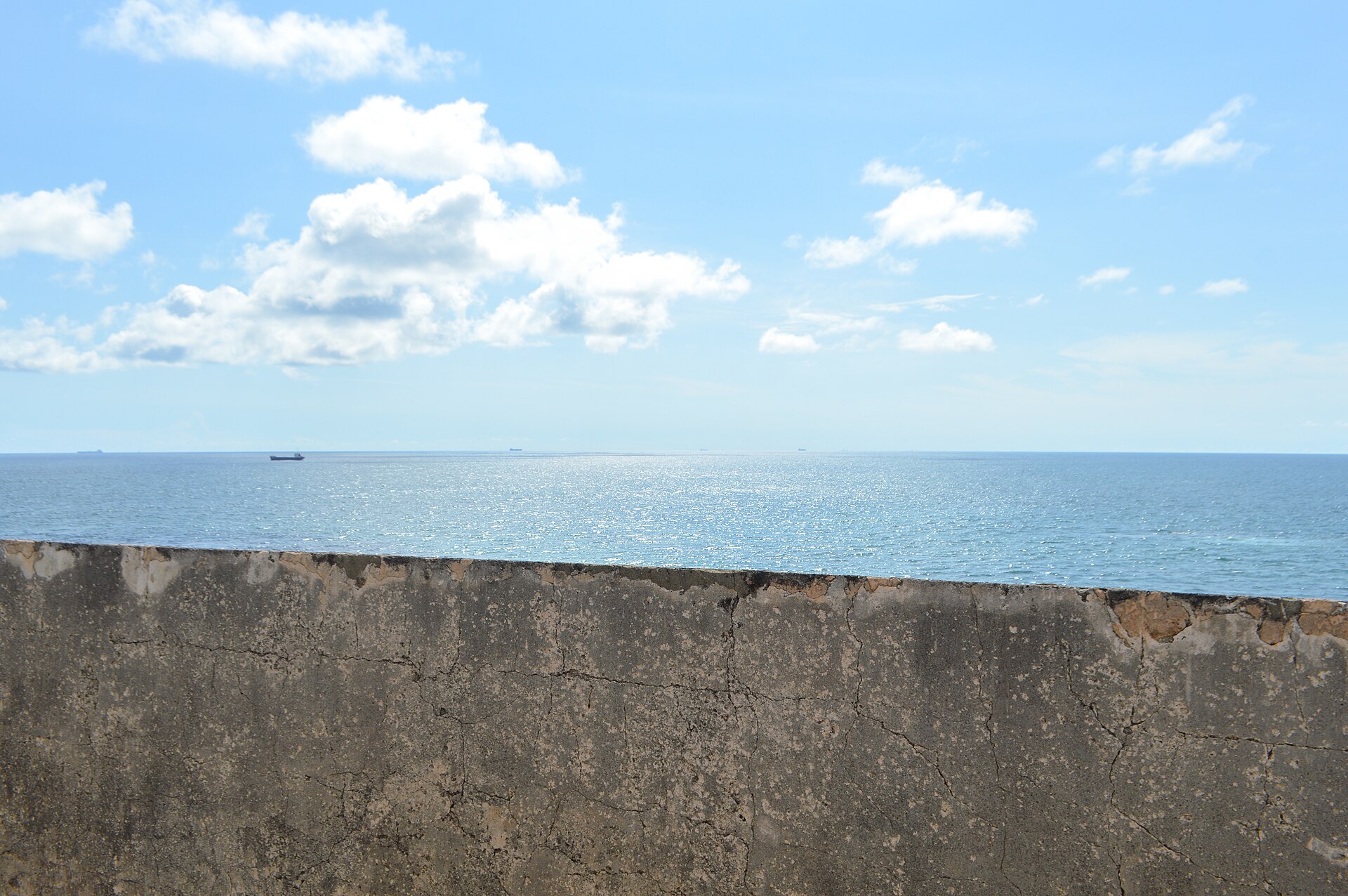
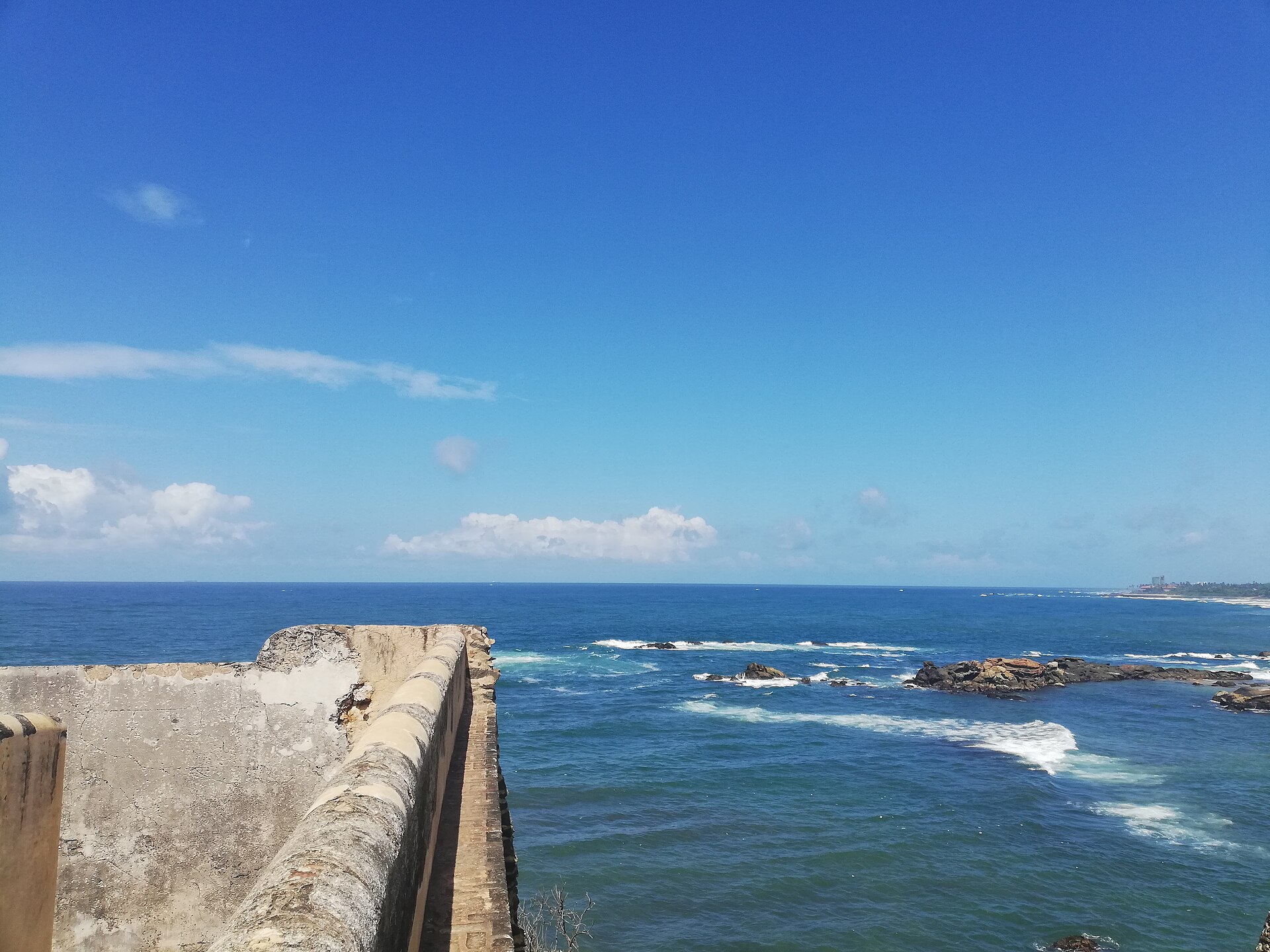
The fort is best covered as a circular Galle Fort ramparts walk, and I trace it for every guest. The route is about 3.5 kilometres and takes roughly three to four hours at a comfortable pace with photo stops. Start at the Clock Tower, which was built in 1883 and still keeps perfect time.
| Stop | Landmark | Why It Matters |
|---|---|---|
| 1 | Main Gate & Old Gate | British coat of arms above; the letters VOC inside date to 1669 |
| 2 | Sun Bastion | The best views across the harbour |
| 3 | Dutch Reformed Church | Floor paved with 18th-century gravestones |
| 4 | All Saints’ Church | A Gothic Anglican church that looks like an English village |
| 5 | Maritime Museum | A whale skeleton and a fascinating tsunami display |
| 6 | Dutch Hospital Precinct | Colonial colonnades now home to cafes and shops |
| 7 | Galle Lighthouse | The icon at Point Utrecht Bastion |
| 8 | Flag Rock Bastion | The best sunset spot and the famous cliff jumpers |
| 9 | Meeran Jumma Mosque & Pedlar Street | The white mosque and the shopping heart of the fort |
| 10 | Moon Bastion | Views over the international cricket stadium |
The Galle Fort ramparts walk is gentle and largely flat, so it suits all fitness levels. The surface is a mix of cobblestones and grass, and the real highlight is the stretch along the sea wall. That circular path is only half the value, though — a Galle Fort walking tour Sri Lanka turns it into a story you will retell for years. Carry water, wear comfortable shoes, and bring a hat.
One of the joys of a guided Galle Fort ramparts walk is timing. My team knows when the fort is quietest, which bastion catches the best light at which hour, and where the local vendors sell the freshest king coconut. These small touches turn a standard sightseeing loop into a memorable one.
Galle Lighthouse — The Icon at Point Utrecht Bastion
The white Galle Lighthouse is the image that draws most visitors, and it does not disappoint. It stands at Point Utrecht Bastion, on the southeast corner of the fort, and it is one of the best-preserved lighthouses on the whole South coast. Built by the British in 1938, it is still in use today, shining out over the busy shipping lane the city once controlled.
The best photographs come from slightly back along the ramparts, where the palm trees frame the white tower against the deep blue sky. The classic angle is near the hospital, looking down the sea wall. That is the shot you have seen a hundred times, and capturing it yourself is one of the small joys of any Galle Fort walking tour Sri Lanka.
The base of the lighthouse also offers a cooling dip at Lighthouse Beach, a small cove where locals swim away from the day-trippers. We build that stop into most Galle Fort walking tour Sri Lanka packages. If you are here in the heat of the afternoon, a quick splash is a welcome break before you continue the loop.
Dutch Reformed Church Galle and the Fort’s Faith Buildings
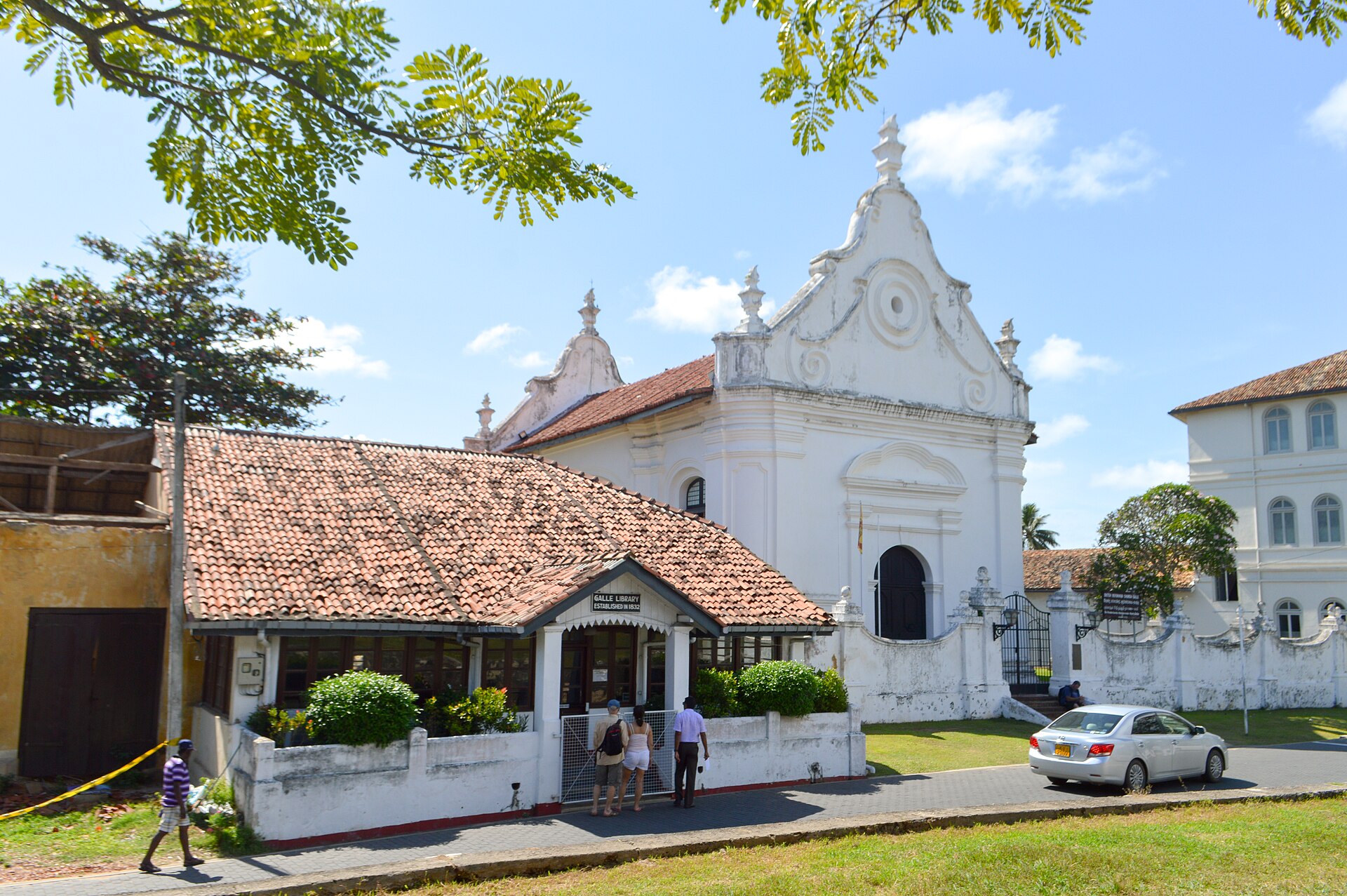
The Dutch Reformed Church Galle, known as the Groote Kerk, is at the true heart of the fort. Built between 1752 and 1755, it is one of the oldest Protestant churches in Sri Lanka. Step inside and the floor tells the story — it is paved with the gravestones of Dutch settlers and their families. It is equal parts moving and remarkable.
Galle is unusual because people of several faiths live side by side within the walls. Just down the street you will see the gothic spire of All Saints’ Anglican Church. And around the corner, the Meeran Jumma Mosque looks, at first glance, like a Portuguese church. That cultural blending is the city’s soul.
A Galle Fort walking tour Sri Lanka weaves these faith buildings together so the stories connect. Guests are always surprised that a mosque, two churches, and a Buddhist temple all sit within a few hundred metres. That coexistence is rare, and it is part of what makes Galle so special.
Things to Do in Galle Sri Lanka Beyond the Ramparts
The list of things to do in Galle Sri Lanka stretches far beyond the famous walls. Pedlar Street, the long, narrow main lane of the fort, is the shopping heart of town. You will find retro poster shops, hand-woven fabrics, gem boutiques, and some excellent coffee in restored Dutch homes.
Food lovers will find a lot to love here too. From a cheap plate of rice and curry at a local eatery to a smart seafood dinner on a verandah, the fort has it all. Try kottu, hoppers, or fresh mangrove crab while you are here. For a fuller list of the island’s experiences, see our things to do in Sri Lanka guide.
Other things to do in Galle Sri Lanka include the lively Sunday fish market, the Old Dutch Hospital precinct, and the cliff jumpers at Flag Rock. They also make excellent add-ons to a Galle Fort walking tour Sri Lanka. If you want art and craft, the fort has several small galleries and a rising batik scene.
Your Galle Fort Walking Tour Sri Lanka — What’s Included & Prices
Let’s talk numbers, because we believe in honest pricing. The cost of a Galle Fort walking tour Sri Lanka depends on whether it is a guided walk, a full day trip from Colombo, or a multi-day South Coast package. That means a Galle Fort walking tour Sri Lanka fits every budget. Here are our typical 2026 rates, so you know what a fair deal looks like:
| Package | Typical Rate (2026) | What’s Included |
|---|---|---|
| Guided Fort walking tour (private, up to 4 pax) | from $70 per group | 2.5 hours, local historical guide, route & timing advice |
| Galle day tour from Colombo (up to 3 pax) | from $85 per vehicle | 9 hours, chauffeur-guide, fort walk + tea factory or beach stop |
| Galle day tour from Colombo (up to 6 pax) | from $120 per vehicle | Same as above in a comfortable van |
| South Coast day tour (Galle + Bentota + Hikkaduwa) | from $140 per vehicle | Fort walk, turtle hatchery, stilt fishermen, beach time |
| 2-day South Coast Explorer (per person) | from $190 | Fort, hotel, transfers, guide, breakfast |
Every Galle Fort walking tour Sri Lanka we run includes a private vehicle with a chauffeur-guide, hotel pickup and drop-off, and all entrance fees. There are no hidden extras, and 24/7 support from our team in Sri Lanka. Since most historical sites in the fort are free, your budget mostly goes on transport, a good guide, and the experiences you add.
Compared with booking a walk and transfers separately, a complete Galle Fort walking tour Sri Lanka from a local operator usually saves both money and stress. You skip the inflated tuk-tuk prices at the gate and the guesswork of which guide is genuinely local. If you are on a tighter budget, our Sri Lanka budget travel guide covers daily costs in detail.
Galle Fort Day Trip from Colombo — How to Get There
Most visitors reach Galle as a Galle Fort day trip from Colombo, and the journey is half the fun. You have three good options, and the right one depends on whether you prefer scenery or speed. The coastal train hugs the ocean the whole way and is the most romantic choice.
The train from Colombo Fort to Galle runs several times a day and takes roughly two hours. The best views are on the right-hand side as you face south, where the line swings close to the water. Check the official Sri Lanka Railways online timetable for live times and fares. The full transport picture is in our getting around Sri Lanka guide.
A private car is faster and lets you stop along the way. The recently opened expressway cuts the drive from Colombo to Galle to about two hours, and from the airport to about two and a half. The route also passes the Madu River mangroves and the Kosgoda turtle hatchery — which is why our Galle Fort day trip from Colombo is so popular.
Whichever you choose, plan to arrive early. The fort is at its best, and its streets at their quietest, before 10:00 AM. A chauffeur-guide can time your arrival around the crowds and the best light.
Sample Itineraries — Half-Day, Full-Day & Two-Day
Galle rewards both a quick stop and a slow stay. Whatever you choose, a Galle Fort walking tour Sri Lanka makes the time genuinely worthwhile. Here is how we structure our three most popular options:
| Duration | Best For | Sample Flow |
|---|---|---|
| Half-day | Cruise stopovers & short shore excursions | Clock Tower → ramparts walk → lighthouse → Dutch church → Pedlar Street shopping |
| Full-day from Colombo | First-time visitors | Morning drive → fort walk → lunch → Madu River or turtle hatchery → return |
| Two-day South Coast | Slow travelers | Day 1: fort + sunset ramparts. Day 2: Unawatuna or Bentota beach, optional tea or turtle stop |
For a two-day base, the fort is the ideal spot to sleep. The evening is when the ramparts come alive — locals dive off the rocks, couples find their spot on the wall, and the sky turns a deep, unforgettable red. That slower pace is a wonderful fit for a relaxed Galle Fort walking tour Sri Lanka. Stay inside the walls and you get the town almost to yourself after the day-trippers leave.
A longer South Coast stay combines Galle naturally with a Mirissa whale watching morning, a Nuwara Eliya tea tour inland, or the Kandy tour on the way north. See how it all fits into your wider route in our 7-day Sri Lanka itinerary.
Best Time to Visit Galle Fort
Galle is a year-round destination, but the dry season from December to April offers the best conditions. You get minimal rain, warm sunny days, and the clearest sky for sunset on the ramparts. For official visitor guidance, see the Sri Lanka Tourism website, and time your Galle Fort walking tour Sri Lanka for the driest skies. The city is popular, so book your Galle Fort walking tour Sri Lanka and your hotel well ahead in these months.
The monsoon on the Southwest coast arrives roughly from May to September, bringing afternoon showers. That is actually a fine time to visit, because the fort’s lanes and museums provide shelter. The rain also makes the old stone glow in a way the dry season never does.
For a month-by-month breakdown across the island, see our best time to visit Sri Lanka guide. The short version is that Galle never really closes — you just pack a light rain shell and time the horizon for the hour when the clouds break.
Frequently Asked Questions
How long does a Galle Fort walking tour take?
A guided Galle Fort walking tour Sri Lanka typically lasts two to three hours. If you add an unhurried lunch and shopping on Pedlar Street, expect a half-day. Walking the full ramparts loop by yourself takes about three hours.
Is a guide worth it in Galle Fort?
For the history, yes. The fort’s architecture and streets make little sense without context, and a good local guide turns a sightseeing loop into a real story. A Galle Fort walking tour Sri Lanka with us includes a guide from the area who knows the landmarks and the tales behind them.
How much does a Galle Fort walking tour cost?
Our 2026 Galle Fort walking tour Sri Lanka rates start at $70 per group for a private guided walk and $85 per vehicle for a full day tour from Colombo. Entrance to the fort and most historical sites is free, so your cost is mostly for the guide and transport.
How do I get from Colombo to Galle?
By train in about two hours along the scenic coastal line, or by private car on the expressway in roughly the same time. Trains are charming; a car lets you stop at the Madu River and turtle hatchery en route. We can build either into your Galle Fort day trip from Colombo.
Is Galle Fort worth visiting?
Absolutely — it is consistently the favorite stop for our guests. The mix of grand colonial fortifications, ocean views, a living town, and excellent food is unique in Sri Lanka. A Galle Fort walking tour Sri Lanka captures all of it in one unhurried day.
How much time do I need in Galle?
One day is enough to see the fort properly. If you want to use Galle as a base to explore nearby beaches such as Unawatuna or Bentota, stay for one or two nights. Our two-day South Coast package builds that in for you.
When is the best time to visit Galle Fort?
December to April is the dry season and the most reliable time for a Galle Fort walking tour Sri Lanka in the sun. The town is lovely year-round though, with the monsoon months quieter and the stone glowing after the rain.
Is Galle Fort walkable?
Yes, and that is exactly how it should be explored. The fort is compact and largely flat, and a Galle Fort ramparts walk is gentle enough for most fitness levels. Wear comfortable shoes, carry water, and bring a hat.
Is Galle safe for travelers?
Galle is one of the safest and friendliest towns in Sri Lanka, and the local community is used to visitors. The main things to watch are the uneven cobblestones and the sea, especially at Flag Rock. Our Sri Lanka safety guide has more detail.
What should I pack for Galle?
Light, breathable clothing for the day, a hat, sunscreen, and comfortable walking shoes. Evenings near the sea can be breezy but rarely cold. Your full packing list is in our what to pack for Sri Lanka guide.
Book Your Galle Fort Walking Tour Sri Lanka with Amazing Escapes
Galle rewards visitors who plan well. That means arriving before the crowds, timing the ramparts walk to the light, and having a local guide who connects the story. Add a team that knows the fort’s quiet corners, and that is exactly what a Galle Fort walking tour Sri Lanka with us delivers. Every Galle Fort walking tour Sri Lanka we build includes a private chauffeur-guide, hotel pickup, and 24/7 on-the-ground support.
We have been guiding travelers through the South Coast since 2018, and our founder has walked every lane in this guide. The advice you get is tested, honest, and local. Older visitors, families, and solo travelers all find a pace that suits them here.
Tell us your dates, your group size, and how many days you have for your Galle Fort walking tour Sri Lanka. Then get a free quote and let us build your perfect Galle Fort walking tour Sri Lanka. The sea breeze is waiting on the ramparts.
About the author: By a Sri Lanka travel expert with over 8 years of experience designing custom tours for international visitors. As the founder of Amazing Escapes Tours, she has personally guided hundreds of travelers — from solo backpackers to luxury honeymooners — across every corner of Sri Lanka. Her expertise covers the heritage coast, tea trails, wildlife safaris, and responsible travel.