Table of Contents
Sri Lanka throws every climate at you in a single week: 30°C beach heat, cool tea-country evenings, sudden tropical downpours, and sacred temples where shoulders and knees must be covered. That contrast is exactly why packing is the most common worry our guests bring to us. After eight years of planning trips here, I can tell you the secret. The trick is not packing more — it’s knowing what to pack for Sri Lanka so it covers every situation without weighing you down.
As a local operator I see the mistakes travelers make at the airport every day: heavy winter jackets, five pairs of jeans, shoes they never wear. Meanwhile the smartest travelers arrive with one carry-on and a sarong. This guide is the complete 2026 answer to what to pack for Sri Lanka, built from what actually works on our tours — not from a generic travel blog list.
Below you will find a season-by-season breakdown, temple dress codes, monsoon gear, electronics advice, a full essentials checklist, and an honest list of things to leave at home. Bookmark this page, pack from the checklists, and you will be ready for beaches, mountains, safaris and city streets. Let’s build your what to pack for Sri Lanka plan together.
What to Pack for Sri Lanka — The Short Answer
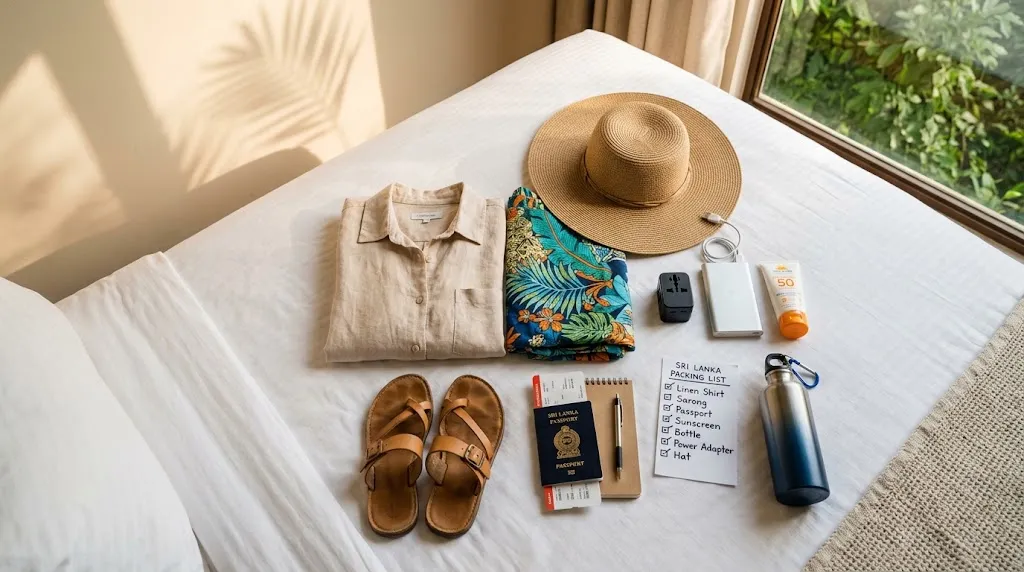
If you only remember one section, remember this: what to pack for Sri Lanka comes down to lightweight, modest, quick-dry layers plus one versatile sarong. The island is hot and humid on the coast, cool and misty in the hills, and conservative around temples — one bag of well-chosen items handles all three. The golden rule of what to pack for Sri Lanka is simple. If you would not wear it in a hot summer at home, you probably do not need it here.
Pack for two weeks with a carry-on and a small daypack. Bring breathable tops, two or three long bottoms for temples and evenings, swimwear, a light jacket for hill-country nights, a rain layer, sturdy sandals, and your electronics. Everything else — toiletries, flip-flops, hats, even sarongs — is cheap and available in every town. Remember that what to pack for Sri Lanka for two weeks fits comfortably in one carry-on bag.
Season matters more than you think. The southwest coast shines from December to April while the east coast is at its best from April to September, and the hills stay cool all year. For the full picture, see our best time to visit Sri Lanka guide. Choosing the right season can halve your what to pack for Sri Lanka problems before you leave.
One more rule for what to pack for Sri Lanka: leave the heavy suitcase at home. Sri Lanka’s domestic travel is bus, train and tuk-tuk based, and a soft duffel or backpack is infinitely easier than a wheeled case on temple steps and dirt tracks. The lighter you travel, the more you enjoy the journey.
Sri Lanka Packing List Women — Cool, Modest & Comfortable
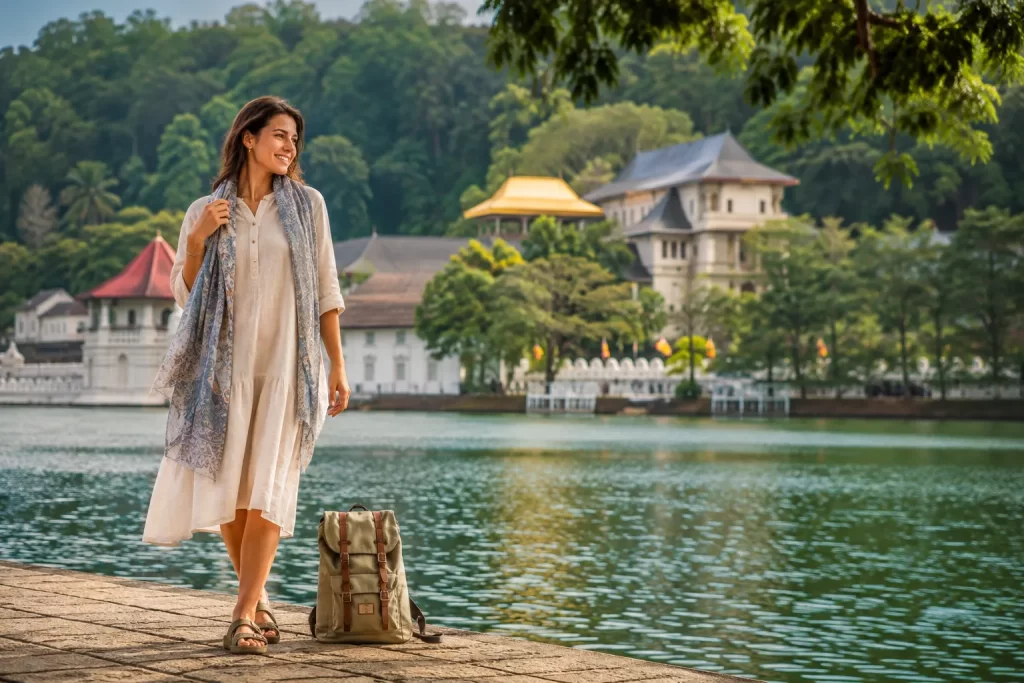
A Sri Lanka packing list women travelers can rely on balances three things: staying cool in 30°C humidity, dressing modestly, and still feeling good at a beach bar. The good news is that all three are easy to achieve — local women do it every day. For most women, what to pack for Sri Lanka comes down to five minutes of choices once the fabric rules are clear. That is the whole Sri Lanka packing list women travelers need.
Start with five to seven lightweight tops: cotton, linen or bamboo, with at least two long-sleeved versions for sun protection and temple visits. Add two or three maxi skirts or long dresses in breathable fabric, one pair of linen trousers, and one pair of shorts strictly for beach towns. A lightweight shawl or scarf is the single most useful item you can carry. It covers shoulders at temples, doubles as a sun shade, and wraps around a wet swimsuit.
For swimwear, two sets are plenty. Choose a style you are comfortable with — the south coast is relaxed, and resort pools welcome everything from bikinis to full-coverage suits. What matters is the cover-up: always carry a sarong or kaftan for the walk from beach to shop, because beachwear is not appropriate in villages and bus stations. Beach-day what to pack for Sri Lanka is exactly that: swimwear, cover-up, sandals and sunscreen.
Hiking and outdoor time is growing fast with women travelers. A good sports bra, quick-dry leggings, and a long-sleeved sun shirt cover everything from Ella Rock to Adam’s Peak. Most guests tell us a Sri Lanka packing list women trust is the hardest part of planning. This practical version skips the frills — you will thank yourself on day four when nothing is rubbing or overheating.
What to Wear in Sri Lanka Temples — Dress Code Explained
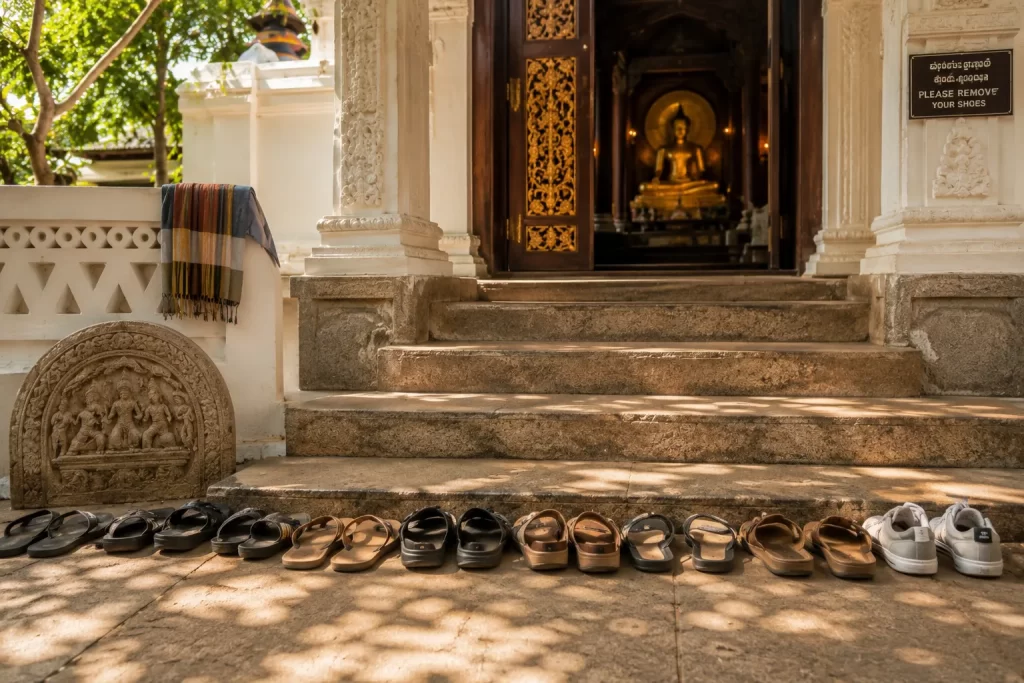
The single biggest packing surprise for first-timers is the temple dress code. What to wear in Sri Lanka temples is simple: shoulders covered, knees covered, shoes off. That rule applies at the Temple of the Sacred Tooth Relic in Kandy, the Dambulla cave temples, and every village shrine you will pass. Temple dress is the most common question we hear about what to pack for Sri Lanka, so here is the complete answer.
What to wear in Sri Lanka temples boils down to three words: covered, covered, covered. Men need long trousers or at least knee-length shorts — many temples accept covered knees over ankles, but full-length is safest. Women need skirts or trousers below the knee and covered shoulders; a scarf over a vest top works in a pinch. There is no requirement for women to cover their heads, which surprises many visitors expecting Middle Eastern norms.
Shoes are always removed before entering, and hats too. You will see neat rows of sandals outside every temple — wear slip-on shoes on temple days and you will breeze past everyone unlacing their hiking boots. Some major sites rent sarongs for a small fee, but carrying your own means never being turned away. Slip-on shoes are a core part of what to pack for Sri Lanka planning: they make every temple stop effortless.
White clothing is traditional for pilgrimages and looks wonderful in photos, but any modest outfit works. Bright colors are fine; disrespectful is skin. When in doubt, the sarong saves the day: wrap it over shorts at the gate, and you are dressed correctly in ten seconds.
Our guides always carry extras for guests — a small touch that makes the 7-day itinerary temple stops stress-free. It is one of the ways a local operator makes what to pack for Sri Lanka easier.
For planning cultural stops and sacred sites, the official Sri Lanka Tourism site is the best starting point — it covers the island’s heritage attractions and practical visitor advice.
Sri Lanka Travel Essentials Checklist — The Non-Negotiables
Beyond clothing, a Sri Lanka travel essentials checklist has a core of items that solve 90% of trip problems. None of them are exotic — they are just easy to forget. Work through this checklist the night before you fly:
| Essential | Why You Need It |
|---|---|
| Sarong (1) | Temple cover-up, beach towel, sun shade, blanket on cold buses — the most versatile item ever packed |
| Reusable water bottle | Tap water is not potable; hotels and guesthouses refill filtered water free |
| Insect repellent (DEET) | Dengue is carried by day-biting mosquitoes; repellent matters from dawn to dusk |
| Sun protection | SPF 50 sunscreen, wide hat, sunglasses — the equatorial sun is fierce all year |
| First-aid mini kit | Plasters, antiseptic, painkillers, rehydration salts, anti-diarrheal tablets |
| Prescription meds | In original packaging with a doctor’s note; some drugs are restricted in Sri Lanka |
| Padlock | Lockers at guesthouses and buses; most dorm lockers need your own |
| Headlamp or torch | Adam’s Peak sunrise climbs, power cuts, beach nights |
| Daypack | Small backpack for daily excursions; leave the big bag at the hotel |
| Travel insurance documents | Print copies plus digital; keep a scan in your email |
Think of this Sri Lanka travel essentials checklist as the safety backbone of what to pack for Sri Lanka — clothing choices are personal, but safety gear is not. The table above assumes you are staying in hotels and guesthouses, which is fair for most visitors. If you are trekking independently in the hill country or camping, add a water purifier, a sleeping bag liner, and a proper medical kit.
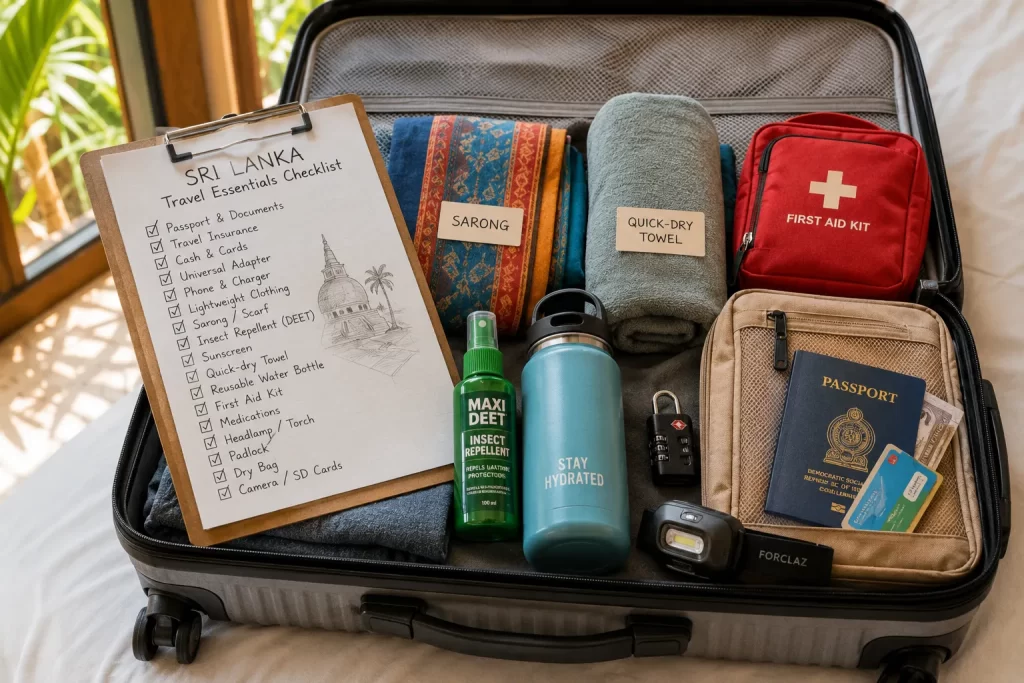
Your documents deserve their own mini-checklist. Carry your passport with six months of validity and your approved ETA visa — see our Sri Lanka visa guide for the 2026 free ETA process. Store copies of everything in your phone and email, and keep the originals in the hotel safe. Documents are the part of what to pack for Sri Lanka people forget until the airport — and they belong on the Sri Lanka travel essentials checklist too.
Sri Lanka Rainy Season Packing — Surviving the Monsoon
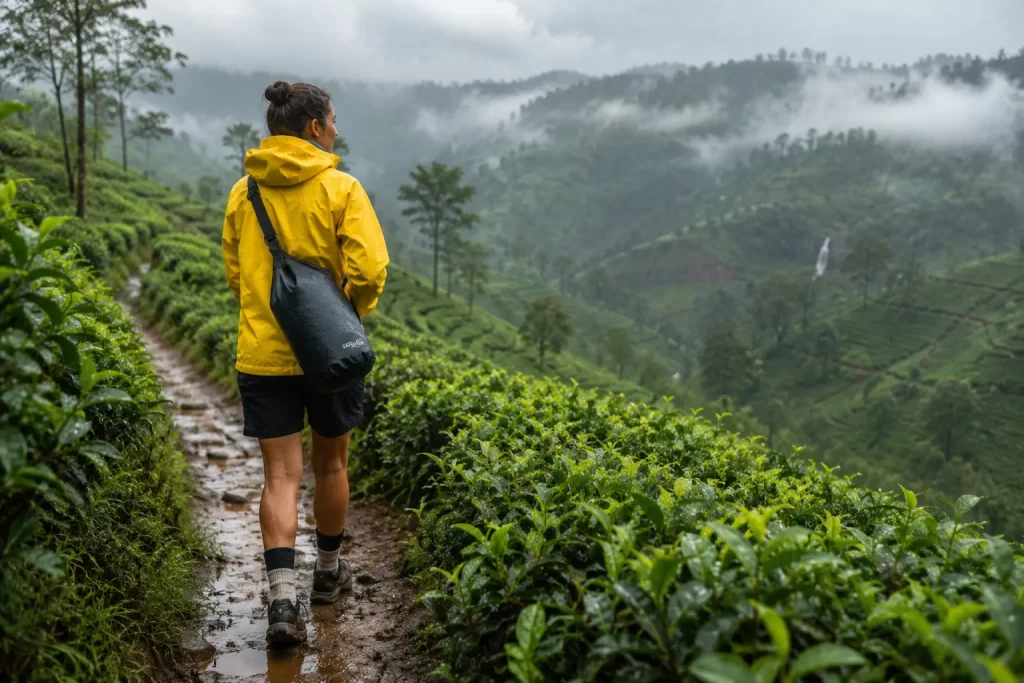
Rain is part of the Sri Lankan experience, and Sri Lanka rainy season packing is simpler than most travelers fear. The country has two monsoons, not one. The southwest monsoon brings rain to the west and south coasts from May to September. The northeast monsoon drenches the east coast from October to January — between the two, there is almost always somewhere dry on the island.
Sri Lanka rainy season packing starts with the forecast. For real-time rainfall data, the Department of Meteorology Sri Lanka publishes daily forecasts for every province — check it before packing each leg of your trip. The official information will tell you honestly whether your beach week is likely to see afternoon showers or a full monsoon band. Understanding the two monsoon windows turns what to pack for Sri Lanka from guesswork into a simple plan.
Monsoon-ready packing starts with a proper rain layer: a packable rain jacket beats an umbrella in every scenario except a sudden cloudburst, and it doubles as a windbreaker on trains. Add quick-dry everything — shirts, underwear, towels — because laundry will struggle in the humidity. Two pairs of footwear minimum: one that dries fast, one for wet days.
Two rainy-season secrets locals swear by. First, a dry bag keeps electronics and passports safe on boats, safari jeeps and tuk-tuk rides through flooded streets. Second, if you hike in the wet season, leech socks or repellent on your ankles are non-negotiable — Ella and the Knuckles range get lively with leeches after rain. Your Sri Lanka rainy season packing list should also include a plastic bag for wet clothes and a power bank, because monsoon storms knock out power lines now and then.
Rainy season is when what to pack for Sri Lanka truly earns its keep.
Sri Lanka Electronics and Adapters — Plugs, Power & SIMs
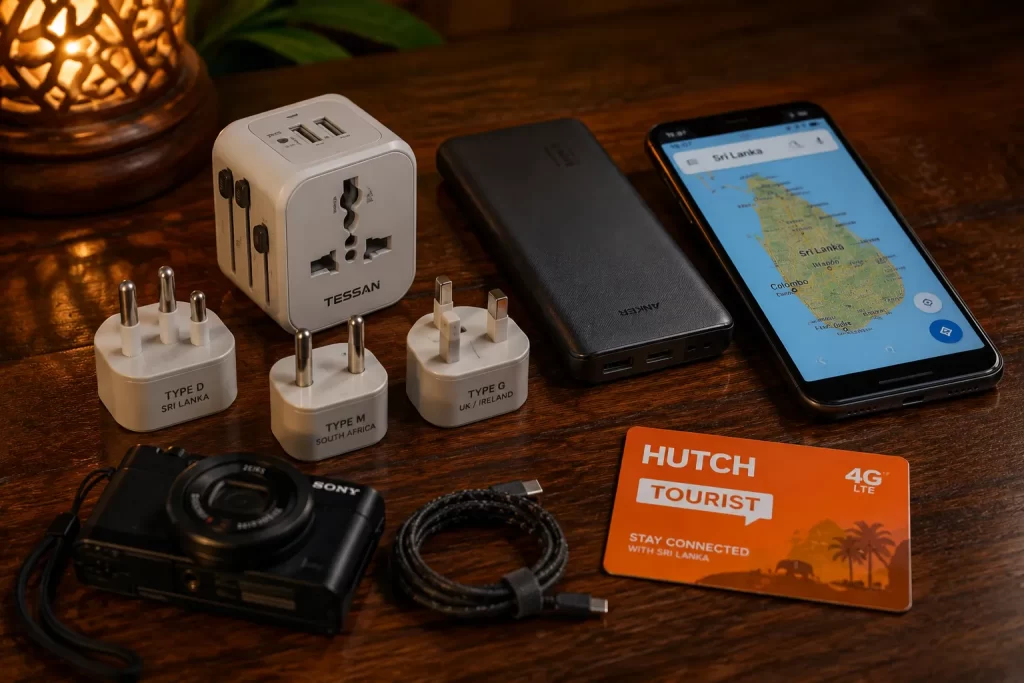
Sri Lanka electronics and adapters trip up more visitors than any other category, so let us settle it once. Sri Lanka runs on 230V, 50Hz, with three plug types: the UK-style three-pin G, plus older D and M round-pin sockets. A universal adapter covers all three, and it is the single piece of electronics gear you should buy before you arrive.
Do you need a voltage converter? Almost never. Phone chargers, laptops, cameras and power banks are all dual-voltage these days — check the label for “100-240V” and you are safe.
The only exception is hair appliances. Most straighteners and curling irons are single-voltage and will burn out on 230V, so leave them at home or buy a cheap local one for $10.
Connectivity is excellent. Buy a tourist SIM at the airport from Dialog or Mobitel for about $5-10. You get 20-50GB of data — enough for maps, WhatsApp and video calls for the whole trip. eSIMs from the same providers work on newer phones and activate before you land.
SIMs and eSIMs are the most underrated part of what to pack for Sri Lanka: connectivity transforms the trip.
Two power notes. Power cuts still happen briefly in rural areas, so keep devices charged overnight and carry a 10,000mAh+ power bank for long train days. And if you fly a drone, know this: Sri Lanka requires a permit from the Civil Aviation Authority, and bringing one without approval can mean confiscation at the airport. Beyond drones, your Sri Lanka electronics and adapters bag is refreshingly simple — one adapter, one power bank, one SIM.
Clothing by Region — Coast, Hill Country & Cultural Triangle
One island, three climates — your clothing plan should match your route. The map below shows what actually works in each region, based on years of running tours through all of them:
| Region | Climate | Pack These |
|---|---|---|
| South & West Coast (Mirissa, Bentota, Unawatuna) | Hot, humid, 28-33°C year-round | Light tops, shorts, swimwear, sandals, sun hat, reef-safe sunscreen |
| Hill Country (Ella, Nuwara Eliya, Kandy) | Cool, misty, 10-24°C; chilly nights | Long sleeves, fleece or light jacket, closed shoes, rain layer |
| Cultural Triangle (Sigiriya, Dambulla, Anuradhapura) | Hot and dry, 30-35°C | Breathable modest clothing, sarong, hat, lots of water |
| East Coast (Trincomalee, Arugam Bay) | Dry April-September, wet Oct-Jan | Beach gear April-September; rain gear October-January |
The classic mistake is packing for the beach only. A day can start with a sunrise climb at Sigiriya Rock, continue through temple towns, and end at a cool hill-country guesthouse. That is three wardrobes in twelve hours. Layering is the answer: a thin long-sleeved shirt over a tee handles the temperature swings without bulk.
For beach stays, our Bentota beach tours show how little you need at the coast: swimwear, cover-up, sandals and sun protection cover 90% of beach days. For the cultural triangle, add comfortable walking shoes and modest layers. Pack once per region, not per day, and you will stay light — region-based what to pack for Sri Lanka planning keeps your bag small and your days comfortable.
Sri Lanka’s dress culture is relaxed but not careless. Outside beach resorts, locals dress modestly — long trousers, covered shoulders — and travelers who do the same get warmer welcomes in villages, markets and bus queues. It shapes what to pack for Sri Lanka in one simple way: modest, breathable, respectful.
Footwear & Beach Gear — What Actually Works
Footwear is where most travelers overpack and underthink. Three pairs cover virtually every Sri Lanka trip: comfortable walking shoes, sturdy sandals, and flip-flops. Half of what to pack for Sri Lanka is choosing the right three pairs — anything more is dead weight in your bag.
Walking shoes earn their space at Sigiriya, the temples, Ella hikes and city days. Choose something breathable with grip; heavy hiking boots are unnecessary except for serious multi-day treks. Sandals with ankle straps handle everything from temple steps to market lanes, and flip-flops live on the beach and in hotel rooms. Water shoes are a nice extra if you snorkel — coral reefs and rocky coves are hard on bare feet.
Beach gear deserves its own paragraph. Bring two swimsuits, a quick-dry towel and reef-safe sunscreen — hotel towels are for rooms, not reefs. Standard sunscreens damage the coral at Hikkaduwa, Pigeon Island and the other whale watching spots along the south coast. A dry bag is worth its weight for boat trips.
One local tip: buy your flip-flops here. Beach towns sell them for $2-3, they are better suited to local conditions, and they make great souvenirs. The same goes for sarongs, hats and beach wraps — Sri Lankan cotton is excellent and absurdly cheap compared to home. The buy-locally approach is the secret of veteran what to pack for Sri Lanka planning.
Health Kit & Toiletries — Pack for a Safe Trip
Health is the least glamorous part of what to pack for Sri Lanka and the most important. The CDC’s Sri Lanka traveler health page recommends hepatitis A and typhoid vaccinations for most visitors, plus routine vaccines like flu and tetanus. Check it two months before departure — some courses need several weeks to complete.
Your health kit is small but complete: insect repellent with DEET, rehydration salts, anti-diarrheal tablets, antihistamines, plasters, antiseptic, and any personal medication in original packaging. A doctor’s note for prescription medicines is wise — Sri Lankan customs is strict about controlled drugs, and our Sri Lanka safety guide covers what is and is not allowed.
Water deserves a special mention. Tap water is not safe to drink in Sri Lanka, but every guesthouse and hotel provides filtered or boiled water, and most refill your bottle free. Bring a reusable bottle and skip the plastic mountain. Ice in reputable restaurants is safe; ice from street stalls is not.
Toiletries are fully available locally — shampoo, toothpaste, sunscreen and sanitary products sit on every supermarket shelf. Pack only what you need for the first two days plus anything brand-specific you cannot live without. Sri Lanka is not the wilderness; it is a modern country with pharmacies on every corner. For toiletries, what to pack for Sri Lanka is simply the first two days’ supply.
What NOT to Pack — Buy It in Sri Lanka Instead
Half of smart packing is knowing what to leave at home. A big part of what to pack for Sri Lanka is deciding what not to pack, because Sri Lanka’s shops and markets are excellent. Several things you were about to pack are cheaper and better bought here:
| Don’t Pack | Buy Locally | Typical Price |
|---|---|---|
| Heavy winter coat | Light fleece or sweater for hill country | $5-15 |
| Beach towel | Quick-dry towel or local sarong | $3-8 |
| Flip-flops | Better ones at beach shops | $2-3 |
| Rain poncho | Cheap ponchos everywhere in season | $1-3 |
| Full toiletry kit | Pharmacies and supermarkets stock everything | At cost |
| Snorkel & mask | Rentals at every snorkeling beach | $3-5/day |
The biggest overpacking trap is the “just in case” wardrobe — the extra jeans, the second pair of boots, the formal outfit you will never wear. Sri Lanka is a casual country; the smartest travelers arrive with half the clothes and twice the budget for experiences. The best what to pack for Sri Lanka advice we give guests is simple: half the clothes, twice the experiences.
Sarongs deserve a final cheer. They cost $3 in any town, double as towels, blankets, skirts, curtains and sun shades, and make perfect gifts. When our things to do in Sri Lanka guests ask what one item to buy first, the answer is always the same: a sarong. If you take one idea from this what to pack for Sri Lanka guide, make it the sarong.
Special Trips — Safari, Whale Watching & Adam’s Peak
Your core packing list covers the general trip; these three excursions need small additions. A safari in the national parks demands neutral colors — khaki, olive, sand — because bright clothing spooks wildlife. Closed shoes, a sun hat, and binoculars if you own them complete the kit for our Yala and Minneriya safaris. Safari days are a small add-on to your what to pack for Sri Lanka list: neutral colors, closed shoes, sun hat.
Whale watching trips along the south coast are a morning on the ocean. Take a warm layer, motion-sickness tablets before departure, a dry bag for your phone and camera, and a light rain shell. The boats move fast and the spray is constant — see our 7-day itinerary for where whale watching fits into a coastal week.
Adam’s Peak is the hill-country classic: a 5,500-step pre-dawn climb to watch the sunrise. Pack a warm layer for the summit — it is genuinely cold at 2,000 meters before dawn — plus a headlamp, snacks, and water. Start at 2am, and the reward is a sunrise over a sea of clouds that no photo does justice.
Whatever your combination of special trips, the same rule applies: layer, dry, and keep it light. A 40-liter backpack is enough for a full Sri Lanka adventure including all three excursions above. That is the final rule of what to pack for Sri Lanka: one bag, used smartly.
Frequently Asked Questions
What should I not forget to pack for Sri Lanka?
The five most-forgotten items are a sarong, insect repellent with DEET, a universal power adapter, a reusable water bottle, and a headlamp. Every one of them earns its place within the first 24 hours of your trip. Start your what to pack for Sri Lanka list with these five.
Can I wear shorts in Sri Lanka?
Yes, in beach towns and resort areas shorts are completely normal. Away from the coast — in cities, villages and especially temples — long trousers or skirts are more appropriate. When in doubt, carry a sarong to wrap over shorts.
Do I need a voltage converter for Sri Lanka?
Only for single-voltage hair appliances. Phone and laptop chargers are dual-voltage (100-240V) and work fine with a plug adapter alone. Sri Lanka uses 230V with type D, M and G sockets. That makes the what to pack for Sri Lanka electronics decision easy: one adapter, no converter.
What is the weather like and what should I pack for each season?
The southwest coast is hot and dry from December to April, the east coast from April to September, and the hill country is cool all year. Pack light layers for heat, a jacket for the hills, and rain gear if traveling in the May-September southwest or October-January northeast monsoons. Season changes what to pack for Sri Lanka more than any other factor.
Is it better to pack light or bring everything?
Pack light — a carry-on and daypack suit two weeks. Clothes, toiletries, flip-flops and sarongs are cheap to buy locally, and lighter bags make bus, train and tuk-tuk travel far more pleasant. For most travelers, that is the entire what to pack for Sri Lanka answer.
What should I wear at Sri Lankan temples?
The answer to what to wear in Sri Lanka temples is simple: covered shoulders, covered knees, shoes off. A sarong over shorts and a scarf over a vest top pass every dress code in the country. Women do not need to cover their heads.
Can I bring my drone to Sri Lanka?
Only with a permit from the Civil Aviation Authority of Sri Lanka. Unapproved drones can be confiscated at the airport, so arrange the paperwork in advance or leave the drone at home.
Do I need a rain jacket in Sri Lanka?
Yes, a packable rain jacket is essential year-round — afternoon showers can appear in any season. It doubles as a windbreaker for hill-country trains and boat trips, making it one of the highest-value items you can pack. Rain gear belongs on every what to pack for Sri Lanka checklist.
What electronics should I bring for Sri Lanka?
A universal adapter, power bank, phone, camera and earbuds cover everything. Buy a $5-10 tourist SIM at the airport for 20-50GB of data, or activate a Dialog or Mobitel eSIM before you fly. That set is the complete Sri Lanka electronics and adapters answer.
Is it safe to drink the water in Sri Lanka?
Tap water is not safe to drink, but filtered or boiled water is provided free at nearly every hotel and guesthouse. Carry a reusable bottle and refill it — this is the cheapest and most eco-friendly choice. A bottle is part of every serious what to pack for Sri Lanka checklist.
Plan Your Sri Lanka Trip with Amazing Escapes
Packing is easier when the rest of the trip is already sorted. At Amazing Escapes Tours, we build custom Sri Lanka itineraries around your dates, budget and travel style — beach weeks, hill-country escapes, safari days, or the full island loop.
Tell us your plans and we will send a detailed day-by-day itinerary with honest advice on what to pack for Sri Lanka for your exact route and season. Every trip includes a local guide, private transport, and accommodation hand-picked for comfort and value.
Get a free quote for your Sri Lanka adventure, or send us your rough itinerary and we will refine it together. Pack light, plan well, and let the island do the rest.
About the author: By a Sri Lankan travel expert and founder of Amazing Escapes Tours, with eight years of experience planning custom holidays across the island.