The first Sri Lanka Cultural Triangle tour I ever planned nearly went wrong. My guests had three nights in Habarana and wanted to fit Anuradhapura, Polonnaruwa, Sigiriya and Mihintale into a single day. By lunchtime on day one they were asleep in the back of the van with a guidebook on their chests.
That trip taught me the rule I still use on every Sri Lanka Cultural Triangle tour. The ancient cities are not a checklist. They are four thousand years of irrigation engineering, monastic scholarship and royal ambition spread across a dry-zone plain the size of a small European country.
This guide is the version I wish I had handed them. It covers the best Sri Lanka Cultural Triangle tour routes by length, honest 2026 ticket prices, the months that actually work, and the mistakes that quietly ruin a heritage trip.
Everything below comes from itineraries we have run for overseas guests, not from a desk. Where a figure can change without notice, I say so plainly.
Table of Contents
Sri Lanka Cultural Triangle Tour — The Quick Answer
If you read one paragraph, read this one. Base yourself in Habarana or Sigiriya and give the region three full days on your Sri Lanka Cultural Triangle tour. Day one is Sigiriya at opening time plus Dambulla in the afternoon.
Day two is Polonnaruwa by bicycle, then Minneriya or Kaudulla for elephants. Day three is Anuradhapura and Mihintale.
Want more depth? Five nights lets you add Ritigala, Nalanda Gedige and Aukana without rushing. A seven-night Sri Lanka Cultural Triangle tour can then link north to Jaffna or south through Kandy into the hill country.
The single most common failure is treating the triangle as a day trip from Colombo. That is roughly eight hours of driving for four hours of sightseeing, which is a poor trade in a country this beautiful.
| Days in the triangle | What fits comfortably | Best for |
|---|---|---|
| 2 days | Sigiriya, Dambulla, Polonnaruwa or Minneriya | Short add-on to a beach or hill country trip |
| 3 days (recommended) | Sigiriya, Dambulla, Polonnaruwa, Anuradhapura, Mihintale, one safari | First-time visitors who want the core sites |
| 5 days | All of the above plus Ritigala, Yapahuwa, Aukana and a second safari | History lovers and photographers |
| 7 days | Everything above plus Jaffna or Kandy and the hill country | Slow travellers and repeat visitors |
Where Exactly Is the Cultural Triangle?
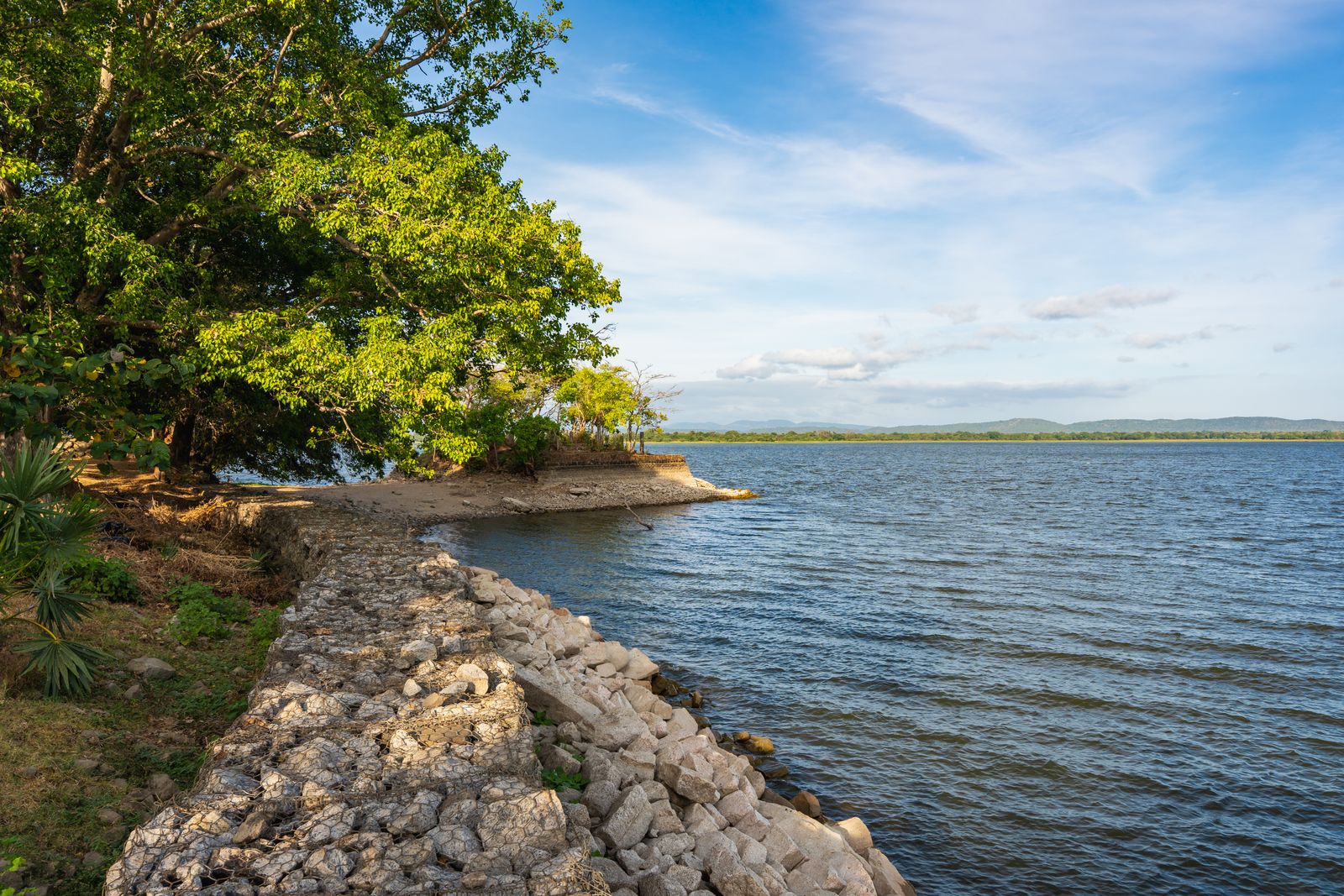
The Cultural Triangle is the heritage heartland of Sri Lanka’s dry-zone plains, and the region most travellers build a Sri Lanka Cultural Triangle tour around. Geographically it is the area bounded by the three great ancient cities — Anuradhapura in the north-west, Polonnaruwa in the east and Kandy in the south.
The name comes from the UNESCO-backed Cultural Triangle project launched in the late 1970s to protect and restore the monuments inside it. That project is run through the Central Cultural Fund, which still administers ticketing at the major sites today. Sri Lanka Tourism publishes its own overview of the region if you want the official framing.
Inside the triangle sit five UNESCO World Heritage properties. Three of them date from 1982: the Sacred City of Anuradhapura, the Ancient City of Polonnaruwa and the Ancient City of Sigiriya. The Sacred City of Kandy followed in 1988, and the Golden Temple of Dambulla in 1991.
For practical travel purposes, most visitors stay in the middle of that map. Habarana, Sigiriya village and Dambulla sit within an hour of everything, which is why nearly every sensible Sri Lanka Cultural Triangle tour is built around one of them.
The official Sri Lanka Tourism page for the Cultural Triangle is worth a look before you finalise dates. It lists the sites under the same heritage umbrella we use when we design a Sri Lanka Cultural Triangle tour.
What sits inside the triangle
- Sigiriya — the fifth-century rock citadel, and the region’s single most famous monument
- Dambulla — cave temples with the finest surviving paintings of the Kandyan school
- Anuradhapura — the island’s first great capital, with stupas the size of pyramids
- Polonnaruwa — the medieval capital, best explored on two wheels
- Mihintale — the hill where Buddhism arrived on the island in the third century BC
- Minneriya, Kaudulla and Hurulu — the parks behind Asia’s biggest gathering of wild elephants
- Ritigala, Nalanda Gedige, Aukana and Yapahuwa — the quieter monuments most tours skip
When to Visit the Cultural Triangle — Best Months and Weather
The Cultural Triangle sits in Sri Lanka’s dry zone, which means it does not follow the beach calendar. The best time to visit the ancient cities is January to April and again from August to September. It is the same window we publish in our month-by-month Sri Lanka weather guide.
Those two windows share one thing: dry ground underfoot and manageable heat. Because the sites are open-air and mostly unshaded, rain is a nuisance rather than a danger, but a wet ruin is a slippery ruin.
The heaviest rain arrives with the north-east monsoon between late October and December, and November is normally the wettest month. The heat peaks from April through August, when midday temperatures on the plains routinely reach the mid-thirties.
Here is the honest trade-off. June to September is hot and dry, and it is also when the elephants gather at Minneriya. If your Sri Lanka Cultural Triangle tour is built around wildlife, that heat is the price of the best elephant watching in Asia.
Whatever month you choose, build the day around dawn and late afternoon. A Sri Lanka Cultural Triangle tour that starts at 6.30am and rests between eleven and three is a completely different experience from one that fights the midday sun.
| Month window | Weather | Verdict |
|---|---|---|
| December – March | Mostly dry, cooler nights, occasional showers | Comfortable all-day sightseeing |
| April | Hot, humid, festive around the Sinhala and Tamil New Year | Start at dawn, rest at noon |
| May – September | Dry and hot, driest July to September | Best for Minneriya and Kaudulla safaris |
| October – November | Inter-monsoonal storms, November wettest | Quiet, green and cheap — pack a poncho |
Sigiriya Rock Fortress — The 200-Metre Citadel
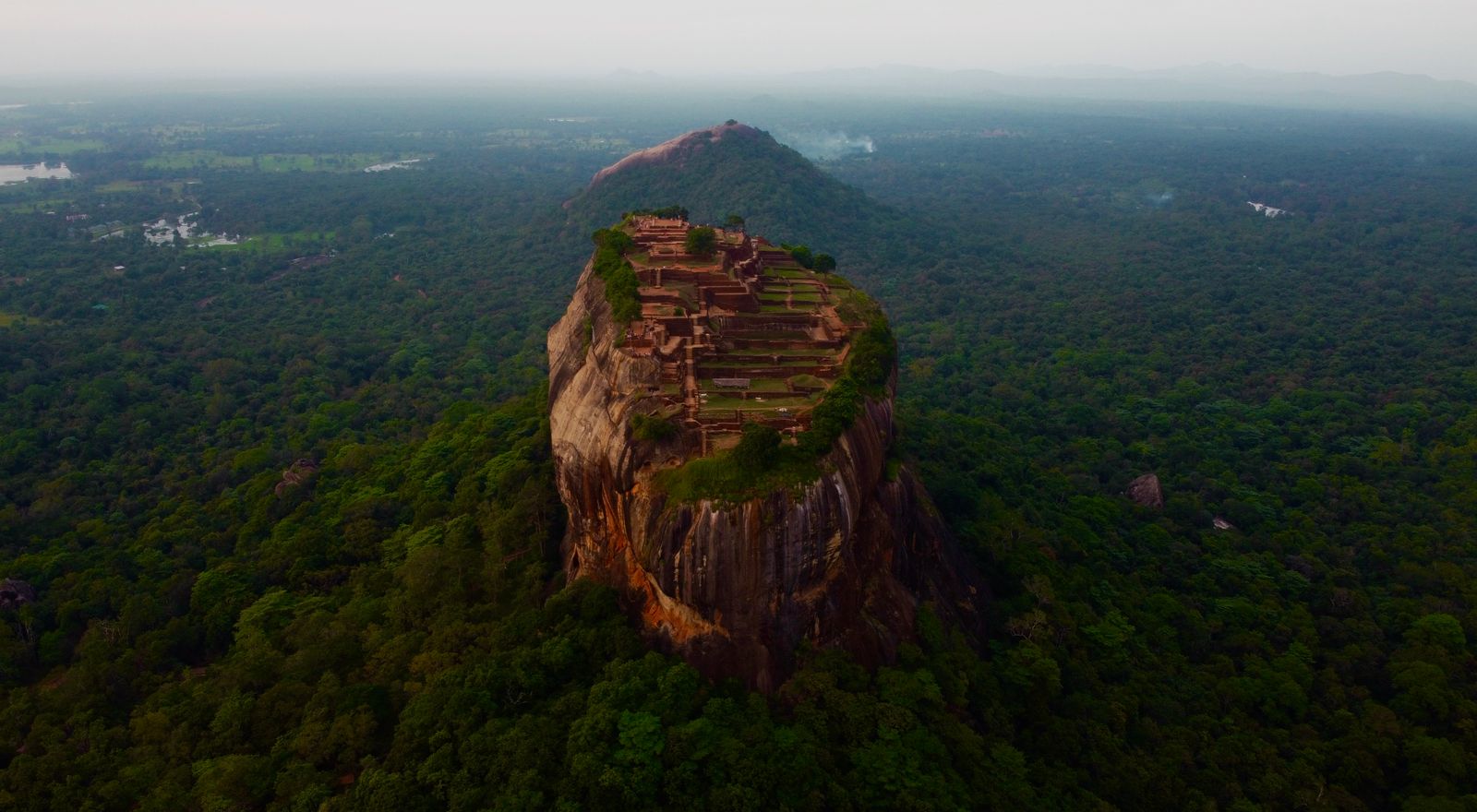
Sigiriya is a granite monolith that rises roughly 200 metres straight out of the jungle, and nearly every Cultural Triangle tour itinerary in Sri Lanka ends up here. King Kashyapa I built his capital on the summit in the late fifth century AD, and what survives is remarkable.
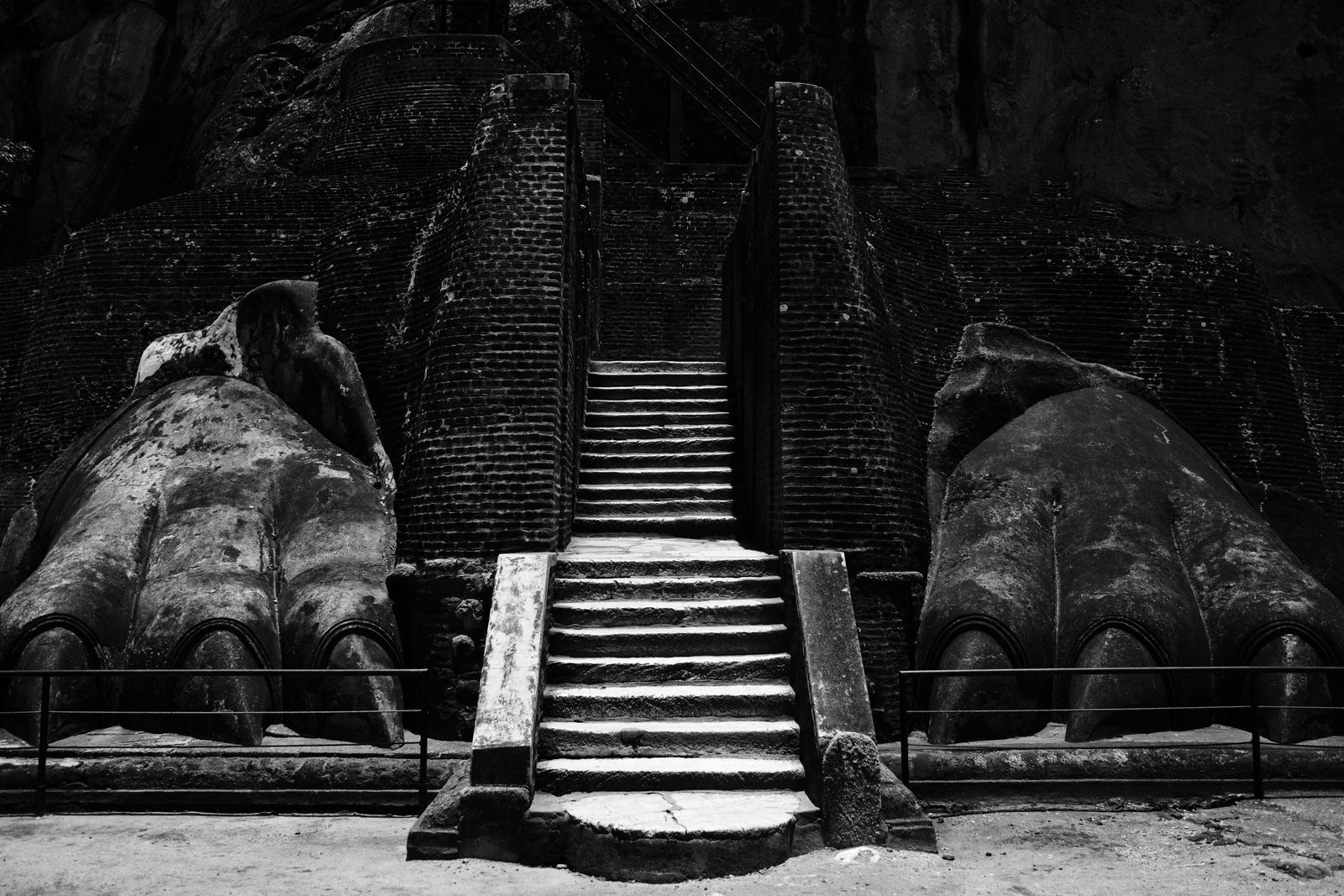
The climb is about 1,200 steps through three distinct zones. You pass the water gardens and boulder gardens at the base, then the mirror wall and the fifth-century frescoes on the rock face. The lion paws come next, and finally the summit palace platform.
Allow two hours for the round trip if you want photographs and a proper look at the frescoes. Fit walkers do it in seventy minutes, and the summit is genuinely exposed, so carry water.
Gates open at 6.30am and close in the late afternoon, with the last entry usually around 5pm. Arriving at opening is not a cliché. By 9am in high season the staircase queues are real, and the rock face has no shade at all.
Sigiriya is also the one monument here with its own dedicated UNESCO listing page. That is why it dominates the search results for any Sri Lanka Cultural Triangle tour. You can read the UNESCO World Heritage listing for the Ancient City of Sigiriya for the official description.
Pidurangala — the sunrise alternative
Directly north of Sigiriya sits Pidurangala, a lower rock with a working temple at the base and the best possible view of Sigiriya from the top. It takes 30 to 40 minutes to climb, mostly over boulders and steps, and the final scramble needs both hands.
Photographers should climb Pidurangala at sunrise and Sigiriya itself in the late afternoon or at opening. Doing them the other way round means shooting into the sun from both directions.
Because Sigiriya anchors most of our guest itineraries, we schedule every Sri Lanka Cultural Triangle tour we run with a private early-morning visit and our own driver-guide. You can see how that works on our Sigiriya day tour page.
Dambulla Cave Temple — Five Caves and 150 Buddha Statues
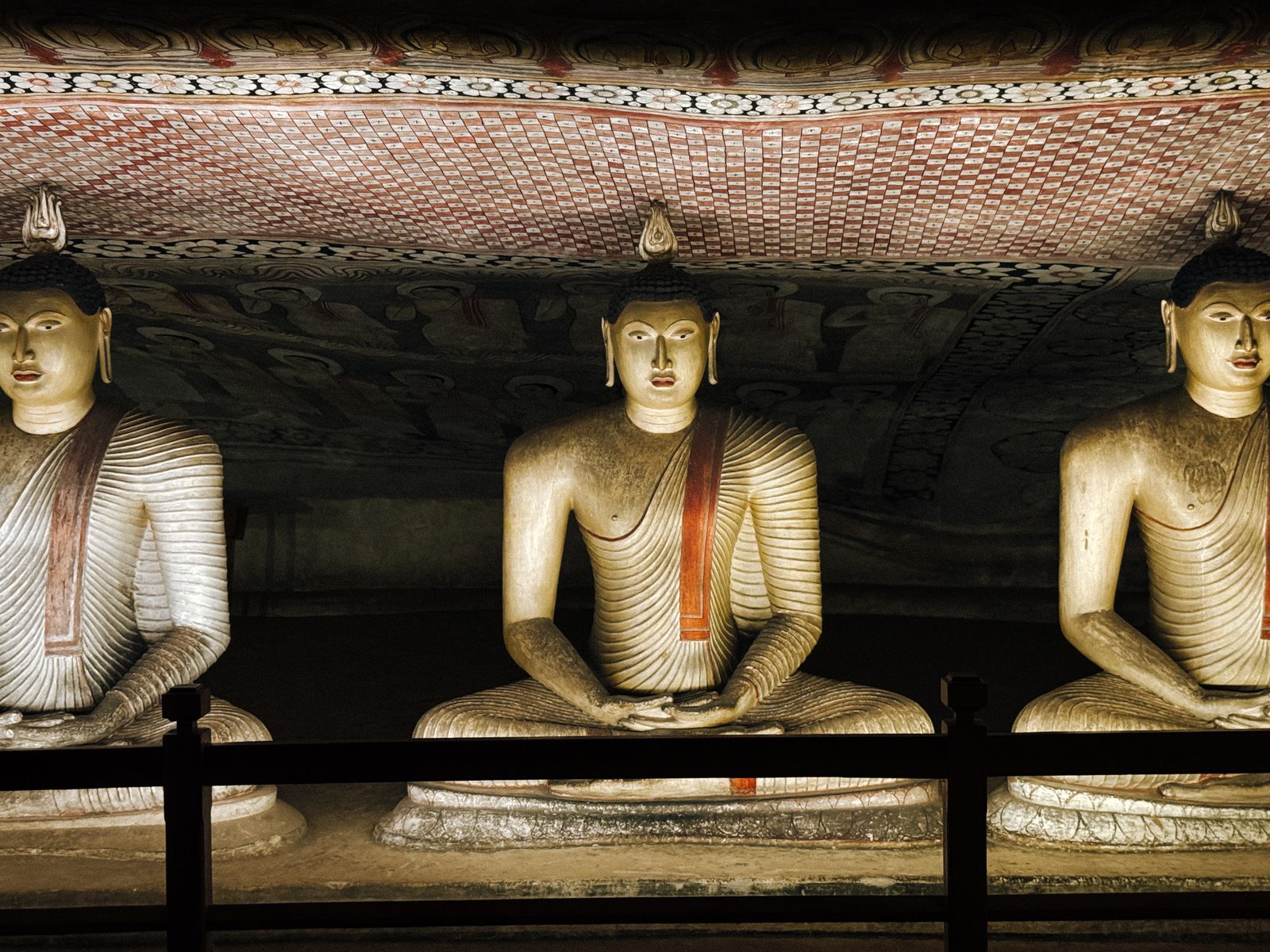
The Dambulla cave temple is the largest and best-preserved cave temple complex in Sri Lanka, cut into a 160-metre rock that looms over the Dambulla–Kandy road. Five separate caves hold more than 150 Buddha statues and roughly 2,100 square metres of painted murals. It is also the easiest major site to slot into any Sri Lanka Cultural Triangle tour, because the car park sits right beneath the rock.
The story starts in the first century BC, when King Valagamba sheltered here during a South Indian invasion and later converted the caves into a monastery. The paintings you see today were mostly renewed by Kandyan kings in the eighteenth century, which is why the colours still sing.
It is a ten-minute climb up roughly 350 steps from the car park, past the golden Buddha statue of the modern Golden Temple at the base. Budget an hour for the caves and the view back over the plains.
Two practical notes matter on any Sri Lanka Cultural Triangle tour. Shoes and hats come off at the entrance, so wear socks you do not mind losing or carry a bag. Monkeys patrol the staircase and will take anything dangling, including sunglasses and ice cream.
Dambulla pairs naturally with Sigiriya on day one of a Cultural Triangle itinerary, because the two sites sit seventeen kilometres apart on the same road. If your Sri Lanka Cultural Triangle tour runs short, this is the pairing to protect.
Anuradhapura Sacred City — Sri Lanka’s First Capital
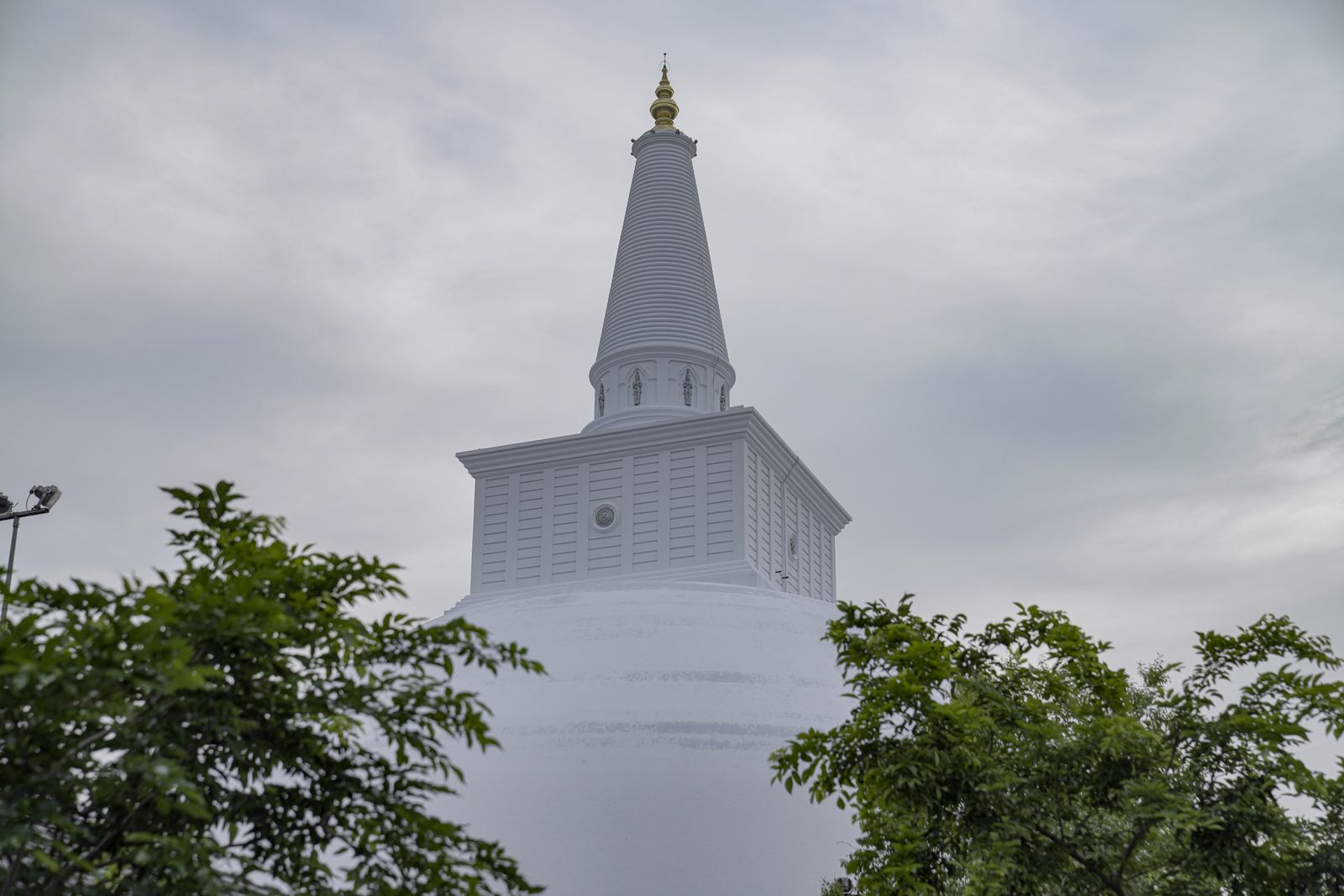
The Anuradhapura sacred city was the island’s capital for well over a thousand years, from the fourth century BC until the eleventh century AD. It is also the largest archaeological site in the country, and the reason most Sri Lanka Cultural Triangle tour routes need three days rather than two.
Three monuments define the visit. The Jaya Sri Maha Bodhi is grown from a cutting of the Bodhi tree in India and is the oldest living, documented tree on earth, planted in 288 BC. The Ruwanwelisaya stupa, completed under King Dutugemunu in the second century BC, is a gleaming white dome you can walk around barefoot.
Then there is Jetavanaramaya, once the tallest structure in the ancient world at roughly 122 metres before its pinnacle was lost. Standing beside it is the closest Sri Lanka gets to standing beside the Great Pyramid.
Anuradhapura is spread out, with distances of several kilometres between clusters. Cycling is the best way to cover it, and bikes rent for a few dollars a day near the museum and in New Town.
Budget a full day here. Any Sri Lanka Cultural Triangle tour that squeezes Anuradhapura into a morning sees two of its seven or eight monument clusters at best. The northern sites are the ones people regret rushing.
Mihintale — where Buddhism began on the island
Thirteen kilometres east of the city, Mihintale is the hill where the monk Mahinda is said to have met King Devanampiya Tissa in 247 BC. That meeting marks the arrival of Buddhism in Sri Lanka, and the site feels like it.
There are 1,840 steps to the summit, though most visitors only climb the first flight to the main terrace and the Ambasthale dagoba. Go at sunset, when the stupas turn gold and the plains below go hazy.
Mihintale is administered by Sri Lanka’s Department of Archaeology rather than the Central Cultural Fund, so its ticket is separate and much cheaper than the headline sites.
Polonnaruwa Ancient City — Cycling the Medieval Capital
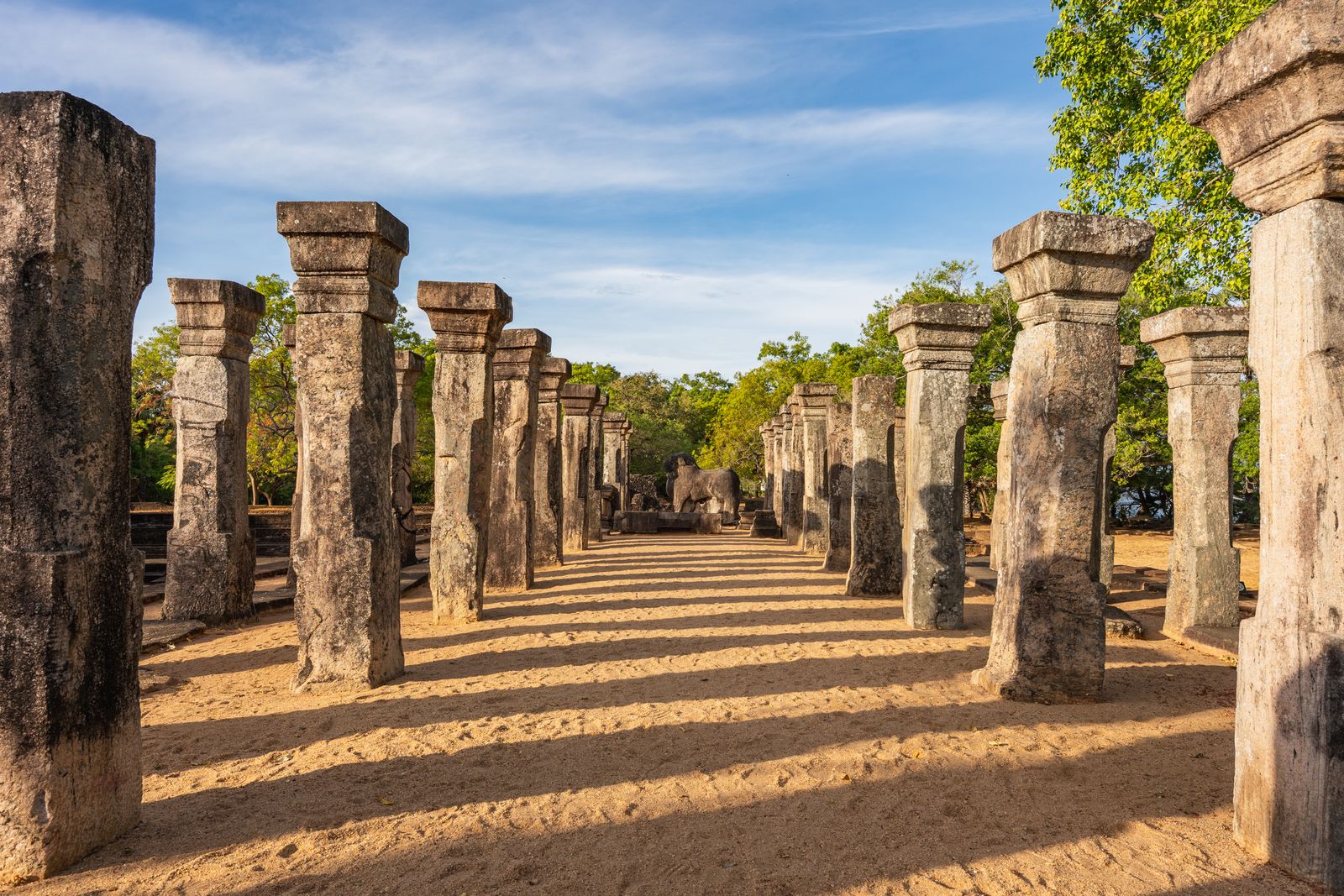
The Polonnaruwa ancient city is the most walkable and best-organised of Sri Lanka’s ruined capitals, and the stop most guests rate highest on a Sri Lanka Cultural Triangle tour. It became the island’s seat of power in the eleventh century and reached its peak under King Parakramabahu I, who built the vast reservoir known as the Parakrama Samudra.
The appeal here is compactness. The royal palace group, the Vatadage, the Rankot Vehera, the Lankatilaka shrine and the Gal Vihara all sit along one shaded loop. The circuit is roughly four kilometres, and you can cycle it in a morning.
The Gal Vihara is the highlight for most visitors. Four Buddha images are carved directly into a single granite face in the twelfth century, and the standing figure is one of the finest pieces of sculpture in Asia.
Buy your ticket at the museum and visit the museum first. It takes twenty minutes and turns a field of ruins into a city you can read. That is exactly why we build a guided hour into every Polonnaruwa morning on our Sri Lanka Cultural Triangle tour routes.
Start at opening, before 8am if you can. By ten the exposed loop between the Quadrangle and the Gal Vihara is unforgiving, and the shade trees on the circuit are the only real shelter. Sri Lanka Tourism has a Polonnaruwa destination page if you want a second overview of the site layout.
Mihintale, Ritigala and the Forgotten Monuments
Most visitors stop at the big four and leave. That is a mistake, because the smaller monuments inside the Cultural Triangle are often the most atmospheric. They also get a fraction of the foot traffic.
Ritigala is my favourite. A fifth-century forest monastery sits on a hillside inside a strict nature reserve, reached by a long stone path and a stretch of root steps through jungle canopy. It is quiet in a way that Anuradhapura never is.
Yapahuwa is a thirteenth-century rock fortress with a carved ornamental staircase that once led to the Sacred Tooth Relic itself. Aukana is a twelve-metre standing Buddha from the fifth century, so finely carved that the granite seems to glow in the morning.
Nalanda Gedige sits almost exactly on the island’s geographic centre on the Dambulla road, a small Hindu-Buddhist shrine that is an easy twenty-minute stop. Aluvihara near Matale is where the Pali canon was first written down on ola leaves in the first century BC.
Adding two of these to your Cultural Triangle itinerary costs half a day and gives you photographs nobody else on your flight will have. On a longer Sri Lanka Cultural Triangle tour they are usually the days guests talk about afterwards.
Minneriya Elephant Gathering — Asia’s Biggest Wild Elephant Meet-Up
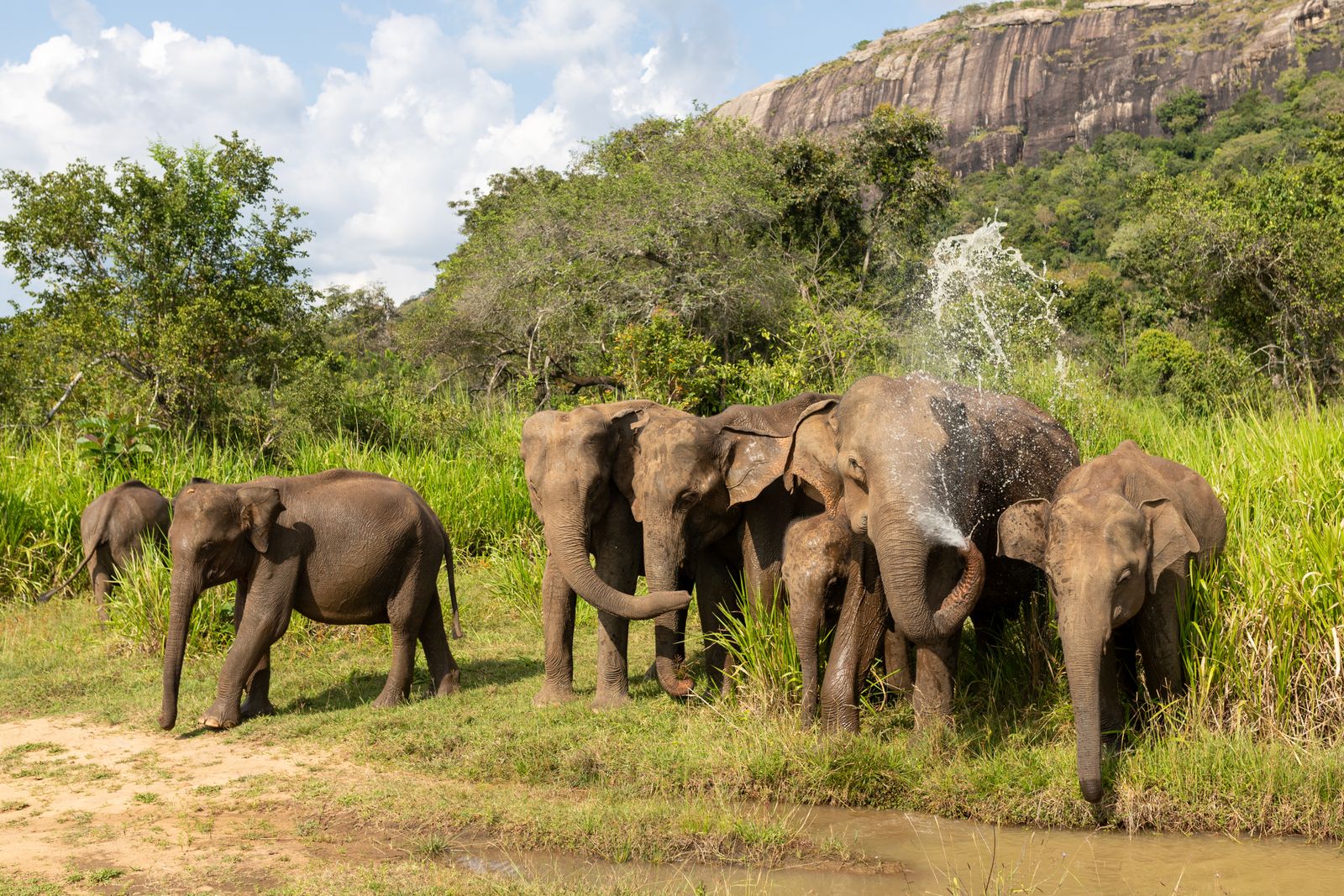
In the dry season hundreds of wild Sri Lankan elephants walk out of the jungle towards the Minneriya tank. This is the Minneriya elephant gathering, and many wildlife guides rate it the largest seasonal concentration of Asian elephants anywhere on the planet.
It happens when the reservoir shrinks and sweet grass takes over the exposed bed. The elephants come to drink, bathe and socialise, and by the peak of the season the count can climb into the hundreds.
Timing is everything. Minneriya National Park peaks from June to September and the classic months are August and September. The nearby Kaudulla park usually takes over from around September to October, and Hurulu Eco Park carries the gathering from January to April.
The afternoon safari is the one you want, arriving for the last two hours of light. Park entry sits in the usual national park band of roughly USD 25 to 30 per adult. Add a jeep at around LKR 7,000 to 12,000 per vehicle per half day, split between your group.
Because the numbers swing with rainfall, we check park conditions on the morning of every safari rather than booking blind. Sri Lanka Tourism keeps a current Minneriya National Park page, and you can compare the parks against Yala on our Sri Lanka safari tour page.
Elephant watching is the reason many families choose to extend their Sri Lanka Cultural Triangle tour by a night. One safari at the right time of year beats three safaris in the wrong season.
Cultural Triangle Itinerary — 3, 5 and 7 Day Routes
A good Cultural Triangle itinerary is built backwards from the heat and the light. Sightsee at dawn, rest through the middle of the day, and go back out for the golden hour.
Here are the three routes we run most often, with realistic driving times included. None of them assumes you enjoy eight-hour days in a vehicle, and each one works as a standalone trip or as part of a longer Sri Lanka Cultural Triangle tour.
3-day Sri Lanka Cultural Triangle tour
- Day 1 — Sigiriya at 6.30am, then Pidurangala or a village lunch, then Dambulla cave temple in the afternoon
- Day 2 — Polonnaruwa by bicycle from 7am, museum first, then an afternoon safari at Minneriya or Kaudulla
- Day 3 — Anuradhapura and Mihintale, finishing at sunset on the Mihintale terrace
5-day Sri Lanka Cultural Triangle tour
- Days 1 to 3 as above, but split Anuradhapura and Mihintale across a full day and add Aukana and Ritigala
- Day 4 — Ritigala forest monastery in the morning, village and lake afternoon in Habarana
- Day 5 — Yapahuwa and Nalanda Gedige en route to Kandy, stopping at Aluvihara near Matale
7-day Cultural Triangle and hill country route
- Days 1 to 5 as above, then continue south to Kandy for the Temple of the Tooth and the evening ceremony
- Day 6 — Kandy to Nuwara Eliya through tea country or the scenic train
- Day 7 — hill country to the coast, or loop back to Colombo and the airport
If your dates are fixed and your interests are specific, our custom Sri Lanka itinerary service rebuilds this route around them. That is also the best route to take if your Sri Lanka Cultural Triangle tour has to fit inside a shorter holiday.
Cultural Triangle Ticket Prices in 2026
Entrance fees are the one part of a Sri Lanka Cultural Triangle tour that catches people out. The headline sites are ticketed in US dollars, not rupees, and the rates are set by gazette rather than by season.
The figures below are the ranges quoted to us at the counters in September 2026. Always treat them as planning numbers for your Sri Lanka Cultural Triangle tour and confirm on the day, because a gazette revision can move them without notice.
| Site | Foreign adult (approx.) | Notes |
|---|---|---|
| Sigiriya Rock Fortress | USD 30 – 35 | SAARC rates are lower; children usually half price |
| Polonnaruwa Ancient City | USD 25 – 30 | Ticket includes the site museum |
| Anuradhapura Sacred City | USD 25 – 30 | Mihintale is separate and far cheaper |
| Dambulla Cave Temple | LKR 2,000 – 3,000 (about USD 6 – 9) | Paid in rupees at the base of the rock |
| Mihintale | Under LKR 1,000 | Administered by the Department of Archaeology |
| Minneriya / Kaudulla National Park | USD 25 – 30 plus jeep | Jeep is per vehicle, not per person |
| CCF Round Ticket (multi-site) | From around USD 50 | Bundles Sigiriya, Polonnaruwa, Anuradhapura, Dambulla and Nalanda Gedige |
If you plan to visit all four headline sites, the Central Cultural Fund round ticket usually saves money against buying singles. Terms and validity windows have changed more than once, so ask at the first ticket counter you reach.
Cards are accepted at Sigiriya and Polonnaruwa, but I still tell every guest to carry enough rupees in cash for Dambulla, Mihintale, tuk-tuks and bike hire. ATMs exist in Dambulla, Habarana and Anuradhapura, and they are not always working. Cash is the one thing that genuinely spoils a Sri Lanka Cultural Triangle tour when it runs out.
Getting There — Colombo, Kandy and the Airport
There is no airport and no railway station inside the Cultural Triangle itself, so every Sri Lanka Cultural Triangle tour starts with a road transfer, whichever direction you arrive from. The good news is that the roads are good and the distances are shorter than they look on a map.
| Route | Distance | Realistic drive time |
|---|---|---|
| Bandaranaike Airport (Katunayake) to Habarana | About 150 km | 3.5 hours |
| Colombo to Sigiriya | About 170 km | 4 hours |
| Dambulla to Sigiriya | 17 km | 25 minutes |
| Kandy to Dambulla | 72 km | 2 hours |
| Habarana to Polonnaruwa | 45 km | 1 hour |
| Habarana to Anuradhapura | 80 km | 1.5 to 2 hours |
| Anuradhapura to Polonnaruwa | 100 km | 2 hours |
A private vehicle with a driver-guide is the transport of choice for most visitors, and it is what we use on every Sri Lanka Cultural Triangle tour we operate. Public buses do reach Dambulla, Habarana, Anuradhapura and Polonnaruwa, but journeys involve changes and much longer times.
Trains run from Colombo to Kandy in about three hours and are a lovely way to reach the southern corner of the region. From Kandy you transfer by road to Dambulla or Habarana. Our guide to getting around Sri Lanka covers the options in detail.
One rule applies everywhere in the dry zone. Do not plan to drive after dark. Cattle, dogs and wild elephants wander onto unlit roads, and that is not a metaphor.
Where to Stay in the Cultural Triangle
Picking the right base saves you hours of driving on a Sri Lanka Cultural Triangle tour. Habarana is the classic hub, sitting roughly midway between Sigiriya, Polonnaruwa and Minneriya, with the widest choice of mid-range and upscale hotels.
Sigiriya village is smaller and closer to the rock, which matters if you want to be at the gate before sunrise. Dambulla is the budget and local-life option, with the best market in the region and quick access to the cave temple.
For Anuradhapura, most guests stay in New Town, a short drive from the sacred city. In Polonnaruwa, hotels cluster near Kaduruwela and along the lake, which puts you ten minutes from the ticket office.
Our own default for a first Sri Lanka Cultural Triangle tour is two nights in Habarana or Sigiriya plus one night near Anuradhapura. That way the long northern transfer happens once, in the evening, rather than twice in the heat.
Book early for December, January, February and the August elephant peak. Those are the weeks when the best rooms in Habarana and Sigiriya disappear first. They are also the weeks when a rushed Sri Lanka Cultural Triangle tour is most likely to end up in a hotel an hour from the gate.
What a Sri Lanka Cultural Triangle Tour Costs
A Sri Lanka Cultural Triangle tour splits its costs into tickets, transport, guiding and accommodation. The gap between doing it yourself and booking an operator is smaller than most people assume. Here is how the arithmetic actually works for two people over three days inside the triangle.
| Item | Do it yourself (per person) | Private tour (per person) |
|---|---|---|
| Entrance tickets (4 headline sites) | USD 100 – 125 | USD 100 – 125 |
| Transport (bus, tuk-tuk, transfers) | USD 45 – 70 | Included |
| Guide or driver-guide | USD 15 – 25 | Included |
| Hotels (3 nights, 3-star to 4-star) | USD 90 – 180 | USD 120 – 240 |
| One national park safari | USD 40 – 60 | USD 40 – 60 |
| Indicative total | USD 290 – 460 | USD 260 – 425 plus vehicle days |
For a mid-range two-week trip, our travellers typically spend USD 100 to 250 per person on activities overall, which matches the figures in our Sri Lanka budget travel guide.
Where a private Sri Lanka Cultural Triangle tour earns its money is time. A driver-guide who knows which gate to use, when the queues build and which restaurant is clean turns three days into four days of actual sightseeing.
Temple Etiquette and Practical Tips
These sites are living places of worship, not theme parks, and the rules are enforced on every Sri Lanka Cultural Triangle tour. Shoulders and knees stay covered at every temple and stupa, which means no vests, no strapless tops and no shorts.
Shoes, socks and hats come off before you step onto any temple terrace or stupa platform. Carry a cotton bag for them, because leaving them at the bottom of a staircase is common and theft is not unheard of.
Never turn your back on a Buddha statue for a photograph, and never pose beside one for a novelty shot. Monks cannot be touched, and women should not hand items directly to a monk.
Practical kit for a Sri Lanka Cultural Triangle tour is simple. Two litres of water per person, a wide-brimmed hat, high-factor sunscreen, a headscarf or light scarf, and shoes you can slip on and off twenty times a day.
At Sigiriya, keep your voice down on the staircase if you meet wasps, and never swat at them. They nest on the rock seasonally and respond badly to panic. Our guides carry antihistamine on every Sri Lanka Cultural Triangle tour for exactly this reason.
Seven Mistakes to Avoid on a Cultural Triangle Tour
Most disappointing Sri Lanka Cultural Triangle tour stories fail for the same few reasons. Every one of these is avoidable with a little planning, or with someone local doing the planning for you.
- Treating it as a day trip from Colombo. Eight hours of driving for four hours of sightseeing is a bad trade.
- Scheduling Anuradhapura and Polonnaruwa on the same day. Each deserves a full morning at minimum.
- Climbing Sigiriya at midday. The rock has no shade and the queues peak between 9am and 11am.
- Skipping the Polonnaruwa museum. Twenty minutes there changes everything you see afterwards.
- Wearing shorts to the caves. You will be turned away, or handed a sarong, at the entrance.
- Ignoring the round ticket. If you are visiting all four main sites, ask about the CCF multi-site ticket first.
- Booking Anuradhapura as a night stop only. Arriving at 6pm and leaving at 8am means you saw none of it.
One more piece of advice, less obvious than the rest. Leave one afternoon empty on your Sri Lanka Cultural Triangle tour. Habarana’s tanks, village lanes and lakeside tracks are some of the most restful hours of the whole region, and they never make it onto an itinerary printed abroad.
Frequently Asked Questions
What is the Sri Lanka Cultural Triangle tour?
The Sri Lanka Cultural Triangle tour is a circuit of the island’s ancient dry-zone capitals and monuments, centred on Sigiriya, Dambulla, Anuradhapura, Polonnaruwa and Minneriya. The name comes from the UNESCO-backed project that protects them. Most travellers base in Habarana or Sigiriya and explore for three to five days.
How many days do you need for the Cultural Triangle?
Three full days is the minimum for a satisfying Sri Lanka Cultural Triangle tour. That covers Sigiriya, Dambulla, Polonnaruwa, Anuradhapura, Mihintale and one safari. Add two more nights if you want Ritigala, Aukana and Yapahuwa without rushing.
When is the best time to visit the Cultural Triangle?
January to April and August to September give you the driest ground and the most manageable heat. October to December is the wettest stretch, with November the wettest month. If elephant watching matters most, book your Sri Lanka Cultural Triangle tour for August or September.
Is climbing Sigiriya difficult?
It is about 1,200 steps, mostly on metal staircases and stone, and it takes an average visitor 60 to 90 minutes for the round trip. There is no technical climbing involved. Anyone reasonably mobile can do it, but the rock is fully exposed and the last section is steep.
How much does a Sri Lanka Cultural Triangle tour cost in 2026?
Plan on USD 100 to 125 per person for the four headline entrance tickets alone, and USD 290 to 460 per person for a three-day trip including hotels and transport. Adding a private driver-guide raises the total but usually reduces wasted time, not the ticket bill.
Is Anuradhapura or Polonnaruwa better?
Polonnaruwa is more compact, easier to read and better on a bicycle, so it suits shorter trips. Anuradhapura is older, larger and carries more religious weight. If your Cultural Triangle itinerary allows only one, most first-time visitors enjoy Polonnaruwa more.
Do I need to cover my shoulders at the Dambulla cave temple?
Yes. Shoulders and knees must be covered, and shoes and hats are removed before entering the caves. A light scarf and long trousers solve it. The Dambulla cave temple is an active place of worship, so the rule is enforced politely but firmly.
When is the Minneriya elephant gathering?
The Minneriya elephant gathering peaks from June to September, with August and September usually the strongest months. Kaudulla takes over around September to October, and Hurulu Eco Park carries the herds from January to April.
Can I combine the Cultural Triangle with Kandy and the hill country?
Easily, and most of our guests do. Kandy is two hours south of Dambulla, which is why so many Sri Lanka Cultural Triangle tour routes end there. From Kandy the road climbs through tea country to Nuwara Eliya and Ella. A ten-day trip typically runs triangle, Kandy, hill country and then the coast.
Are there wild elephants on the roads?
Yes, especially in the dry zone around Habarana, Minneriya and Wasgamuwa, and mostly after dark. Drive slowly, keep your distance and never approach an elephant for a photograph. This is the main reason we do not schedule night transfers on any Sri Lanka Cultural Triangle tour.
Is the Cultural Triangle round ticket worth buying?
If you plan to see Sigiriya, Polonnaruwa, Anuradhapura and Dambulla, the CCF round ticket normally works out cheaper than four separate singles on a Sri Lanka Cultural Triangle tour. Terms and validity periods have changed before, so confirm the current rules at the first ticket counter.
Can you do the Cultural Triangle with children or older parents?
Yes, with planning. Sigiriya is the demanding climb, so families often send one parent up and take the children to Pidurangala’s temple or the Sigiriya museum instead. Polonnaruwa by car, rather than bicycle, keeps the pace gentle for older travellers.
How do I get to the Cultural Triangle from Colombo or the airport?
By road, in a private vehicle, in about three and a half hours from Bandaranaike Airport to Habarana and four hours from Colombo to Sigiriya. There is no airport or railway station inside the triangle, so the final leg is always a transfer.
Plan Your Sri Lanka Cultural Triangle Tour with Amazing Escapes Tours
We are a Sri Lanka based operator, not an overseas reseller, and the Cultural Triangle is the region our team knows best. Every Sri Lanka Cultural Triangle tour we design is built around your dates, your pace and how much walking your party actually enjoys.
Tell us when you land and what you want to see. We will tell you honestly whether three days is enough, or whether you should trim something else from your trip. That is a conversation worth having before you book flights, not after you have already paid for a Sri Lanka Cultural Triangle tour that does not fit.
What is included in every Cultural Triangle tour we operate:
- Private air-conditioned vehicle with an English-speaking driver-guide
- Hand-picked hotels in Habarana, Sigiriya, Dambulla or Anuradhapura
- Airport transfers and all inter-site transport in the triangle
- Sunrise Sigiriya entry, Polonnaruwa cycling and one national park safari
- Bicycles, jeeps, site tickets and local guides arranged in advance
- A local contact number you can reach throughout your stay
Start with a free, no-obligation quote and let us build the route around the monuments that matter to you. Request your custom Sri Lanka Cultural Triangle tour today, or read our seven-day Sri Lanka itinerary to see how the triangle fits into a longer trip.
About the author: Dhanushika Hewa Paththinige is a Sri Lanka travel expert with over 8 years of experience designing custom tours for international visitors. As the founder of Amazing Escapes Tours, she has personally guided hundreds of travellers through the Cultural Triangle, the hill country and both coastlines. Her favourite mornings start at the Sigiriya gate before 6.30am and end on the Mihintale terrace at sunset. Her expertise covers island-wide itinerary design, heritage and wildlife travel, and family and honeymoon holidays.
2 Comments
Comments are closed.
Best Safari in Sri Lanka - 5 Parks Compared (2026 Guide)
[…] towards Anuradhapura. That position makes it the natural first safari for travellers heading to the Cultural Triangle. Kumana hides beside Arugam Bay on the east coast. Bundala sits just past Yala on the southern […]
Kandy Esala Perahera 2026 - Dates, Tickets & Guide
[…] you want to understand where Kandy sits in a wider route, our Sri Lanka Cultural Triangle guide explains how the hill capital connects to Sigiriya, Dambulla and […]