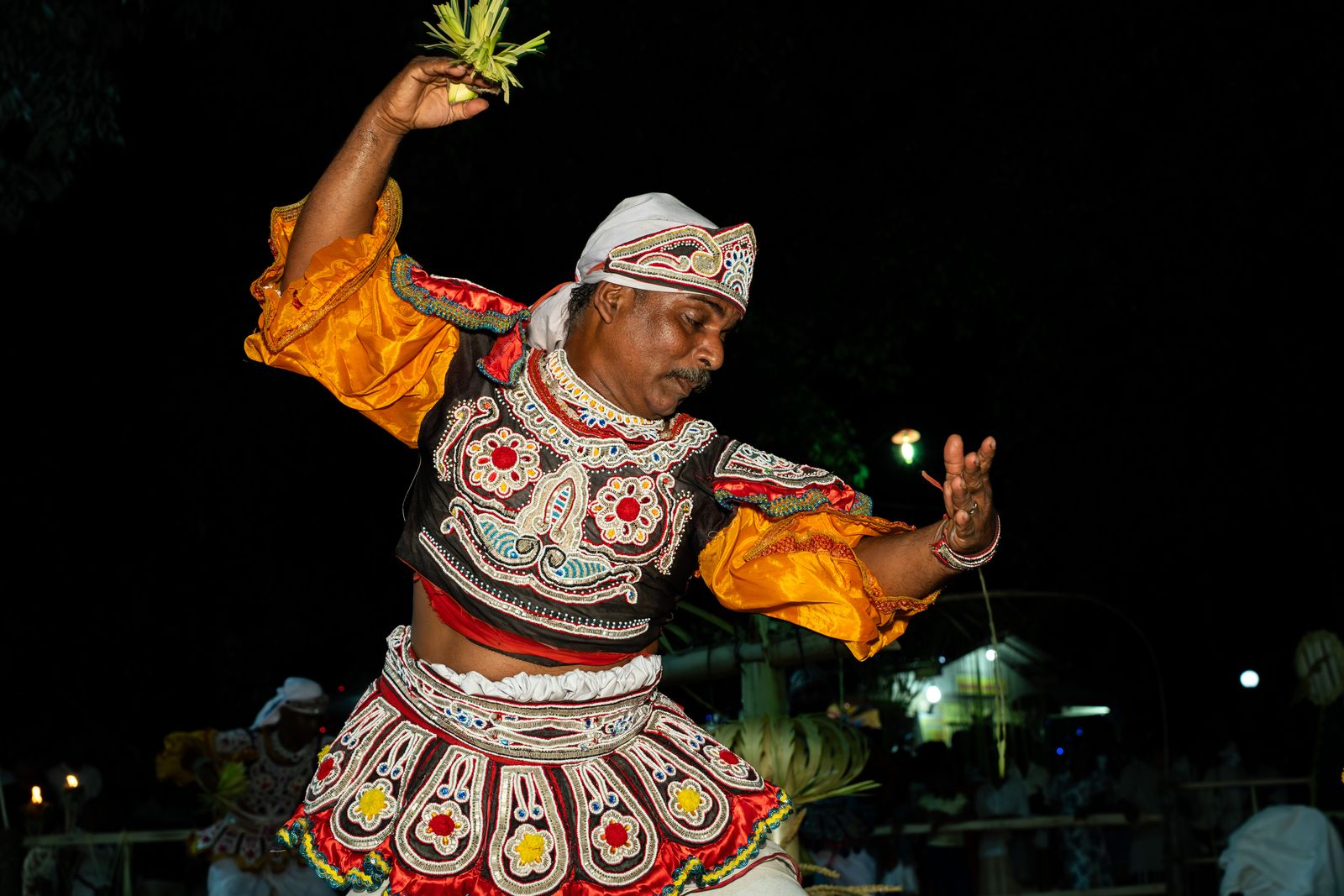
The Kandy Esala Perahera 2026 ran from 18 to 28 August, and it was the busiest edition I have seen in years. Ten nights of drumming, fire and roughly a hundred caparisoned elephants circling the Temple of the Tooth.
I have watched this procession since I was a schoolgirl, and I have arranged Perahera trips for hundreds of visitors. Every year I answer the same questions about the Kandy Esala Perahera 2026 and its dates. Which night is worth the effort? How much do seats really cost?
Guests also ask whether it is worth changing a whole itinerary for one festival. For this one, my honest answer is usually yes.
So this is the guide I wish someone had handed me years ago. Everything in it comes from the official festival programme, the Kandy Municipal Council’s own ticketing portal, and my own evenings on those pavements.
If you are planning ahead, the same structure applies every year. Read how the Kandy Esala Perahera 2026 worked, then plan the next one.
Kandy Esala Perahera 2026 — The Quick Answer
If you read one paragraph, read this. The Kandy Esala Perahera 2026 was a ten-night festival, with public nighttime processions from 18 to 27 August 2026 and a daytime procession on 28 August 2026.
The first five nights are the Kumbal Perahera. The next four are the Randoli Perahera, which is bigger and more elaborate. The grand finale is the Last Randoli Perahera on 27 August, the Nikini full-moon night.
Street viewing is free, but you need to claim your spot by about 5:30 pm. Reserved grandstand seats are sold by the Kandy Municipal Council. For the Kandy Esala Perahera 2026 they cost between LKR 5,000 and LKR 28,500, depending on the night and the row.
Here is the same answer in one table, in case you are comparing nights for the Kandy Esala Perahera 2026.
| Question | Kandy Esala Perahera 2026 answer |
|---|---|
| Main festival dates | 13 to 28 August 2026 (opening rite to water-cutting) |
| Nighttime processions | 18 to 27 August 2026, 6:28 pm to 7:00 pm start |
| Best single night | 27 August 2026, the Last Randoli Perahera |
| Calmer but still beautiful | 23 to 26 August 2026 (Randoli), or 18 to 22 August (Kumbal) |
| Free or paid | Street is free; grandstands LKR 5,000 to LKR 28,500 |
| Official seat seller | Kandy Municipal Council Perahera booking portal |
| Where it happens | Streets around the Temple of the Tooth, central Kandy |
One honest note before we go further. The Kandy Esala Perahera 2026 has finished, so this page now works in two ways. Use it to relive the nights you attended, or use it to plan the next edition, because the rhythm of the festival barely changes from year to year.
Kandy Esala Perahera 2026 in Numbers
Numbers help you picture the scale before you commit to a night. These figures come from the organisers and from my own count over several evenings of the Kandy Esala Perahera 2026.
| Detail | 2026 figure |
|---|---|
| Public procession nights | 10 (5 Kumbal, 5 Randoli) |
| Caparisoned elephants | Up to about 100 |
| Performers each night | Around 1,500 |
| Processions in one parade | 5 (the temple plus four devalas) |
| Typical parade length | 3 to 5 hours |
| Official grandstand seats | 380 a night across 19 blocks |
| Grandstand nights | 5 (21, 22, 25, 26 and 27 August) |
| Seat prices | LKR 5,000 to LKR 28,500 |
When I stood near the lake on the final night of the Kandy Esala Perahera 2026, the procession took well over three hours to pass a single point. That is the practical reality behind the poster image.
Sri Lanka received about 1.34 million visitors during 2026, and August is always one of the busiest months. The festival is the main reason, so plan your Kandy Esala Perahera 2026-style trip well ahead. For the festival weeks themselves, hotel demand peaks hard.
What Is the Kandy Esala Perahera?
The Kandy Esala Perahera is Sri Lanka’s grandest Buddhist procession, held every year in the hill capital of Kandy. It is a religious rite first and a spectacle second, and that order matters.
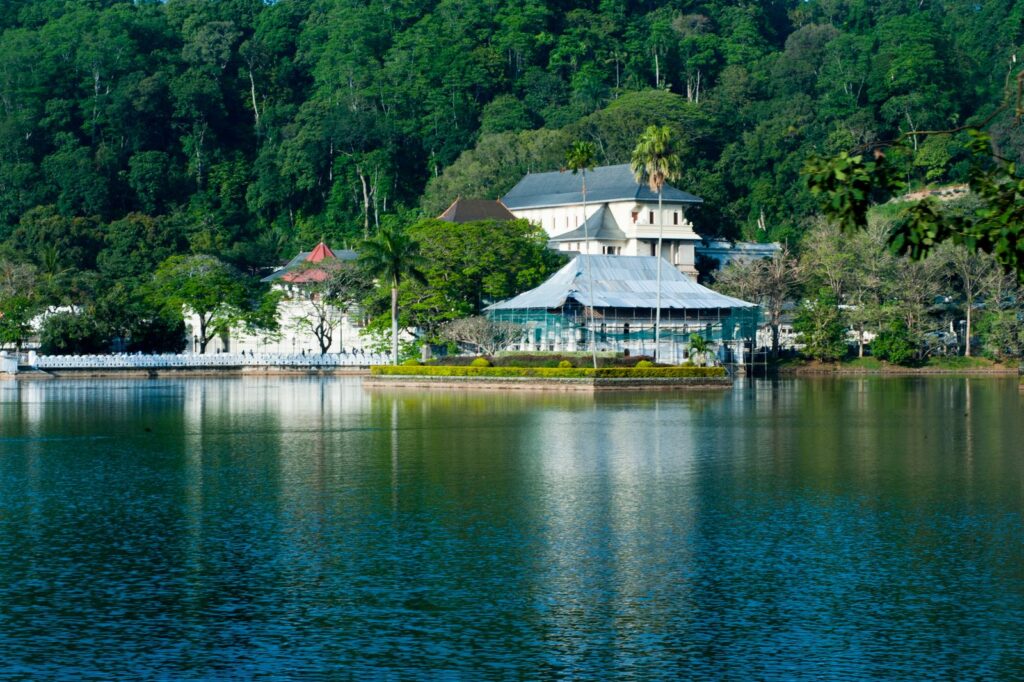
The Kandy Esala Perahera 2026 drew crowds from every corner of the island, and the festival honours the Sacred Tooth Relic of the Buddha. That relic is kept at the Sri Dalada Maligawa, or Temple of the Tooth. The temple sits beside Kandy Lake, inside the old royal precinct that UNESCO listed as a World Heritage Site in 1988.
The word “perahera” simply means procession. “Esala” is the lunar month in which it falls, roughly July to August in the Western calendar. That is why the exact dates of the Kandy Esala Perahera 2026 moved slightly from the year before.
Where the Kandy Esala Perahera tradition comes from
The present form of the festival is usually dated to 1775, when King Kirthi Sri Rajasinha brought together the processions of four Hindu devalas with the Buddhist Dalada procession. Those four shrines are Natha, Vishnu, Kataragama and Pattini.
Now the Kandy Esala Perahera is really five processions in one, each with its own drummers and dancers, moving through the streets as a single river of sound. The order is fixed and has been for generations.
The relic itself, a tooth believed to be the Buddha’s left canine, arrived in Sri Lanka in the fourth century. Tradition credits Princess Hemamala and Prince Dantha with carrying it from Kalinga.
Since 1990 the tooth carried in the Kandy Esala Perahera has been a replica, while the original stays in the temple’s inner sanctum. You can read the temple’s own account of the Kandy Esala Perahera history at the official Sri Dalada Maligawa website.
Why the festival matters so much to Sri Lanka
On the nights I attended, Kandy was full of Sri Lankan families who had travelled from every province, sitting on the pavement with their children. That mix of visitors and local families is part of what makes the Kandy Esala Perahera 2026 feel like a real festival.
The national tourism authority treats the event as a flagship cultural draw. You can see how it fits Sri Lanka’s wider visitor offering on the official Sri Lanka Tourism website.
If you want to understand where Kandy sits in a wider route, our Sri Lanka Cultural Triangle guide explains how the hill capital connects to Sigiriya, Dambulla and Anuradhapura.
Kandy Perahera Schedule 2026 — Night by Night
The Kandy Perahera schedule 2026 was announced in advance by the Sri Dalada Maligawa, and the structure is the same every year. Ten public nights, then a daytime procession, then a closing rite.
Everything opens with the Kap Situveema, which in the Kandy Esala Perahera 2026 fell on 13 August. That morning ritual plants a blessed jackfruit trunk at each devala and marks the formal start of the festival, but it is not a public parade.
After that the ten nights of the Kandy Esala Perahera 2026 ran as follows.
| Date (2026) | Night | Approx. start | Notes |
|---|---|---|---|
| 13 August | Kap Situveema | Morning | Opening rite, not a public procession |
| 18 August | 1st Kumbal Perahera | 6:52 pm | Quieter, good for families |
| 19 August | 2nd Kumbal Perahera | 6:41 pm | Quieter, good for families |
| 20 August | 3rd Kumbal Perahera | 6:53 pm | Crowds begin to build |
| 21 August | 4th Kumbal Perahera | 6:40 pm | Grandstand tickets available |
| 22 August | 5th (Last) Kumbal Perahera | 6:28 pm | Grandstand tickets available |
| 23 August | 1st Randoli Perahera | 6:44 pm | Bigger procession begins |
| 24 August | 2nd Randoli Perahera | 7:00 pm | Good balance of scale and space |
| 25 August | 3rd Randoli Perahera | 6:53 pm | Grandstand tickets available |
| 26 August | 4th Randoli Perahera | 6:44 pm | Grandstand tickets available |
| 27 August | Last Randoli Perahera | 6:43 pm | Grand finale, Nikini full moon |
| 28 August | Dahawal Perahera (day) | 2:18 pm | Daytime procession, then Diya Kepeema |
Two things are worth understanding about that table. First, the Kandy Perahera schedule is set by the moon, so the dates shift every year by a week or two. Second, the starting times drift by a few minutes each night because they follow an astrologically chosen moment.
In the Kandy Esala Perahera 2026 the processions left between 6:28 pm and 7:00 pm. That is the window to plan around, and it has been consistent for years.
The closing rites — Dahawal Perahera and Diya Kepeema
The festival ends with the Diya Kepeema, or water-cutting ceremony, at dawn on 28 August 2026 at Getambe on the Mahaweli River. Only a small crowd attends, and it is a sober, beautiful end to the whole thing.
Before that, the Dahawal Perahera brings the whole procession out in daylight. For anyone who dislikes crowds in the dark, the daytime parade of the Kandy Esala Perahera 2026 was the easiest and most photogenic of the twelve.
Kumbal Perahera vs Randoli Perahera — Which Nights Should You Pick?
This is the decision that matters most, and most guides rush it. The first five nights are the Kumbal Perahera. The next four nights and the finale are the Randoli Perahera. Everything below is based on the Kandy Esala Perahera 2026 dates.
The Kumbal nights are shorter, less crowded and easier to photograph. The Randoli nights add the goddesses’ palanquins, more elephants and far more people. If you have children or a camera, the Kumbal nights of the Kandy Esala Perahera 2026 were quietly wonderful.
The Randoli nights are the ones people travel across the world for. The Last Randoli Perahera on 27 August 2026 was the longest and most spectacular night of the whole Kandy Esala Perahera 2026. It also emptied every hotel room in Kandy weeks in advance.
Here is my honest comparison, based on eight years of taking guests to both.
| Feature | Kumbal Perahera | Randoli Perahera |
|---|---|---|
| Nights in 2026 | 18 to 22 August | 23 to 27 August |
| Procession length | Shorter, roughly 2 to 3 hours | Longer, roughly 3 to 5 hours |
| Elephants | Fewer, but still dozens | Up to about 100 caparisoned elephants |
| Performers | Around 1,000 per night | Around 1,500 per night |
| Crowd pressure | Manageable on the street | Heavy, especially the last two nights |
| Best for | Families, photographers, first-timers | Anyone who wants the full spectacle |
My advice is simple. If you can attend two nights, take one Kumbal night and one Randoli night and compare them yourself. If you can only attend one, take a Randoli night, ideally the 3rd or 4th rather than the finale.
The finale of the Kandy Esala Perahera 2026 was magnificent, but it was also the night when the pavement was three deep and the roads closed early. Guests who chose the 25th or 26th almost always tell me afterwards that they saw just as much and enjoyed it more.
Kandy Esala Perahera Tickets — Official Prices and How to Book
Kandy Esala Perahera tickets are only sold officially through the Kandy Municipal Council, so ignore anyone else claiming to be the official seller. In the Kandy Esala Perahera 2026 the council ran 19 viewing blocks with 380 seats per night across five nights.
Those five grandstand nights were 21, 22, 25, 26 and 27 August 2026. Every other night, the pavements and roadside spaces are open to anyone, free of charge.
Kandy Esala Perahera tickets in 2026 started at LKR 5,000 for the back row on a Kumbal night. At the top end, a front-row seat for the Last Randoli Perahera cost LKR 28,500. That is roughly USD 17 to USD 95 per seat, and the ladder is similar every year.
| Seat row | Kumbal nights (21, 22 Aug) | 3rd Randoli (25 Aug) | 4th Randoli (26 Aug) | Last Randoli (27 Aug) |
|---|---|---|---|---|
| Row 1 (front, seats 01-05) | LKR 10,000 | LKR 15,000 | LKR 20,000 | LKR 28,500 |
| Row 2 (seats 06-10) | LKR 7,500 | LKR 15,000 | LKR 18,500 | LKR 25,000 |
| Row 3 (seats 11-15) | LKR 5,000 | LKR 10,000 | LKR 12,500 | LKR 17,500 |
| Row 4 (last, seats 16-20) | LKR 5,000 | LKR 10,000 | LKR 10,000 | LKR 17,500 |
The booking flow is straightforward. For the Kandy Esala Perahera 2026 you picked a night and chose your exact row and seat on an interactive block map. You then paid through a secure gateway and received a QR-coded e-ticket by email.
You can see the live portal and the current pricing at the Kandy Municipal Council Perahera booking site. Book as early as you can, because the good Kandy Esala Perahera tickets on the last two nights disappear months out.
Are Kandy Esala Perahera tickets worth the money?
For a first visit, yes, on one night. A grandstand seat means you sit above the crowd, you can see the whole procession pass, and you are not standing for three hours.
For a second or third night, I would skip the seats and stand on the street instead. Free viewing on the pavement gives you a completely different experience, with the drums passing a metre away.
What you should never do is buy from a man on the street with a laminated card. There were reports again during the Kandy Esala Perahera 2026 of touts selling fake seats on the night, and the council has no obligation to honour them.
Kandy Perahera Viewing Spots — Free Pavements and Paid Seats
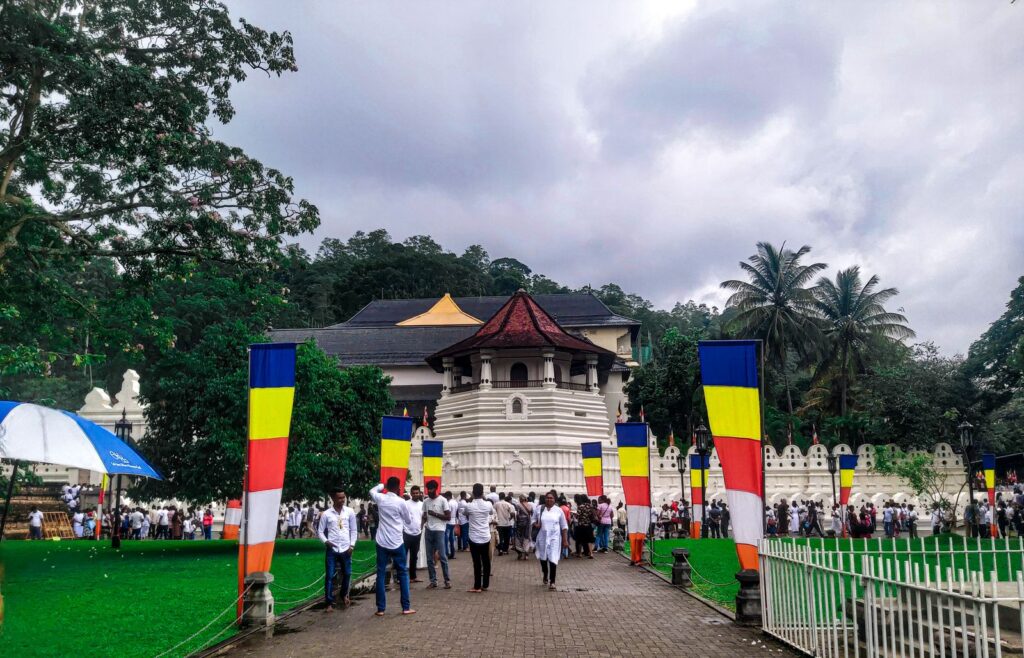
Kandy Perahera viewing spots fall into three practical types, and each suits a different kind of traveller. Knowing them in advance is the difference between a great night and a frustrating one. Here is how they worked during the Kandy Esala Perahera 2026.
The first type is the official grandstand, which circles the route near the Temple of the Tooth and along Dalada Veediya. This is the paid option, and it gives you a chair, a number and a clear line of sight.
The second type is the public pavement anywhere along the route. It is free, it fills up from about 3 pm on Randoli nights, and it is where the atmosphere of the Kandy Esala Perahera 2026 actually lived.
The third type is a hotel balcony or rooftop overlooking the route. A handful of central Kandy hotels sell dinner-and-view packages, and for older travellers or anyone with mobility limits this is often the best value.
My favourite free Kandy Perahera viewing spots are the stretch along the lake side of the route and the corners where the procession turns, because the elephants slow down there. Get there by 5 pm, bring something to sit on, and you will be comfortable.
| Viewing option | Cost in 2026 | Arrive by | Best for |
|---|---|---|---|
| Official grandstand | LKR 5,000 to LKR 28,500 | 5:00 pm | First-timers, anyone who wants a seat |
| Public pavement | Free | 4:00 to 5:00 pm | Atmosphere and close-up photos |
| Hotel balcony or roof | Dinner package | 6:00 pm | Families, older travellers, mobility limits |
Roads in central Kandy close from about 5:30 pm on procession nights, so whatever you choose, be inside the closure zone before that. Tuk-tuk drivers will not be able to reach the temple area afterwards.
One more tip. If you are staying outside the centre, our guide to getting around Sri Lanka explains how to time a driver for a Perahera evening without getting stuck in the jams.
The Kandy Esala Perahera 2026 Route, Step by Step
The route is a loop through the old city, and it has barely changed in two centuries. Every night the five processions assemble near the Temple of the Tooth and then circle the sacred precinct.
They move out along Dalada Veediya, past the old royal palace and the lake, before turning through the main streets of the city centre. The exact sequence takes in D.S. Senanayake Veediya, King Street and Yatinuwara Veediya before the return to the temple.
Because the Kandy Esala Perahera 2026 route is a loop, you never need to chase it. Stand anywhere along it, watch the procession pass, and you have seen the whole thing within an hour or so. This is how it has worked for generations.
The spectacle builds as it reaches you. First come the whip-crackers, whose snaps you hear long before you see them, then flag bearers, then the drummers, then the dancers and finally the elephants.
The Maligawa Tusker, carrying the golden casket on a decorated howdah, is the emotional centre of the whole night. When he passed on the final evening of the Kandy Esala Perahera 2026, the crowd went quiet in a way that is hard to describe.
Kandyan Dancers and Drummers — What You Are Actually Watching
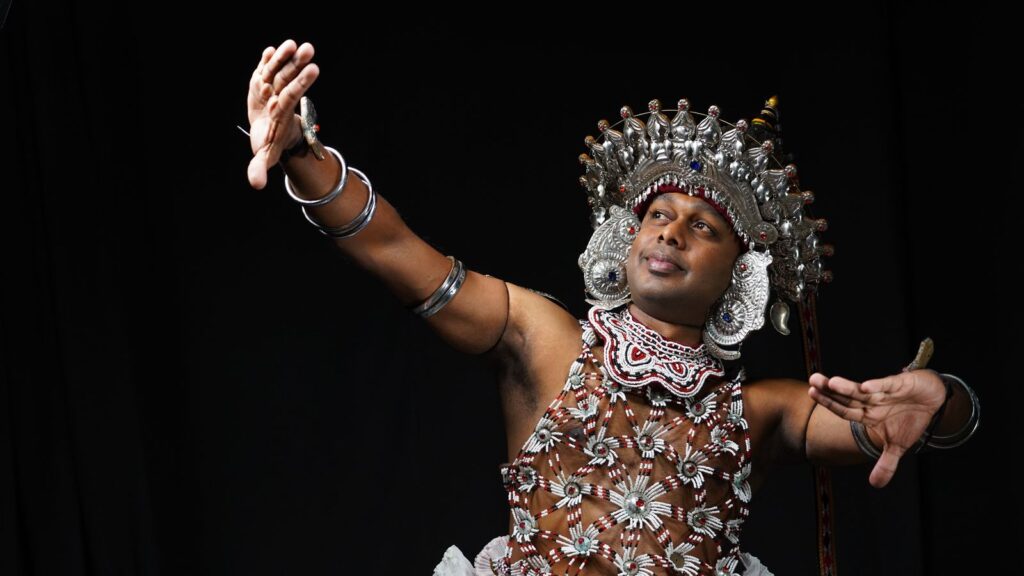
The Kandyan dancers and drummers are the heart of the procession, and knowing the order helps you appreciate it. This is not a parade of floats. It is a ritual with a strict, inherited sequence.
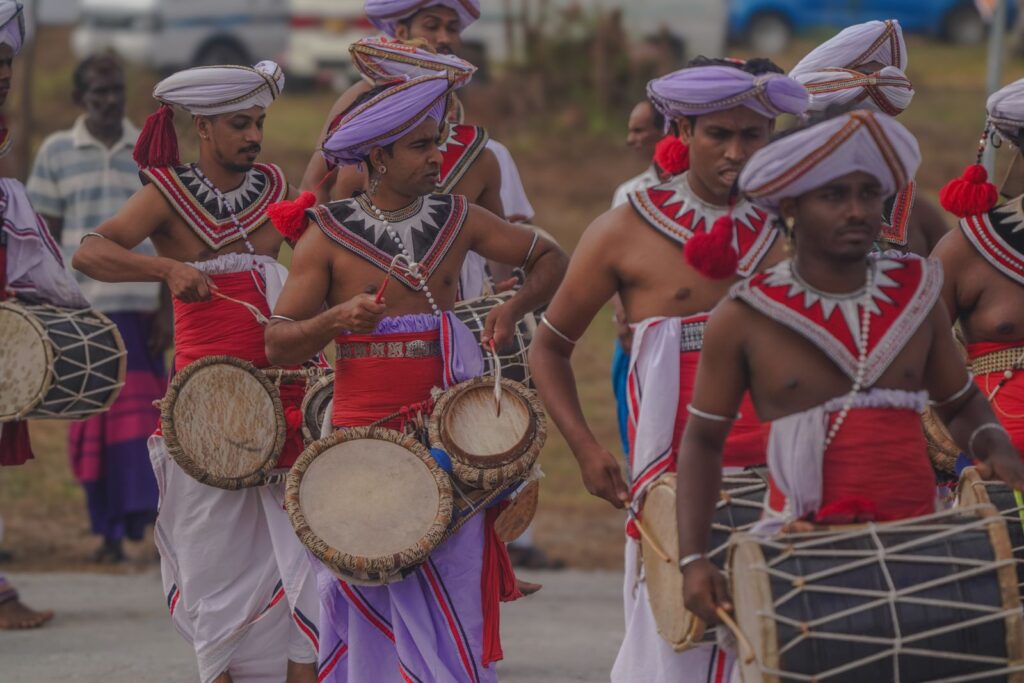
The hewisi drummers come first with their horizontal drums, setting a rhythm that never really stops. Then the flag bearers, carrying the standards of the four devalas and the temple.
The Ves dancers are the ones most visitors photograph. Their headdresses are built from more than sixty pieces of silver, and the dance is a devotional form, not a performance for the crowd.
Then come the fire dancers and the gini bola, the spinning fireballs. During the Kandy Esala Perahera 2026 the fireball display was again handled by the Bolawatte family, who have carried that role for generations.
Behind them walk the acrobats, the stilt walkers and the drummers of the four devalas, then the elephants with their mahouts. The Diyawadana Nilame, the chief custodian of the temple, traditionally brings up the rear.
For pure colour and the biggest company of Kandyan dancers and drummers, the Last Randoli Perahera on 27 August 2026 was the night to see. For a real sense of the ritual, a quieter Kumbal night lets you watch the dancers instead of glimpsing them.
Esala Perahera Elephants — Welfare, Ethics and What to Watch For
The Esala Perahera elephants are the most photographed part of the festival, and also the most debated. Around 100 caparisoned elephants walked in the Kandy Esala Perahera 2026 processions, and each one carries heavy ceremonial regalia for hours.
That is a real welfare question, and Sri Lanka is discussing it openly. The procession is a religious duty for the temples, many of which have owned and cared for their elephants for generations.
Others are brought in from private owners for the season. In recent years animal welfare groups have raised concerns about the hours, the crowds, the heat and the lighting during the festival. Some temples have reduced the number of Esala Perahera elephants in response.
As a visitor, you have more influence than you think. Attend as a respectful guest, and keep your money away from the parts of the Esala Perahera elephants industry that treat the animals as a photo prop.
How to attend the elephants procession responsibly
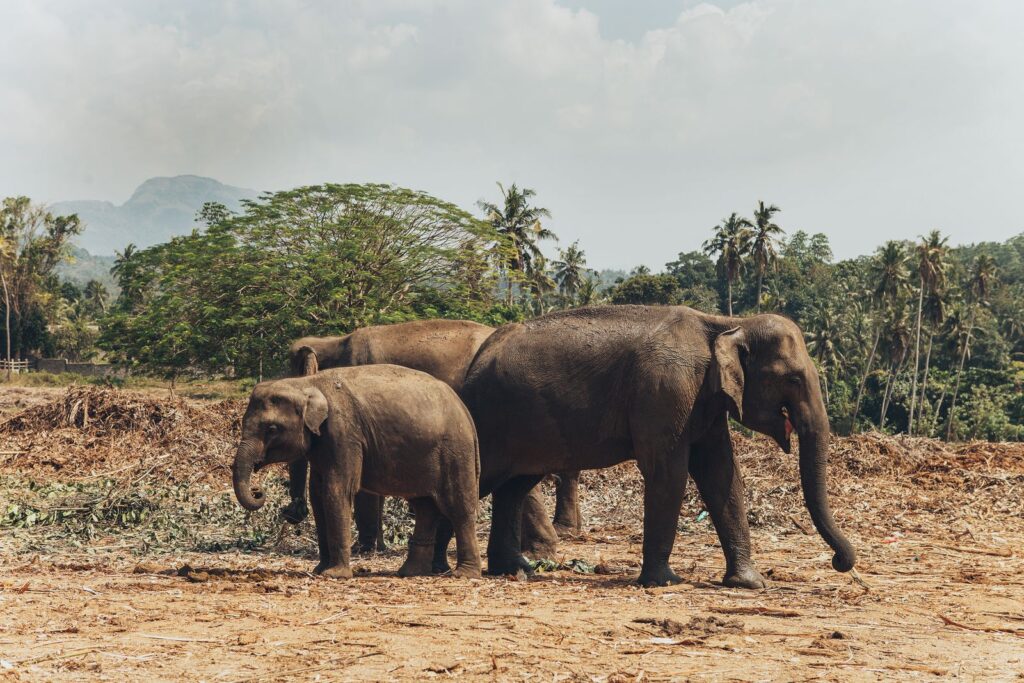
Do not buy an elephant ride, a trunk blessing or a posed photograph anywhere near the festival. Those side businesses are what push elephants into long working days.
Do not use flash photography at night, and do not step into the route to get closer to an elephant. A startled elephant in a crowded street is a genuine danger to everyone nearby.
Do book through operators who contribute to the temples rather than to middlemen. When we arrange Perahera evenings, the money goes to the council and the local guides, not to anyone selling animal encounters.
Finally, remember what you are watching. For Sri Lankan Buddhists the Esala Perahera elephants are carrying a sacred relic, and that dignity is worth more than any photograph.
Getting to Kandy and Where to Stay for the Perahera
Kandy sits in the hill country, about 115 km from Colombo and roughly the same distance from Bandaranaike International Airport. In normal traffic that drive takes three to four hours. On a Kandy Esala Perahera 2026 procession night it can take much longer.
My strong advice is to sleep in Kandy for at least two nights, and to arrive before the afternoon of your chosen procession. Day-tripping from Colombo on a Randoli night is the single most common mistake I see.
The most scenic way in is the train from Colombo Fort or, better still, the hill-country line from Hatton or Nuwara Eliya. Our Nuwara Eliya tea country tour pairs beautifully with a Perahera stay.
For hotels, the map matters more than the star rating. Anything within walking distance of the lake or the temple means you can walk home after the Kandy Esala Perahera 2026 procession instead of waiting an hour for a tuk-tuk.
| Area | Walk to route | Best for |
|---|---|---|
| Around Kandy Lake | 5 to 15 minutes | Most visitors, best all-round choice |
| City centre near the temple | 2 to 10 minutes | Close-up access, but noisiest |
| Peradeniya Road / outskirts | 20 to 30 minutes | Cheaper rooms, quieter nights |
| Hill guesthouses above the city | 15 to 25 minutes | Views, cooler air, needs transport |
Book early, and I mean months early for the finale. Kandy’s central hotels have been effectively sold out for the last few Perahera weeks, and prices spike hard.
If you want us to hold rooms and seats together, our Kandy tour packages are built around exactly this kind of timing.
What to Wear, Bring and Expect on Perahera Night
August in Kandy is warm and humid, with daytime temperatures around 28 to 32 degrees Celsius and a real chance of an evening shower. Dress for a long, sticky, wonderful night.
Wear light, comfortable clothing and shoes you can stand in for hours. Remember that you are in a sacred setting, so shoulders and knees covered is the respectful choice, especially near the temple.
Bring water, a light rain jacket, a small cushion or folded cloth to sit on, and a power bank for your phone. Mosquito repellent helps if you are near the lake after dark during the Kandy Esala Perahera 2026 season.
Expect noise, crowds and a slow walk home. The procession finishes late, the streets stay full for another hour, and the tuk-tuks are all taken. None of that changes from year to year, and it did not during the Kandy Esala Perahera 2026.
Expect, too, that the religious elements are not a show. Locals will be praying, and the drumming has meaning. Follow the police and stewards, and never push through a family to get a photo.
Photographing the Kandy Esala Perahera 2026
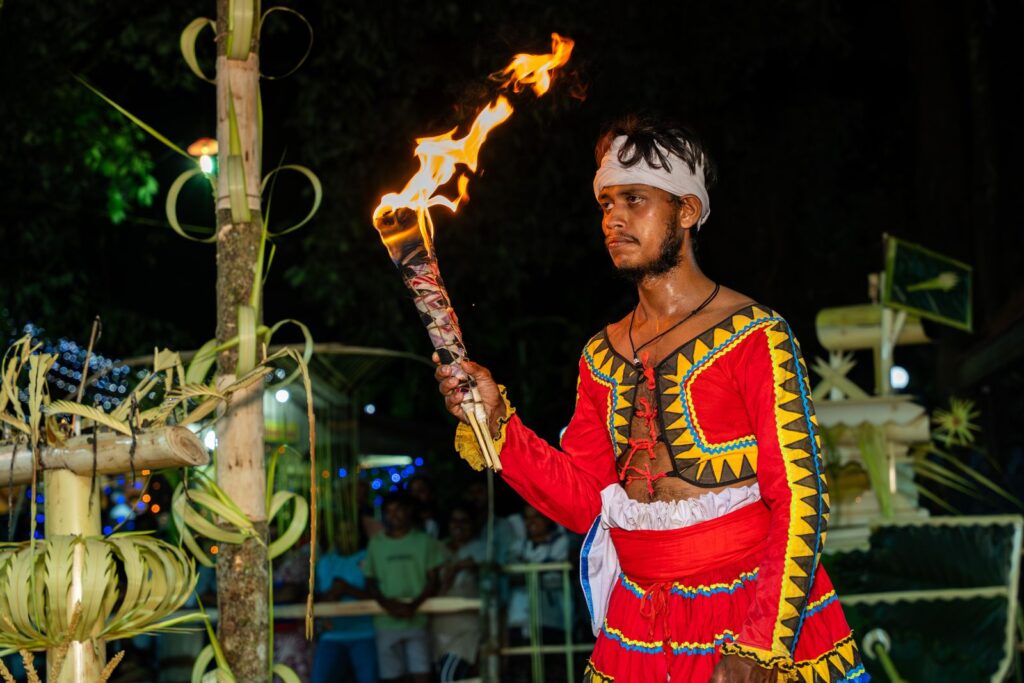
Night photography at the Kandy Esala Perahera 2026 was genuinely difficult, so go in with a plan. The light is low, the subjects move, and the crowd jostles you constantly.
Take a fast prime lens if you have one, set a high ISO and shoot in bursts. Turn off flash, both for the elephants and out of respect for the ritual. That one rule made the biggest difference for me during the Kandy Esala Perahera 2026.
The fire dancers are the easiest subject, because they light themselves. For the elephants, wait for the moments when they pass under a street lamp or the temple lights.
Arrive early and claim a spot near a turn, where the procession slows and you get a few precious seconds of relative stillness. Then put the camera down for a minute and just watch the Kandy Esala Perahera 2026 pass by.
Kandy Esala Perahera 2027 — Dates and How to Plan Ahead
The Kandy Esala Perahera 2027 is expected in late July to August 2027, and the exact dates will be confirmed by the Sri Dalada Maligawa closer to the time. The festival follows the lunar calendar, so the window moves each year.
Because of that, keep your dates flexible until the temple publishes the programme, usually a few months out. Then lock your Kandy nights immediately.
Use the Kandy Esala Perahera 2026 calendar as your template. Expect the opening rite in early August 2027, five Kumbal nights, four Randoli nights, a grand finale on the Nikini full moon and a daytime procession the next day.
The festival falls in Sri Lanka’s south-west monsoon season for the hill country, so pack for warm days and wet evenings. Our month-by-month guide to the best time to visit Sri Lanka explains how that regional weather works.
Building the Kandy Esala Perahera 2026 Into a Wider Trip
Kandy is an easy fit into almost any Sri Lanka itinerary, which is lucky, because flying in for one night wastes the journey. Give the hill country at least three nights around the festival.
A shape that works well is Sigiriya and Dambulla first, then Kandy for the Perahera, then the train through Nuwara Eliya to Ella. That covers the Cultural Triangle, the festival and the tea country in one sweep.
If you are here for a week, our 7-day Sri Lanka itinerary already threads Kandy into the middle. Add the Kandy Esala Perahera 2026 dates and you have a genuinely special week.
For a longer trip, or one built around the festival dates, the simplest answer is a custom route. We hold the Kandy nights fixed and build everything else around them. That is exactly how we built our own Kandy Esala Perahera 2026 trips.
You can also read more about the temple itself on our Temple of the Sacred Tooth Relic page, and see the wider region through our Cultural Triangle guide.
Seven Mistakes to Avoid at the Kandy Perahera
After years of watching guests get this right and wrong, these are the mistakes that cost people the most during the Kandy Esala Perahera 2026.
- Day-tripping from Colombo or the coast. You will spend more time in traffic than at the procession. Stay in Kandy.
- Turning up at 7 pm. The route is full by then. Be in position by 5 pm on a Randoli night.
- Buying seats from a tout. Kandy Esala Perahera tickets come from the Municipal Council portal, full stop.
- Picking only the finale. The Last Randoli is beautiful but brutal for crowds. The 3rd or 4th Randoli night is often a better experience.
- Forgetting the roads close. Central Kandy shuts from about 5:30 pm, so plan your evening around walking.
- Using flash at the elephants. It is dangerous, disrespectful and gives you a worse photograph anyway.
- Treating it as a show. The Kandy Esala Perahera 2026 was a religious festival with tourists in the audience, not the other way round.
Frequently Asked Questions
When exactly was the Kandy Esala Perahera 2026?
The Kandy Esala Perahera 2026 opened with the Kap Situveema rite on 13 August 2026 and closed with the water-cutting ceremony on 28 August 2026. The public nighttime processions ran from 18 to 27 August 2026.
How many nights is the Perahera, and which night is best?
There are ten public nights: five Kumbal and five Randoli, followed by a daytime procession. The best single night is the Last Randoli Perahera on the Nikini full moon, but the 3rd and 4th Randoli nights are calmer and nearly as impressive. That held true for the Kandy Esala Perahera 2026.
How much do official Kandy Esala Perahera tickets cost?
For the Kandy Esala Perahera 2026 they ranged from LKR 5,000 for a back-row seat on a Kumbal night. The front row on the Last Randoli night cost LKR 28,500. That is roughly USD 17 to USD 95 per seat.
Can I watch the Kandy Esala Perahera for free?
Yes. Street viewing along the whole route is free, and it is how most Sri Lankan families watch. Arrive by 4 to 5 pm on a Randoli night to claim a good space on the pavement. That was true throughout the Kandy Esala Perahera 2026.
Where do I buy official Perahera seats?
Only through the Kandy Municipal Council’s own booking portal. You choose a night, pick a seat on a block map, pay online and receive a QR-coded e-ticket. There is no other official seller.
How far in advance should I book a hotel in Kandy?
For the Randoli nights and especially the finale, book three to six months ahead. Central Kandy has sold out completely in recent years, and prices rise sharply as the festival approaches.
What time does the Kandy Perahera schedule start each night?
During the Kandy Esala Perahera 2026 the processions left between 6:28 pm and 7:00 pm, following an astrologically chosen moment. The exact minute shifts slightly each night, so check the published schedule on the day.
Is the Kandy Esala Perahera suitable for children or older travellers?
It can be, with planning. Choose a Kumbal night or the 3rd Randoli, book a grandstand seat or a hotel balcony, and arrive early. Standing in a crowd for hours suits nobody under eight or over seventy.
Do I need tickets for the Dahawal or daytime Perahera?
No. The daytime procession on 28 August 2026 was free to watch. It is also far easier for photography, because you are not fighting the dark or the no-flash rule.
How do I get to Kandy for the Perahera?
By road from Colombo it is about three to four hours, and by train from Colombo Fort or Hatton it is slower but far more scenic. Our Sri Lanka transport guide covers both options in detail.
What should I wear to the Perahera?
Light, comfortable clothing with shoulders and knees covered, plus shoes you can stand in for hours. Bring a light rain jacket, water and something to sit on.
Is it ethical to attend the Esala Perahera elephants procession?
The festival is a genuine religious rite and many temple elephants are cared for over a lifetime. Watch respectfully, avoid elephant rides and posed photo encounters, skip the flash, and choose operators who pay the temples rather than the encounter industry.
When is the Kandy Esala Perahera 2027?
The Kandy Esala Perahera 2027 is expected in late July to August 2027, with exact dates confirmed by the Sri Dalada Maligawa closer to the festival. Keep your travel dates flexible until the programme is published.
Plan Your Kandy Esala Perahera Trip with Amazing Escapes Tours
We are a Sri Lanka based operator, and Kandy is one of the places we know best. Every Perahera trip we build puts the festival nights first and fits the rest of the island around them.
Tell us your dates, how many nights you want in the hill country and whether you would like grandstand seats or a hotel balcony. We will tell you honestly which nights are worth booking and which to skip.
What is included when we arrange a Perahera trip on the Kandy Esala Perahera 2026 pattern:
- Central Kandy hotel rooms held for the festival nights
- Official Municipal Council grandstand seats booked on your behalf
- A private vehicle and English-speaking driver-guide for the whole hill country leg
- Free re-planning if the festival dates shift, as they did for the Kandy Esala Perahera 2026
- Honest advice on which nights suit your family, your camera and your patience
Start with a free, no-obligation quote and let us build the festival into your trip. Request your custom Sri Lanka itinerary today, or browse our custom tour itinerary service to see how we work.
Planning around the Kandy Esala Perahera 2026 or looking ahead to 2027 should feel like advice from a friend who grew up watching it. That is the standard we hold ourselves to on every booking we take.
About the author: Dhanushika Hewa Paththinige is a Sri Lanka travel expert with over 8 years of experience designing custom tours for international visitors. As the founder of Amazing Escapes Tours, she arranges festival seats, hotels and hill-country routes for travellers every Perahera season. Her expertise covers island-wide itinerary design, cultural and heritage travel, and family and honeymoon holidays.