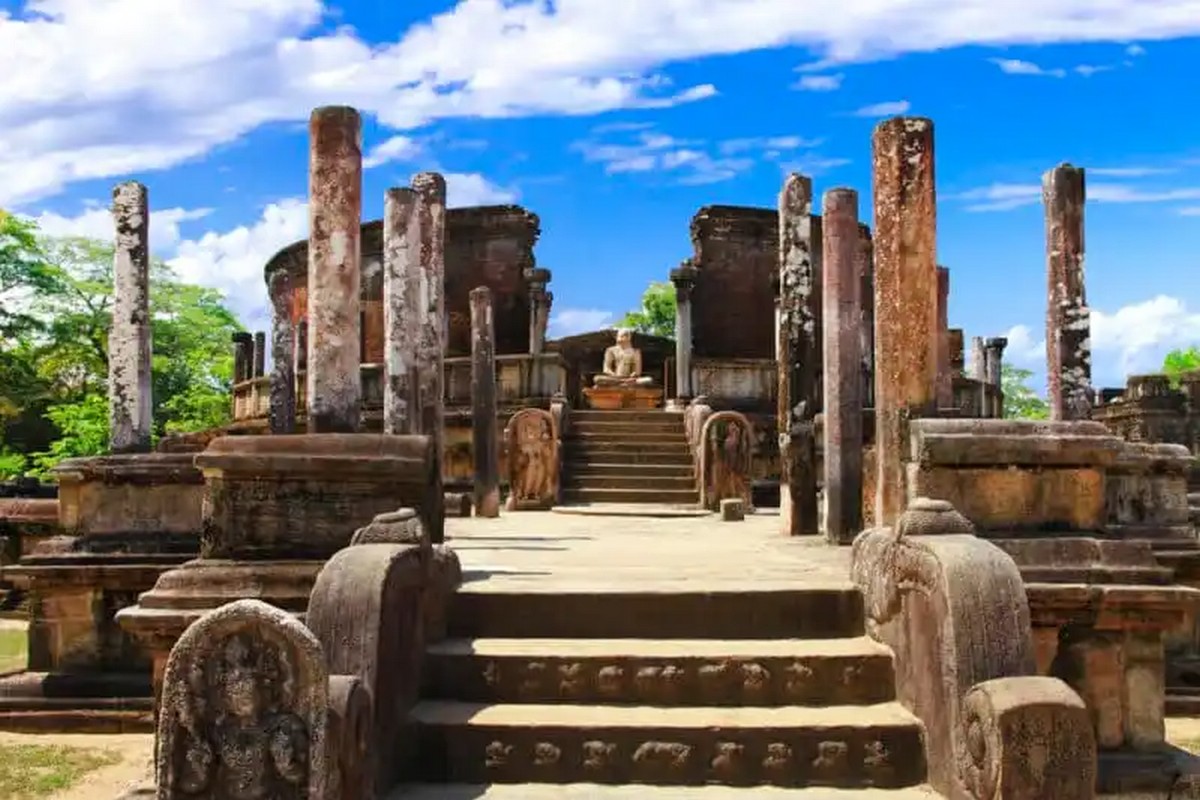
The ancient cities of Sri Lanka are not one place. Anuradhapura, the first capital, holds the sacred bodhi tree and the giant stupas of a kingdom that lasted 1,300 years. Polonnaruwa, forty miles east, is the garden city that replaced it — and its carved Buddhas at Gal Vihara are the finest stonework on the island. Most travellers see both badly, in one rushed day, because nobody told them the distances.
Last updated: November 2026 · By Dhanushika Hewa Paththinige, Amazing Escapes Tours
Ancient Cities Sri Lanka — The Quick Answer
| Detail | 2026 answer |
|---|---|
| How long you need | Two days minimum for both; three if you add Mihintale and Dambulla |
| Anuradhapura ticket | US$30 for a foreign adult, US$15 for SAARC nationals, one-day ticket |
| Polonnaruwa ticket | US$30, ticket includes the site museum |
| Combined round ticket | About US$50-55, covering Anuradhapura, Polonnaruwa, Sigiriya and the museums |
| Best months | December to March, the dry season in the Cultural Triangle |
| Anuradhapura to Polonnaruwa | Several hours by road — you cannot do both properly on one ticket day |
| Dress code | Shoulders and knees covered, shoes off at every shrine, hats off |
Things to Do in Anuradhapura
Anuradhapura was founded in the 4th century BC and ruled for more than a thousand years before it fell in 993. UNESCO inscribed the Sacred City in 1982, describing a city built around a cutting from the tree of enlightenment brought to the island in the 3rd century BC. That tree is still standing, and it is where most visitors should start.
- Sri Maha Bodhi — the oldest living tree in documented history, grown from a cutting of the original Bodhi tree at Bodh Gaya. Guarded, gold-fenced, and visited by pilgrims rather than tourists, which is the point.
- Ruwanwelisaya — the white stupa that photographs like nothing else in Sri Lanka. Best in early light before the pilgrims arrive in force.
- Jetavanaramaya — once the third-tallest structure in the ancient world. The brickwork alone takes twenty minutes to walk around.
- Abhayagiri — the monastery complex with the carved moonstone (sandakada pahana) at its entrance, the finest example of the form.
- Isurumuniya — the rock temple of the lovers’ carving, beside the Tissa Wewa tank.
- Kuttam Pokuna — the twin bathing pools, cut with a precision that still looks modern.
- Mihintale — twenty-five minutes from Anuradhapura and the birthplace of Buddhism on the island. The climb is 1,840 steps, and it is best done just after six in the morning.
Things to Do in Polonnaruwa
Polonnaruwa rose from Anuradhapura’s wreckage and, a century and a half later, produced the finest garden city in South Asia. It is compact, flat and easy to cycle, which makes it the more comfortable of the two for a hot day.
- Gal Vihara — four Buddhas carved from a single granite face, including the reclining figure. Be there at seven in the morning, when the light is flat and the coaches have not arrived.
- Vatadage — the circular relic house with its guardstones and moonstone, the most photographed structure in the city.
- Rankoth Vehera — the largest stupa at Polonnaruwa, and the one you can walk right up to.
- Royal Palace of Parakramabahu — what survives is the audience hall and its stone lion throne; the timber upper floors are long gone.
- Parakrama Samudra — the vast irrigation tank the kings built. Sunset from the bund is worth the detour.
- Archaeological Museum — included in your ticket, and the right first stop for ten minutes of context.
Dambulla — The Cave Temple on the Way
Any route between the two capitals passes Dambulla, and the cave temple complex there is worth two hours. Five caves, more than 150 Buddha images and ceiling paintings that have survived since the 16th century. It is 65 km and about ninety minutes from Polonnaruwa, which makes it a natural break rather than a separate day. Our ancient cities Sri Lanka tour uses exactly that sequence, and our Cultural Triangle tour guide covers how Dambulla fits with Sigiriya and Minneriya.
Tickets and What They Cost in 2026
Buy the site tickets in your own name, at the counter, and keep them — they are checked at each monument. The Anuradhapura Sacred City ticket is US$30 for a foreign adult and US$15 for SAARC nationals, and it covers the main monuments for one day. Polonnaruwa is US$30 and includes the museum at the ticket counter.
The Cultural Triangle round ticket costs roughly US$50-55 and covers Anuradhapura, Polonnaruwa, Sigiriya and the archaeological museums, with single entry per site. It is the most misunderstood ticket in Sri Lanka: it is good value if you are visiting all three, and a waste if you are not. Adding Sigiriya separately costs US$35. Cash is still the safe assumption at every counter.
How Long You Actually Need
Anuradhapura deserves a full morning plus Mihintale at dawn. Polonnaruwa deserves a full morning of its own, ideally by bicycle. Dambulla needs two hours. That is three nights if you do not want to spend your holiday in a vehicle.
A two-night / three-day shape works: arrive Anuradhapura, see the sacred city, sleep in Habarana, then Polonnaruwa early, then Dambulla on the way out. A three-night version adds Sigiriya and the Minneriya elephant gathering. What does not work is Anuradhapura and Polonnaruwa on one ticket day — the distances are too long and both sites close their gates in the late afternoon.
Best Time to Visit the Ancient Cities
December to March is the dry season in the Cultural Triangle: hot, clear, and the right months for photography. April and September are the inter-monsoon windows, when an afternoon downpour is likely but the sites are quieter. The northeast monsoon brings rain to this part of the island from October to January, which is why the dry-season advice holds even though the south coast is doing the opposite.
Whatever the month, work the sites early. The stone at Polonnaruwa radiates heat by eleven in the morning, and the shrines at Anuradhapura are at their most atmospheric before eight.
Getting There
Anuradhapura is about four to five hours from Colombo by road, or reachable by train and by domestic flight. Polonnaruwa is 55 km and about 75 minutes from Sigiriya, and 65 km from Dambulla. Most guests do the loop as a private route from the airport or from Kandy, which is why almost every quote we issue for the ancient cities includes a driver-guide rather than a series of buses.
Frequently Asked Questions
What are the best things to do in Anuradhapura?
The Sri Maha Bodhi, the Ruwanwelisaya and Jetavanaramaya stupas, the Abhayagiri monastery and its moonstone, Isurumuniya rock temple, the Kuttam Pokuna twin pools and the Mihintale climb twenty-five minutes away. Allow a full morning plus a dawn for Mihintale.
What are the best things to do in Polonnaruwa?
Gal Vihara at seven in the morning, the Vatadage, Rankoth Vehera, the Royal Palace audience hall, the archaeological museum included in your ticket, and sunset from the Parakrama Samudra tank bund. The city is flat, so cycling between them is the best way.
Is Anuradhapura or Polonnaruwa better?
They are different trips. Anuradhapura is the older, larger and more spiritual city, with the living bodhi tree and Mihintale. Polonnaruwa is compact, easier to walk or cycle, and holds the better sculpture. If you can only do one, choose Polonnaruwa for art and Anuradhapura for scale.
How much are the Anuradhapura and Polonnaruwa entrance fees in 2026?
Anuradhapura’s Sacred City ticket is US$30 for a foreign adult and US$15 for SAARC nationals, valid one day. Polonnaruwa is US$30 including the site museum. The combined Cultural Triangle round ticket costs roughly US$50-55 for all three cities plus museums.
Is the Cultural Triangle round ticket worth buying in 2026?
Yes if you are visiting Sigiriya, Anuradhapura and Polonnaruwa, because the three separate tickets cost more. No if you are skipping one of them. It allows single entry per site, so it does not cover a second visit to the same monument.
Can you visit Anuradhapura and Polonnaruwa in one day?
Not properly. The drive between them is several hours, both sites need a morning, and the gates close in the late afternoon. Doing both in one day means seeing the inside of a vehicle. Give each city its own day, and put Dambulla between them.
Do I need to cover my shoulders and remove my shoes?
Yes, at every shrine. Shoulders and knees covered for men and women, shoes and hats off before entering, and no posing with your back to a Buddha image. Socks help, because the stone courtyards get genuinely hot by mid-morning.
Is it worth paying for a guide at Anuradhapura and Polonnaruwa?
Yes, more than at almost any other site in Sri Lanka. These are ruins without labels — a stupa looks like a stupa until someone explains which king built it, why, and what the moonstone at the entrance actually depicts. Our guides are licensed site guides, not coach escorts.
How far is Polonnaruwa from Sigiriya and Dambulla?
Polonnaruwa is 55 km and about 75 minutes from Sigiriya, and 65 km — roughly ninety minutes — from Dambulla. That makes Habarana the sensible base for all three, which is exactly where our itineraries put you.
What is the best time of year to visit the ancient cities?
December to March, the Cultural Triangle dry season. Clear mornings, no monsoon rain, and the best light for the stupas. April and September are quieter but wetter, and the sites are at their hottest from March onward, so always work them before eleven.
Plan Your Ancient Cities Trip
The difference between a rushed ruin and an unforgettable one is usually the order you see them in, and whether anyone explains what you are looking at. Our ancient cities Sri Lanka tour runs two to five days with licensed site guides, tickets bought in your name, and the driving hours stated before you book.
Request a quote with your dates and we will tell you honestly how many days you actually need.