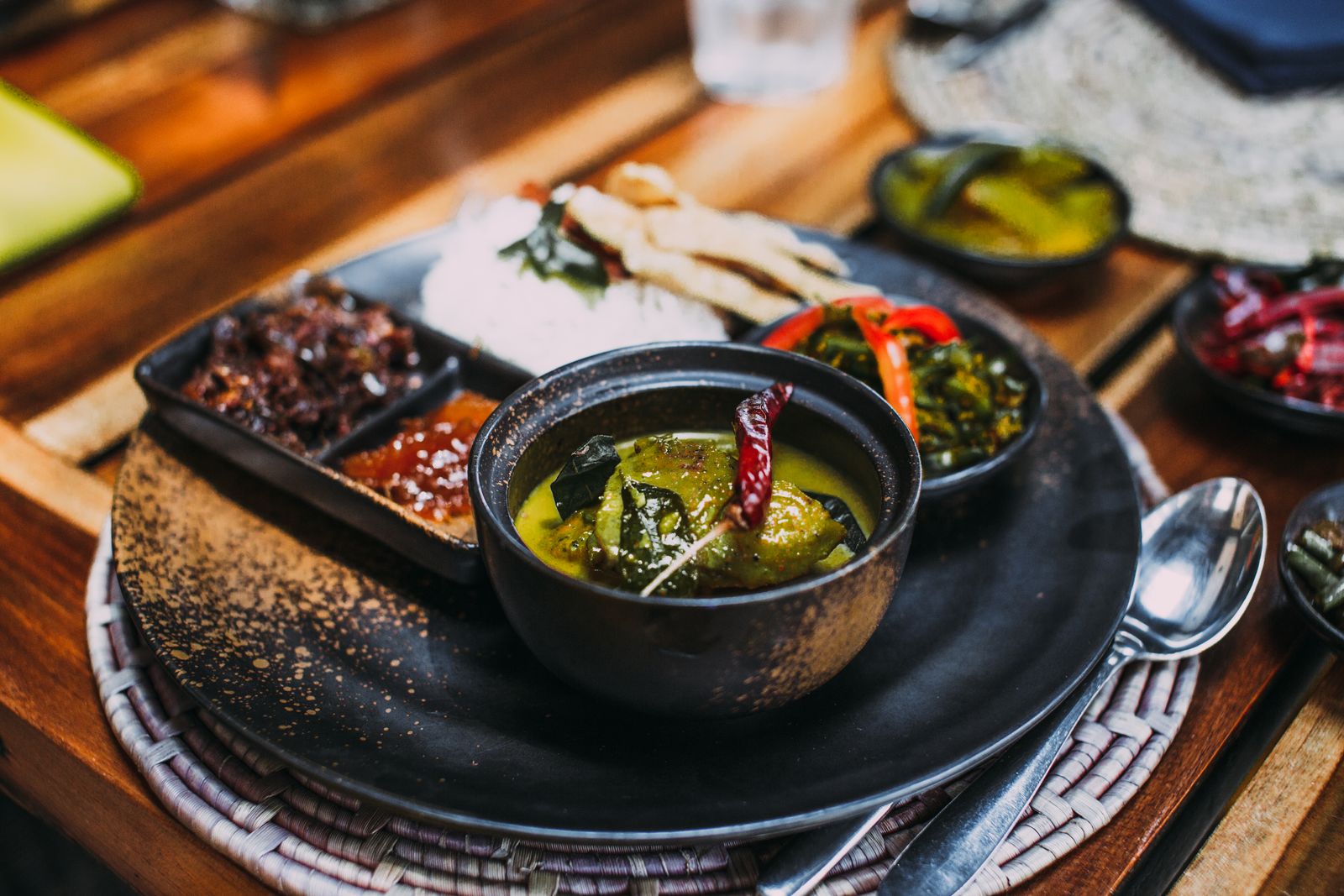
The first thing that surprises most visitors about Sri Lankan food is not the chilli. It is the number of dishes that arrive at once, all on one plate, none of them asking your permission first.
Here is the short answer. Sri Lankan food is built on rice, coconut milk, curry leaves and chilli, and it is served as a plate of rice with four to eight small curries around it. Lunch is the main meal, breakfast is the most varied, and dinner is often street food eaten standing up.
I have been designing food-led itineraries across this island for over eight years, and I still learn a dish every season. This guide to Sri Lankan food is the list I send guests before they fly, in the order I would have them eat it.
Everything below is checked against the published record of Sri Lankan cuisine, Sri Lanka Tourism’s official culinary pages and the UNESCO listing for kithul tapping. No prices are invented here, and no dish is described as “authentic” without a reason.
Sri Lankan Food — The Quick Answer
If you read one section, read this one. Sri Lankan food splits into four eating moments, and each one has its own shortlist. Breakfast is where the cuisine is most inventive, lunch is where it is most generous, and the late-afternoon snack is where it is cheapest and most fun.
The single most useful thing to know is that heat is not uniform. A plate of Sri Lankan food can hold a fiery chicken curry next to a coconut gravy that is barely spiced at all. You are always eating a range, never one level. That range is the reason Sri Lankan food works for cautious eaters as well as confident ones.
Here are the fifteen dishes worth planning around, with a heat rating from 0 to 5. That rating is ours, based on what guests actually finish, not an official classification.
| # | Dish | Local name | What it is | Best at | Heat |
|---|---|---|---|---|---|
| 1 | Rice and curry | Bath | Rice with several curries, sambol, mallum and papadam | Lunch | 3 |
| 2 | Dhal curry | Parippu | Red lentils simmered with turmeric, coconut milk and curry leaves | Lunch | 1 |
| 3 | Coconut sambol | Pol sambol | Grated coconut, chilli, red onion and lime | Any meal | 2 |
| 4 | Hoppers | Appa | Fermented rice-flour bowl pancake with a crisp rim | Breakfast | 1 |
| 5 | String hoppers | Indiappa | Steamed rice-flour noodle nests served with coconut gravy | Breakfast | 1 |
| 6 | Milk rice | Kiribath | Rice cooked in salted coconut milk, cut into squares | Breakfast | 1 |
| 7 | Pittu and pol roti | Pittu, pol roti | Steamed rice-and-coconut cylinders, and coconut flatbread | Breakfast | 1 |
| 8 | Chopped roti stir-fry | Kottu | Godamba roti chopped on a hot plate with egg, vegetables and curry | Dinner | 3 |
| 9 | Short eats | Short eats | Prawn fritters, fish cutlets, rolls and fish buns | 4pm | 2 |
| 10 | Banana-leaf rice bake | Lamprais | Rice boiled in stock with curry, cutlet and aubergine, baked in leaf | Celebration | 2 |
| 11 | Sour fish curry | Ambul thiyal | Fish cooked dry with goraka and pepper, no coconut milk | Lunch | 3 |
| 12 | Crab curry | Nandu curry | Northern-style crab in roasted curry powder and coconut milk | Celebration | 4 |
| 13 | Jaggery custard | Watalappam | Steamed coconut milk, egg and jaggery pudding | Dessert | 0 |
| 14 | Curd and treacle | Kiri peni | Buffalo curd with palm-sap treacle poured over it | Dessert | 0 |
| 15 | King coconut and tea | Thambili, teh | Coconut water drunk fresh, wood apple juice, and Ceylon tea | Any time | 0 |
Sri Lankan Food Must Try — How I Chose These 15
A list of Sri Lankan food must try dishes usually runs to fifty entries, which is useless to someone with ten days. I cut this one down with three rules, and I applied them the way I would for a friend rather than for a search engine.
First, a dish has to be worth a detour, not just worth eating. Second, it has to be something a visitor can actually find without a local guide knocking on a kitchen door. Third, it has to teach you something about the island’s four food traditions.
That last rule matters more than it sounds. Sri Lankan food is a blend of Sinhalese, Tamil, Muslim and Burgher cooking, and you can taste the history in the sequence of a single day. Sri Lanka Tourism’s culinary pages name the same four communities and their signature dishes, and the list below follows that map.
I have left out anything I could not place honestly. There are no invented prices in this guide, no chilli-scoville claims, and no dish ranked by a number I did not eat myself.
Sri Lankan Rice and Curry — How the Plate Actually Works
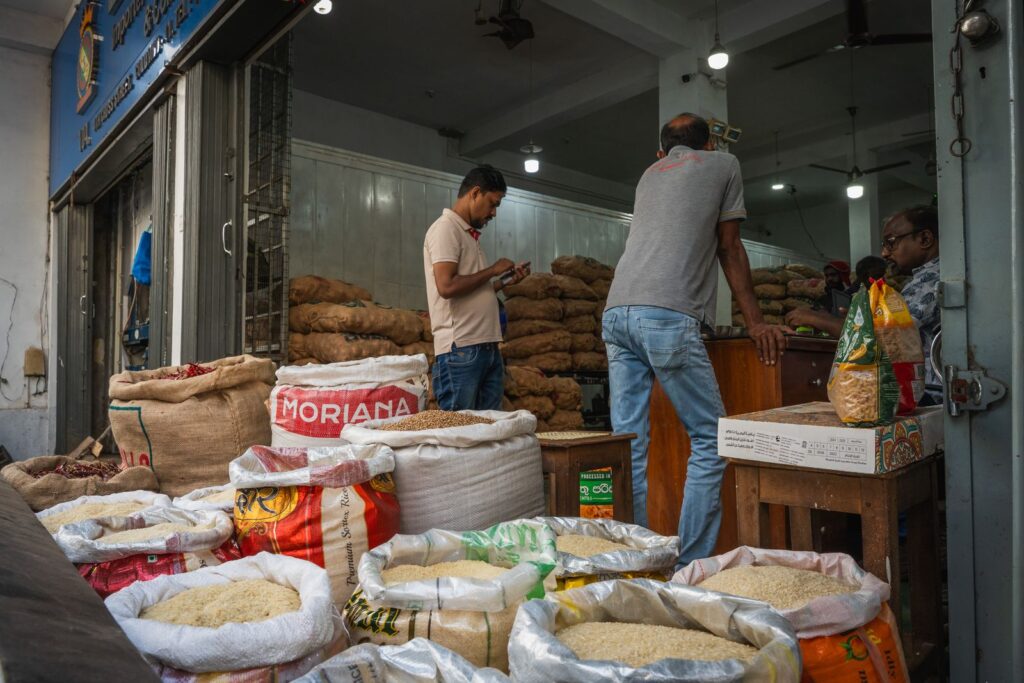
Sri Lankan rice and curry is not one dish. It is a format, and once you understand the format you can order confidently anywhere on the island. The base is a mound of rice, usually a local red or white variety, and around it sit four to eight small curries and relishes.
A classic plate carries a meat curry, a dhal curry, a vegetable curry and a mallum of chopped greens. There is also a sambol, papadam, and often a deep-fried chilli for the brave. Sri Lanka Tourism describes exactly this arrangement on its official culinary page, and it is what arrives when you order “rice and curry” without instruction. That format, not any single dish, is the backbone of Sri Lankan food.
Lunch is when Sri Lankan food is at its most generous. Most households and most small eateries cook rice and curry once, in the late morning, and serve it until it runs out. Eat at 12:30 rather than 2:30 and the difference is obvious.
1. Rice and Curry, the Everyday Meal
Order it once plainly, then order it again with a specific curry named. The second plate is where the cuisine opens up, because the kitchen will give you more of what you asked for and the rice-to-curry ratio finally works. That is Sri Lankan rice and curry as a local eats it, rather than as a menu describes it.
The rice itself is worth a sentence. Sri Lankan food relies on rice varieties you will not see at home, including red rice with a nutty bite that holds up against coconut-heavy gravies. Things to do in Sri Lanka covers the wider day-by-day picture if you are still building the trip around meals.
2. Parippu — The Dhal Curry That Anchors the Plate
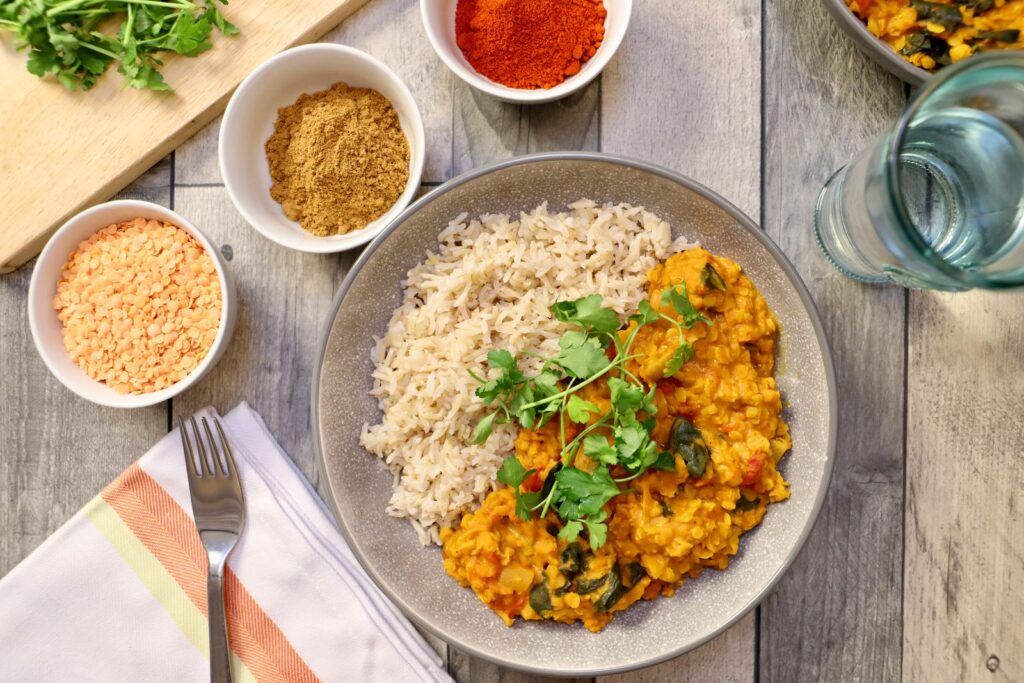
Parippu is red lentils cooked down with turmeric, coconut milk, curry leaves and a tempering of onion and mustard seed. It is mild, faintly sweet, and it is the dish that saves every plate. When the chicken curry is too much, parippu is the answer.
Every cook makes it slightly differently, and the version in a hill-country guesthouse is usually softer than the one in a Colombo restaurant. Ask for a second spoonful; nobody refuses. It is also the dish that convinces nervous visitors that Sri Lankan food is not all fire.
3. Pol Sambol — Coconut, Chilli and Lime
Pol sambol is grated coconut pounded with chilli, red onion, lime and salt, sometimes with a pinch of Maldive fish for depth. It is not a curry and it is not a salad. It is the thing that makes plain rice taste like a decision you made well.
Eat it in small amounts at first. The coconut softens the chilli on the way in, and the heat arrives a moment later, which is exactly how people get caught out by Sri Lankan food.
Sri Lankan Food at Breakfast — Hoppers, String Hoppers and Kiribath
Breakfast is where Sri Lankan food becomes genuinely inventive, and it is the meal most visitors skip. Do not skip it. Between 6am and 9am the island eats fermented rice batter, coconut and chilli, and almost nothing on that table exists in a hotel buffet.
The exception is the beach hotel that serves toast. Walk out of the gate instead, find a hopper stand or a string-hopper kitchen, and pay less for a better meal. This is the hour when Sri Lankan food is at its cheapest and most varied.
4. Hoppers (Appa) — Crisp Edges, Soft Middle
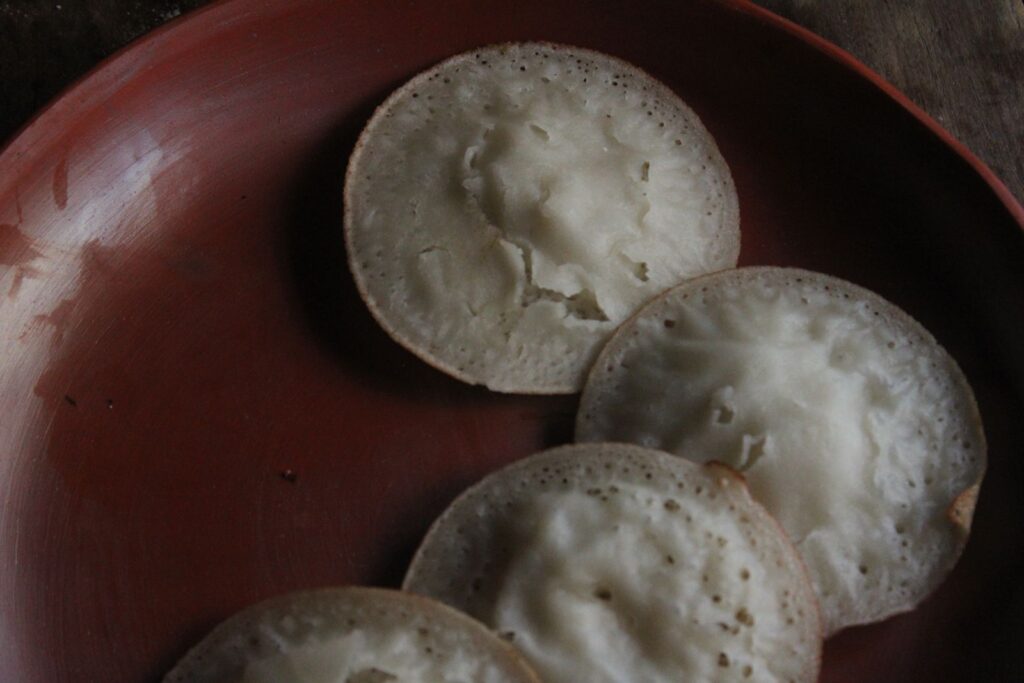
A hopper is a bowl-shaped pancake of fermented rice flour and coconut milk. The batter is swirled into a small wok and cooked until the rim turns crisp and lacy. The middle stays soft and slightly sour from fermentation.
Order a plain one first, then an egg hopper, which has an egg cracked into the centre before the lid goes on. The batter is leavened with palm toddy or yeast according to the written record. That faint sourness is the fermentation, not spoilage, and it is the signature of Sri Lankan food at breakfast.
5. String Hoppers with Kiri Hodi
String hoppers are nests of steamed rice-flour noodles, pressed through a small mould onto wicker mats and stacked. They are almost never eaten plain, and the classic partner is kiri hodi, a thin coconut-milk gravy that is barely spiced at all.
This is the mildest proper breakfast in the country and the one I recommend to anyone worried about chilli. Add a spoon of pol sambol on the side and you control your own heat. For a first morning of Sri Lankan food, it is the safest order on the menu.
6. Kiribath and Lunu Miris
Kiribath is rice cooked in salted coconut milk until the grains go soft, then pressed flat and cut into squares. It appears at breakfast, at New Year, at birthdays and at temple mornings, which tells you how central it is to Sri Lankan food culture.
It is served with lunu miris, a rough relish of red onion and chilli. The combination is rich, salty and simple. If you are invited to share it, take a square with your right hand and eat it in two bites. No other dish explains Sri Lankan food culture as quickly as this one.
7. Pittu and Pol Roti
Pittu is a cylinder of rice flour and grated coconut steamed in a bamboo mould, crumbly and nutty, eaten with curry or with katta sambol. Pol roti is a flatbread with shredded coconut worked into the dough and no leavening, so it stays dense and chewy.
Both are everyday Sri Lankan food rather than restaurant food, which is why both are worth seeking out. A roadside breakfast hut that sells only these two things is usually excellent. Ask for katta sambol with the pittu and watch how the regulars eat it.
Sri Lankan Street Food — Kottu, Short Eats and What to Order
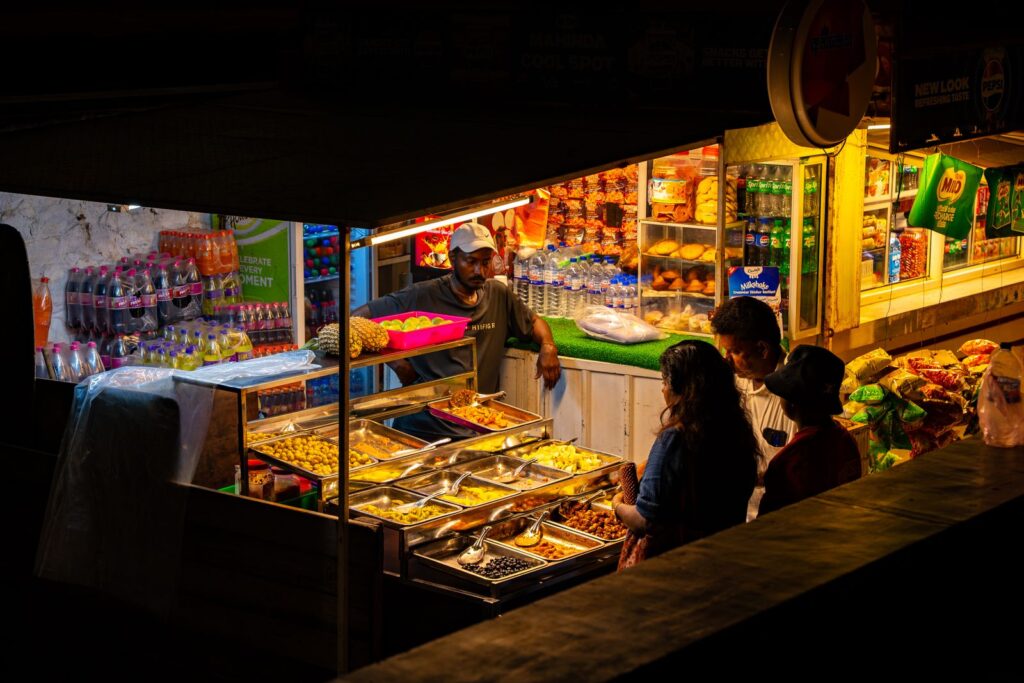
Sri Lankan street food is loud, fast and mostly fried, and it is the part of the trip people talk about afterwards. The centre of it is kottu, which is not so much a dish as a performance with blades.
Evenings are the right time. Stalls light up around six, the queues are local, and the smell of curry and hot metal carries down the road. Start with one shared plate and work outwards.
8. Kottu Roti — The One You Hear Before You See
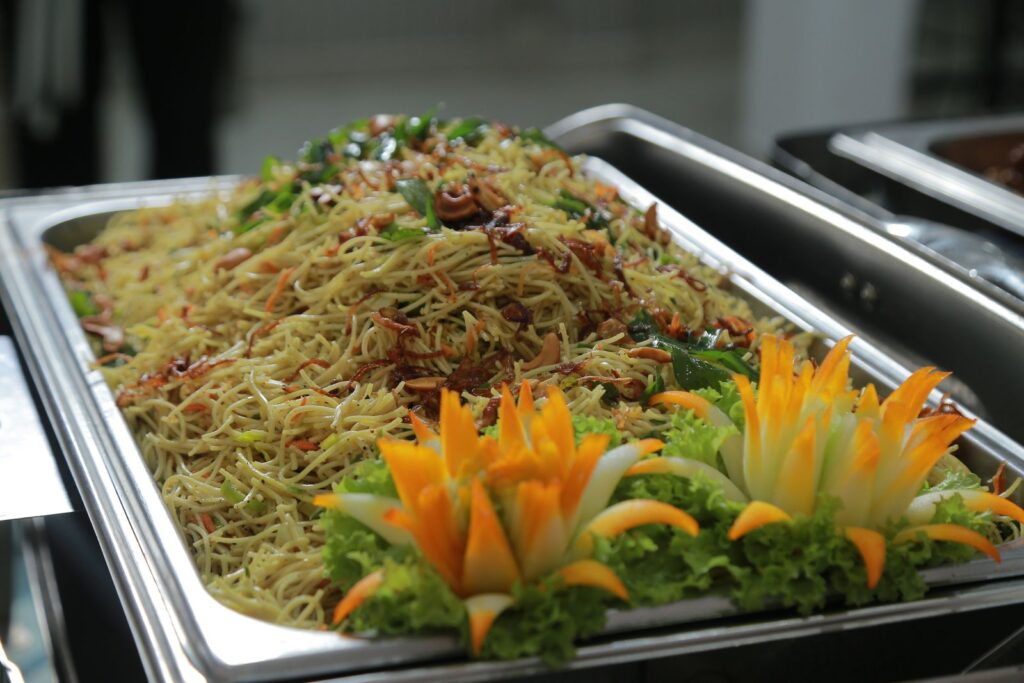
Kottu is godamba roti chopped on a hot steel plate with vegetables, egg, meat or cheese, all stir-fried together with curry gravy. The written record credits Colombo with inventing it, and the name simply means chopped roti.
You hear the blades before you see the stall, two flat cleavers hammering in rhythm. Order a chicken kottu with egg for your first one, ask for it mild, and share it. Portions are large, and Sri Lankan food at this price point rarely comes in small sizes.
9. Isso Wade and the Short Eats Tray
Isso wade are deep-fried prawn fritters, sold hot from a tray beside the road with a smear of sambol. They belong to a wider family called short eats: fish cutlets, Chinese rolls, patties, and maalu paan, the fish-stuffed bun.
The 4pm short-eats tray is a genuine Sri Lankan institution, timed for the gap between lunch and a late dinner. Eat what is hot and what is moving fast, and skip anything that has been sitting in the sun since morning. It is also the most reliable first taste of Sri Lankan street food, because every piece is deep-fried to order.
Street stalls are also where you will meet achcharu, a pickled fruit mix, and fresh king coconut. Both are good and neither needs a plan. This is the cheapest way into Sri Lankan food, and often the most memorable.
Traditional Sri Lankan Food for a Celebration Table
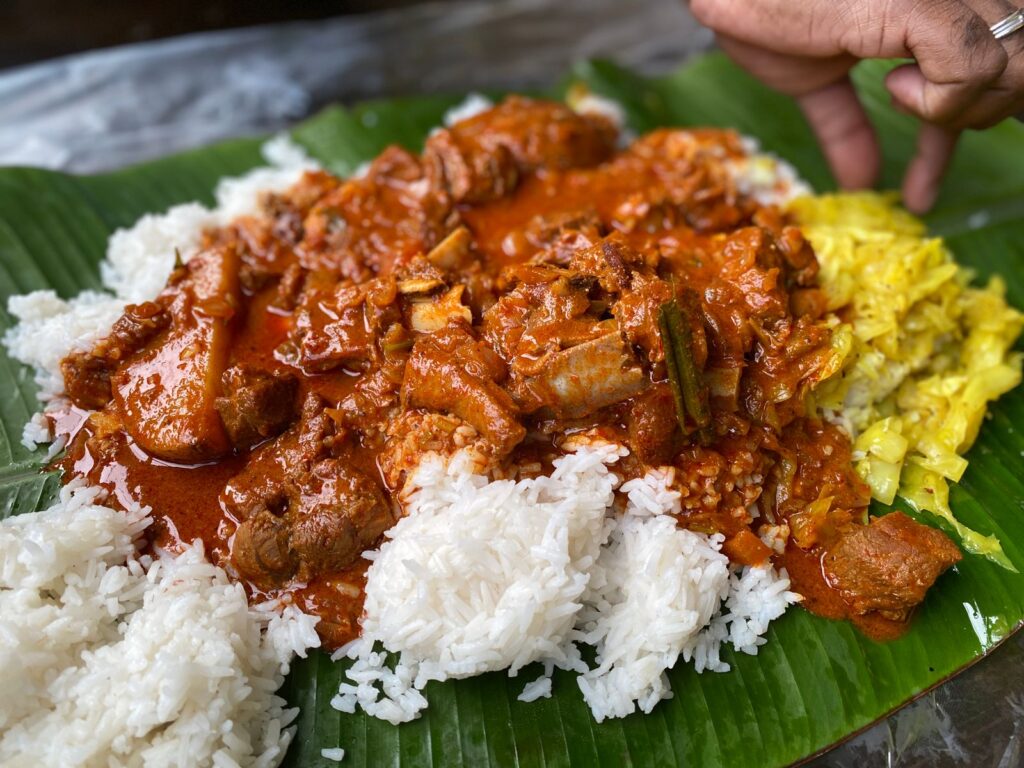
Traditional Sri Lankan food for a celebration is a different register entirely. These are the dishes cooked for weddings, for a homecoming, for a Sunday table with three generations around it, and they take hours.
Three of them are worth building a day around. All three are regional, and knowing which region explains why the same island produces such different plates. None of them is the sort of traditional Sri Lankan food you will find on a hotel buffet.
10. Lamprais — The Burgher Banana-Leaf Bake
Lamprais is a Dutch Burgher inheritance: rice boiled in stock, a meat curry, frikkadels, blachan, fried aubergine and ash plantain, all wrapped in a banana leaf and baked. It is cooked twice, once as separate parts and once as a parcel. Few dishes show the layered history of Sri Lankan food as clearly.
Unwrap it at the table and eat straight from the leaf. It is heavy, faintly smoky and unlike anything else in Sri Lankan food, which is why it survives on celebration tables a few centuries after it arrived.
11. Ambul Thiyal — The Sour Fish That Keeps
Ambul thiyal is fish cooked dry with goraka, a sour dried fruit, black pepper and no coconut milk. The result is dark, dense and sharply sour, and it keeps for days without refrigeration, which is why it became a travel food on the south coast.
Order it with rice and a mild vegetable curry to balance it. This is also one of the few Sri Lankan dishes that improves on the second day.
12. Jaffna Crab Curry and Northern Kool
Jaffna crab curry is the northern flag-bearer: crab simmered in roasted curry powder and coconut milk until the sauce clings. It is the hottest dish on this list, and the one worth scheduling a lunch around. Order it with plain rice and let the sauce do the work; Sri Lankan food this rich needs no accompaniment.
If you get to the north, also try kool, a seafood broth thickened with palmyra root flour and built from crab, fish, cuttlefish, long beans and tamarind. Northern Sri Lankan food is its own cuisine, and Jaffna is where to test that claim.
Sweets, Fruit and Drinks — Where Sri Lankan Food Ends
Sri Lankan food does not really do pudding courses, and sweetness arrives in small, concentrated hits instead. A dessert is often a spoonful next to a cup of tea, or a fruit cut on a roadside stand, and that is the better way to eat it.
Three things are worth planning for. All three are cheap, all three are sold where you least expect them, and all three explain something about the island that the curries do not.
13. Watalappam — The Malay Jaggery Custard
Watalappam is a steamed pudding of coconut milk, egg and jaggery, spiced with cardamom and sometimes cashew. The written record traces it to Malay settlers, and it is now a standard Sri Lankan food dessert at weddings and festivals.
It is dense rather than light, and a small slice is enough. Look for the version with a dark, glossy top, because that is the jaggery caramelising and it is where the flavour lives.
14. Curd with Kithul Treacle
Buffalo curd is thick, faintly sour and set in a clay pot, and kithul treacle is poured over it at the table. The treacle comes from the sap of the kithul palm, boiled for several hours until it turns dark and smoky.
That tapping tradition was inscribed on UNESCO’s Representative List of the Intangible Cultural Heritage of Humanity in 2025, which is a remarkable thing to have happened to a breakfast condiment. The same listing records the sap being made into jaggery, vinegar and a fresh drink as well.
A published review of indigenous and traditional foods of Sri Lanka covers the palm products in more detail. Buy your curd where the pot is still sealed, and eat it before the afternoon heat reaches it.
It is the best dessert in Sri Lankan food, and it costs less than a coffee in most of the places that sell it.
15. King Coconut, Wood Apple Juice and Ceylon Tea
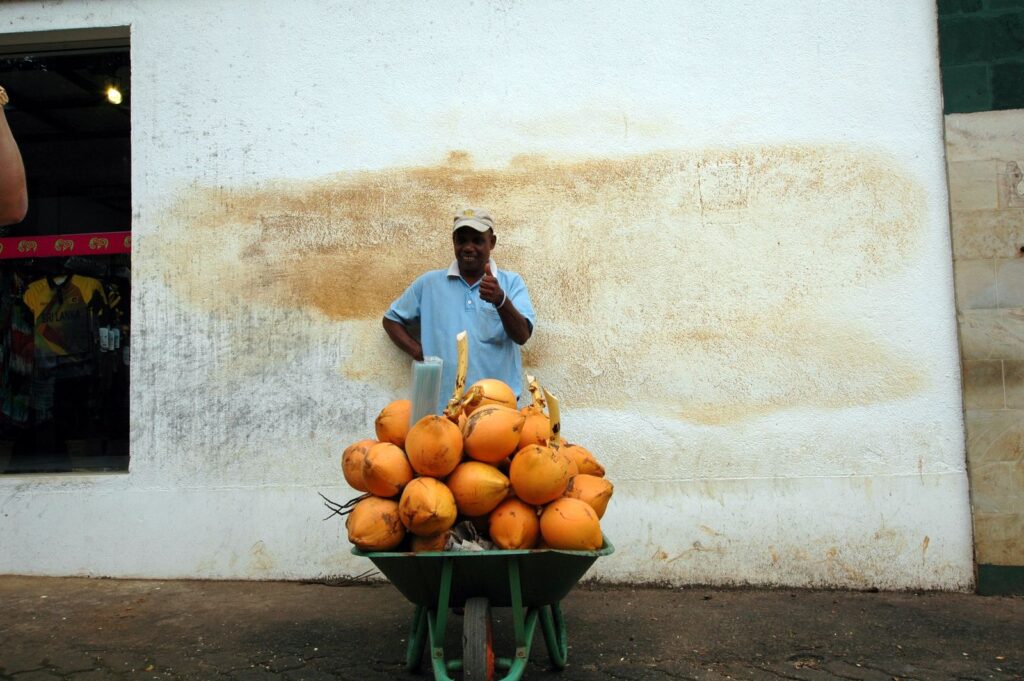
King coconut, or thambili, is the orange coconut cut open at the roadside and drunk through a straw. It is clean, cold and mildly sweet, and it is the drink that gets most visitors through an afternoon of chilli.
Wood apple juice is the other one to try: a sour, thick shake made from the hard-shelled fruit, often sweetened with jaggery. Ceylon tea finishes the day, and it is the one Sri Lankan food product the whole world already knows by name.
If you are offered tea at a factory or a guesthouse, take it. It is usually brewed strong, served with milk and sugar on the side, and it costs nothing to say yes.
The drinks also solve a practical problem. Sri Lankan food can be heavy, and a king coconut between meals resets you in a way that a soft drink does not.
Sri Lankan Dishes for Vegetarians and Vegans
Sri Lankan dishes for vegetarians are not an afterthought here, and that surprises people who expect a rice-and-curry country to be meat-led. The everyday plate is mostly vegetable, dhal and coconut, with the meat curry as one component among six.
A vegan visitor can eat extremely well for a week without repeating a dish. The one thing to watch is Maldive fish, a dried fish seasoning that turns up in sambols and vegetable curries where you would not expect it. It is the single most common surprise in vegetarian Sri Lankan food.
| Dish | Vegetarian | Vegan | Watch for |
|---|---|---|---|
| Parippu (dhal) | Yes | Yes | Sometimes finished with a little Maldive fish |
| Pol sambol | Yes | Ask | Maldive fish in some kitchens |
| Kiri hodi | Yes | Yes | Usually plain coconut milk gravy |
| Jackfruit curry (polos) | Yes | Yes | Confirm no Maldive fish |
| Mallum (greens) | Yes | Yes | Grated coconut is standard, not optional |
| Egg hopper | Yes | No | Order a plain hopper instead |
| Kottu | Ask | Ask | Cheese and egg kottu are common; say no egg clearly |
The phrase worth learning is “no Maldive fish please”, said slowly, and it works better in a small kitchen than in a hotel. Where you are eating with family or in a guesthouse, tell them at booking and the whole menu shifts.
Families travelling with children usually find the vegetarian route easier too, because dhal, hoppers and string hoppers are mild by default. Our Sri Lanka family holiday packages plan meals this way for exactly that reason.
Sri Lankan Food Guide — How Hot, and How to Ask for Mild
A practical Sri Lankan food guide has to start with heat, because heat is where most visitors get their first surprise. The island’s chilli habit is real, but it is not uniform, and restaurant food is usually milder than home food.
Ask for mild before the food is cooked, not after. “Mild please” helps a little; “less chilli” helps more. Ordering a dhal curry and a kiri hodi alongside whatever else you chose gives you two safe dishes on every plate. That trick alone makes Sri Lankan food manageable on day one.
| Heat | What it feels like | Dishes at this level | Who should order it |
|---|---|---|---|
| 0 | Sweet or neutral | Watalappam, curd and treacle, king coconut | Everyone |
| 1 | Warm, no burn | Parippu, kiri hodi, hoppers, string hoppers, kiribath | Anyone new to chilli |
| 2 | A clear tingle | Pol sambol, lamprais, vegetable curries | Comfortable with moderate heat |
| 3 | Real heat, still edible | Rice and curry plate, kottu, ambul thiyal | Confident chilli eaters |
| 4 | Full chilli, slow burn | Jaffna crab curry, devilled dishes, lunu miris | People who already eat chilli at home |
Two more habits make the difference. Eat the rice with the curry rather than before it, because the rice is the buffer. And keep a curd or a king coconut nearby; dairy and coconut water both calm the burn faster than water.
Where to Eat What — A Route Through the Island
Sri Lankan food changes with the map, and a route that ignores that ends up eating the same hotel curry for ten days. Four stops cover most of the range without any backtracking.
Start in Colombo for the widest choice, go east to Kandy for hill-country vegetables and short eats, then south to Galle for the sour fish curries of the coast. Add Jaffna if you have the days, because the north eats differently from anywhere else. Four stops is enough to see how far Sri Lankan food ranges inside one small island.
Timing matters as much as place. Seafood is best in the coastal months. Two monsoons also move the dry side of the country through the year. Our month-by-month guide to the best time to visit Sri Lanka sets that out properly.
In Kandy, look for the vegetarian kitchens near the temple and the short-eats shops around the market. Our Galle Fort walking tour ends near the fish market on a good day, which is where ambul thiyal starts.
For tea, the hill country is the point. A working factory is the only honest way to understand why Ceylon tea tastes different at 1,800 metres. Our Sri Lanka tea plantation tour builds that stop into a full day.
Food Safety — What a Local Guide Actually Avoids
Sri Lankan food is generally safe, and the failures are predictable rather than mysterious. Heat, turnover and water are the three things that decide whether a meal goes well, and all three are visible before you order.
Eat where the food is hot and the queue is moving. A stall with a crowd is turning its stock over; a stall with nobody at it is a different bet entirely. Fried food from a busy tray is a safer choice than a cold salad, in any country.
Drink sealed bottled water, and ask for no ice if you are unsure of the source. Peel your own fruit rather than buying it pre-cut, and be careful with buffets that have been standing in the heat. None of this is exotic advice, and none of it requires avoiding street food. Most Sri Lankan food is cooked to order and served hot, which is the single best safety signal there is.
Carry oral rehydration salts and a small first-aid kit, and keep the wider Sri Lanka safety guide handy for everything else. If you have a shellfish allergy, say it clearly and in writing; crab and prawn appear in dishes that do not mention them in the name.
Eating Etiquette — Right Hand, Sharing and Tipping
Eating with the right hand is the custom in Sri Lanka, and it is a practical skill rather than a test. Mix a little rice with a little curry using your fingertips, lift it, and keep the palm clean. Cutlery is always available, and nobody minds if you use it.
Sharing is normal, and a plate of Sri Lankan food is often ordered to be divided. Take from the side of the dish nearest you rather than reaching across, and never touch food that is going back to a shared plate.
At a home, expect to be fed more than you asked for. Accept a little of everything, and it is fine to leave food; it is not fine to refuse the first offer outright. Tipping is not expected at a roadside stall, and a small note on the tray is enough where there is table service. Hospitality is the part of Sri Lankan food that visitors remember longest.
Two small notes on dress and drink. Shoulders and knees covered will get you into more places, including temple kitchens. On Poya, the full-moon holiday, many licensed bars and wine stores stay shut, so plan dinner around that rather than being surprised by it.
Frequently Asked Questions
What is Sri Lankan food known for?
It is known for coconut, chilli and curry leaves, and for the rice-and-curry plate that puts several small dishes in front of you at once. The island’s food also carries clear Sinhalese, Tamil, Muslim and Burgher influences, which is why one cuisine can taste like four.
Is Sri Lankan food very spicy?
Some of it is, and much of it is not. A plate usually holds both a hot curry and a mild coconut gravy, so you choose your own level. Ask for less chilli when ordering and you will eat well on your first day of Sri Lankan food.
What is the number one Sri Lankan food must try dish?
Rice and curry, because it is the meal the whole cuisine is organised around. If you only eat one thing, eat that, at lunch, in a place where locals are queuing.
Is there vegetarian and vegan Sri Lankan food?
Plenty. Dhal, coconut gravy, jackfruit curry, mallum and most vegetable curries are plant-based, and the everyday plate is mostly vegetarian anyway. Watch for Maldive fish in sambols and ask for it to be left out. Sri Lankan food is unusually easy to eat without meat.
What should I eat for breakfast in Sri Lanka?
Hoppers, string hoppers with kiri hodi, or kiribath with lunu miris. All three are cheap, mild and served before nine in the morning, and all three are far better than a hotel buffet.
How much does food cost in Sri Lanka?
We do not publish rates that change with the season, and we will not guess at them either. Local eateries and street food are inexpensive by European or Australian standards, and we give guests current figures at booking rather than a number that ages badly.
Can I drink the tap water in Sri Lanka?
Most visitors drink sealed bottled water instead, and that is the advice we give. Ask for no ice where the source is unclear, and use bottled water for brushing your teeth if you have a sensitive stomach.
What is kottu roti made of?
Godamba roti chopped and stir-fried with vegetables, egg, meat or cheese and curry gravy. It was invented in Colombo, and the name means chopped roti, which is exactly what the blades are doing.
Is street food safe in Sri Lanka?
Usually yes, if you choose hot food from a busy stall and skip anything that has been sitting out. Fried short eats, kottu cooked to order and hot hoppers are all low-risk choices. The street is often safer than a lukewarm hotel buffet, which is the part of Sri Lankan food nobody warns you about.
What are the most traditional Sri Lankan dishes?
Kiribath with lunu miris, lamprais, ambul thiyal and kiri hodi with string hoppers. Each one is tied to a community and a occasion, and each is worth ordering deliberately rather than by accident.
What is kithul treacle?
It is the sap of the kithul palm, boiled for hours into a dark syrup also called kithul honey. In 2025 the tapping tradition itself was inscribed on UNESCO’s Representative List of the Intangible Cultural Heritage of Humanity, which is a rare recognition for a breakfast condiment.
Can children eat Sri Lankan food?
Yes, and easily. Hoppers, string hoppers, dhal, kiribath and plain rice are all mild, and most kitchens will cook a dish without chilli for a child. Introduce the sambols slowly.
Do I need to book restaurants in Sri Lanka?
Rarely for everyday eating, and yes for the dishes that take hours. Crab curry and lamprais are often prepared to order or in limited batches, so tell your hotel or guide a day ahead.
Plan a Food-Led Trip with Amazing Escapes Tours
A good food trip is a timing problem before it is a menu problem. The hopper stand is only open until nine, the crab curry needs a day’s notice, and the tea factory is best before the afternoon cloud arrives.
We are a Sri Lanka based operator, not a reseller. Our guides eat at these places themselves, which is how we know which short-eats tray to trust and which village kitchen still cooks ambul thiyal the old way.
What is included in a food-led itinerary we design:
- A private air-conditioned vehicle with an English-speaking driver-guide
- Meal stops planned around cooking times, not around the driving schedule
- A market walk and a home-cooked rice-and-curry lunch with a local family
- A tea factory visit in the hill country and a hopper breakfast you would not find alone
- Advance ordering for crab curry, lamprais and any dish that needs notice
- Airport transfers and a local contact number throughout your trip
Tell us what you already eat at home and how much chilli you can take, and we will build the route around that. Start with a free quote through request your custom Sri Lanka food itinerary today. You can also see how a tailor-made trip works on our custom Sri Lanka tour itinerary page. Our Sri Lanka 7 day itinerary is the shortest route that still fits breakfast, lunch and dinner properly.
About the author: Dhanushika Hewa Paththinige is a Sri Lanka travel expert with over 8 years of experience designing custom tours for international visitors. As the founder of Amazing Escapes Tours, she has eaten her way across the hill country, the Cultural Triangle and both coastlines, and still orders parippu first. Her expertise covers island-wide itinerary design, food-led travel, hill-country walking and family holidays.