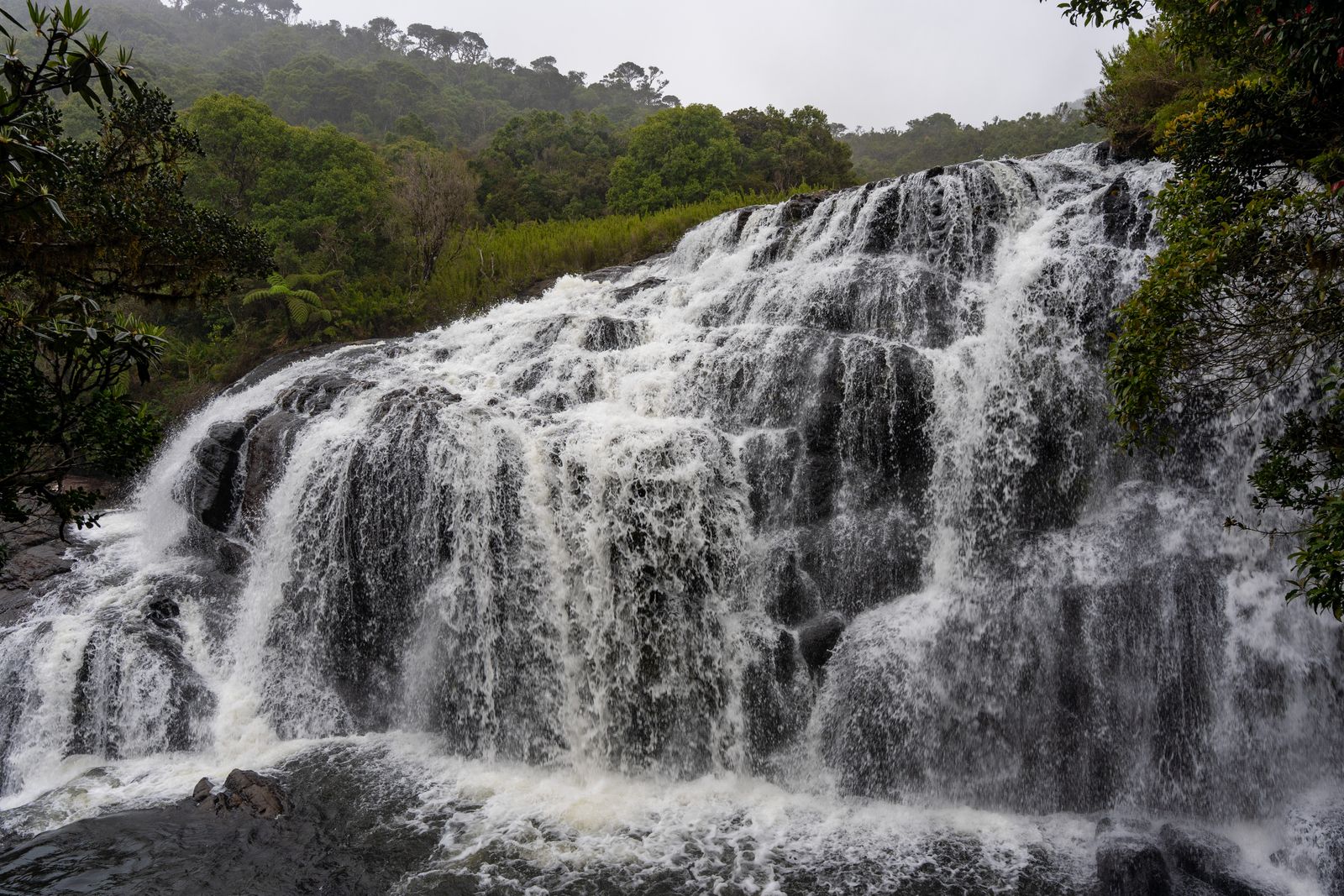
I have been chasing waterfalls in Sri Lanka for eleven years, and I still get the same email every week. Someone has seen a photograph of Diyaluma’s infinity pools and wants to know how to get there, and whether they can swim.
Here is the honest answer up front. The best waterfalls in Sri Lanka are not the ones with the biggest car park. They are the ones where access, season and your own footing all line up on the same day.
This guide covers the ten waterfalls in Sri Lanka I actually send guests to. Each entry carries a verified height, the district it sits in, how hard the walk is, and the months the flow is worth the trip. No invented prices, and no promises about swimming that the locals would laugh at.
Everything below is checked against the published national waterfall inventory, official district records, and what I see on the ground each season. Ten falls, ranked by what they are actually like on a Tuesday in November.
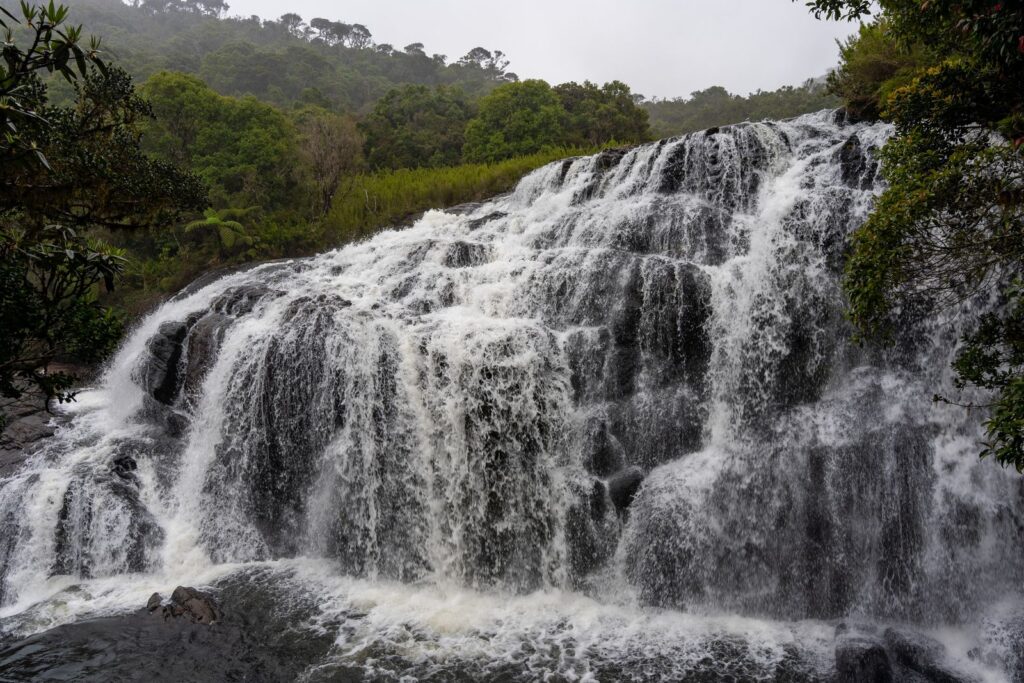
Waterfalls in Sri Lanka — The Quick Answer
If you read one section, read this one. Waterfalls in Sri Lanka cluster along the edge of the central highlands, where rivers fall off the plateau into the lowlands of Uva, Sabaragamuwa and the Central Province.
Bambarakanda is the tallest at 263 metres. Diyaluma is second at 220 metres and has the swimmable pools at the top. Ravana is the easiest to reach, and Baker’s Falls is the only one inside a national park. Those four names alone explain why waterfalls in Sri Lanka punch above the island’s size.
The single most useful thing to know is that flow is seasonal, and the season is not the same for every fall. A waterfall that is a firehose in November can be a trickle in March. That rhythm is what separates the waterfalls in Sri Lanka worth planning around from the ones you happen to pass.
| Waterfall | Height | District | Access | Swim? | Strongest flow |
|---|---|---|---|---|---|
| Bambarakanda Falls | 263 m | Badulla | Drive plus short walk | No | Nov–Jan, Apr–Jun |
| Diyaluma Falls | 220 m | Badulla | Roadside base, steep hike to top pools | Top pools only | Nov–Jan, Apr–Jun |
| Dunhinda Falls | 63 m | Badulla | 1 km forest walk | No | Nov–Jan |
| Ravana Falls | 25 m | Badulla | Roadside | Base pool, care needed | Nov–Jan, Apr–Jun |
| St Clair’s Falls | 80 m | Nuwara Eliya | Roadside viewpoint | No | Jun–Sep, Nov–Jan |
| Devon Falls | 97 m | Nuwara Eliya | Roadside viewpoint | No | Jun–Sep, Nov–Jan |
| Baker’s Falls | 20 m | Nuwara Eliya | 9 km park loop walk | No | Nov–Jan |
| Ramboda Falls | 109 m | Nuwara Eliya | Roadside plus steps | No | Jun–Sep, Nov–Jan |
| Aberdeen Falls | 98 m | Nuwara Eliya | 40-minute estate walk | No | Jun–Sep, Nov–Jan |
| Bopath Ella | 30 m | Ratnapura | Roadside base | Base pool, seasonal | May–Sep |
That table is the whole trip in one screen. Everything after it explains why each of these ten waterfalls in Sri Lanka earned its place, and what could go wrong on the day you visit.
Best Waterfalls in Sri Lanka — How I Chose This List
Most lists of the best waterfalls in Sri Lanka are written from photographs. I have ranked these ten on four things that decide whether you actually enjoy the day.
First, access. A fall you can see from the car is worth less than one you can stand under. But a fall that needs an unmarked four-hour scramble is not a holiday. Access is the first filter on any honest list of waterfalls in Sri Lanka.
Third, safety. There is no lifeguard, no barrier and often no phone signal at most of these sites, so I have said plainly where swimming is a bad idea. Fourth, the setting, because half the pleasure of waterfalls in Sri Lanka is the tea estate or cloud forest you walk through to reach one.
I have deliberately left out falls that only work for serious hikers, and falls where the approach crosses private land without a clear arrangement. If you want those, ask us and we will build the day properly.
Bambarakanda Falls — The Tallest Drop in the Country
Bambarakanda Falls is the tallest waterfall in Sri Lanka at 263 metres, and it is the one that surprises people most. It does not roar. It falls as a thin white thread down a dark cliff, framed by pine and eucalyptus, into a bowl of green.
The falls sit near Kalupahana in Badulla District, at the top of the Uva Province, reached from the A4 Colombo–Badulla road. From the Kalupahana junction you take the B394 and follow it for roughly ten kilometres as it climbs through tea and pine.
You do not need to hike to see it. The last stretch is a short walk on an uneven path to a viewpoint that looks straight at the drop. That makes Bambarakanda the tallest of the waterfalls in Sri Lanka you can photograph without a trek.
Flow is the catch. In February and March it thins to a ribbon, and photographers who arrive expecting a curtain of water leave disappointed. Go in November to January, or April to June, when the catchment above Kalupahana has had real rain.
Do not swim at the base. The pool is shallow and boulder-strewn, and the current shifts without warning. If you want to cool off, the small Lanka Ella cascade nearby is the safer stop. Most of the waterfalls in Sri Lanka are like this: better viewed than entered.
Bambarakanda pairs naturally with Haputale and the Lipton’s Seat road, so most of our travellers see it on the way between Ella and the hill country. If your route runs the other way, read our guide to getting around Sri Lanka before you plan the drive.
Diyaluma Falls — The Infinity Pools Above the Drop
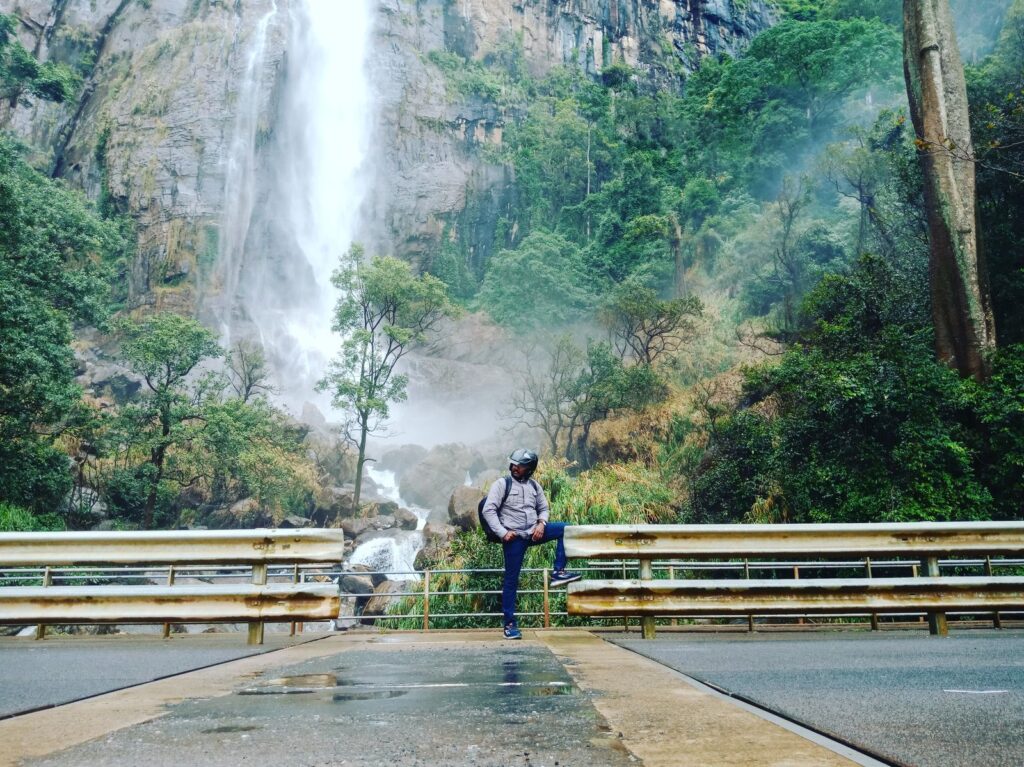
Diyaluma Falls is the second highest waterfall in the country at 220 metres, and it is the one everybody asks about. The reason is not the drop itself but the natural rock pools at the top, where the river slides over smooth granite before it vanishes over the edge.
The falls sit at Koslanda in Badulla District, on the A4 between Wellawaya and Haputale. You can see the whole thing from the road, which is free and takes thirty seconds. The version you have seen on Instagram requires the hike.
That hike starts near the base and climbs for forty-five minutes to an hour through grass, scrub and private land. It is steep, unshaded in places, and genuinely slippery after rain. Of all the waterfalls in Sri Lanka with a walk involved, this is the one where footwear actually decides your day.
The upper pools are the reward, and they are as good as the photographs. Cool, clear water, a series of small falls between pools, and a view across the southern plains that goes on for fifty kilometres.
They are also the most dangerous place in this article. People have died at Diyaluma after slipping on wet rock above the lip, and there is no fence, no warden and no railing anywhere near the edge. Keep well back, never walk to the lip for a photograph, and do not enter the water if it is brown or carrying debris.
Diyaluma is the waterfall in Sri Lanka most worth a guide, and the one where I would not send a nervous swimmer to the top. If you want the pools without the scramble, say so when we plan your route and we will time it for a dry morning.
Waterfalls Near Ella — Ravana Falls and the A23
If you are based in Ella, you are twenty minutes from one waterfall and forty from another. Waterfalls near Ella are the easiest in the country to combine, because Ravana and Diyaluma both sit on the same road west towards Wellawaya.
Ravana Falls drops 25 metres in a broad tiered curtain right beside the road, about six kilometres from Ella town. Buses slow down as they pass it. Tuk-tuks will take you there and wait for the price of a coffee.
Because it is so easy, it is also the busiest waterfall in Sri Lanka in high season. Coach groups arrive between ten and four. Go before eight in the morning and you will have the rock to yourself.
The base pool is shallow and popular with local families, and it is the one place near Ella where a quick dip is normal. Still check the flow before you get in, and never climb the rock face beside the falls for a better angle.
Ravana carries a story as well as water. In the Ramayana, this is where the demon king Ravana is said to have hidden Sita, and the cave above the falls is still pointed out by guides. That history is why Indian pilgrims stop here.
Diyaluma is the second of the waterfalls near Ella and the better half-day. Both are covered in our Ella tour package. Ella itself is worth two nights rather than one if you want the best waterfalls in Sri Lanka without rushing.
Dunhinda Falls — The One You Earn
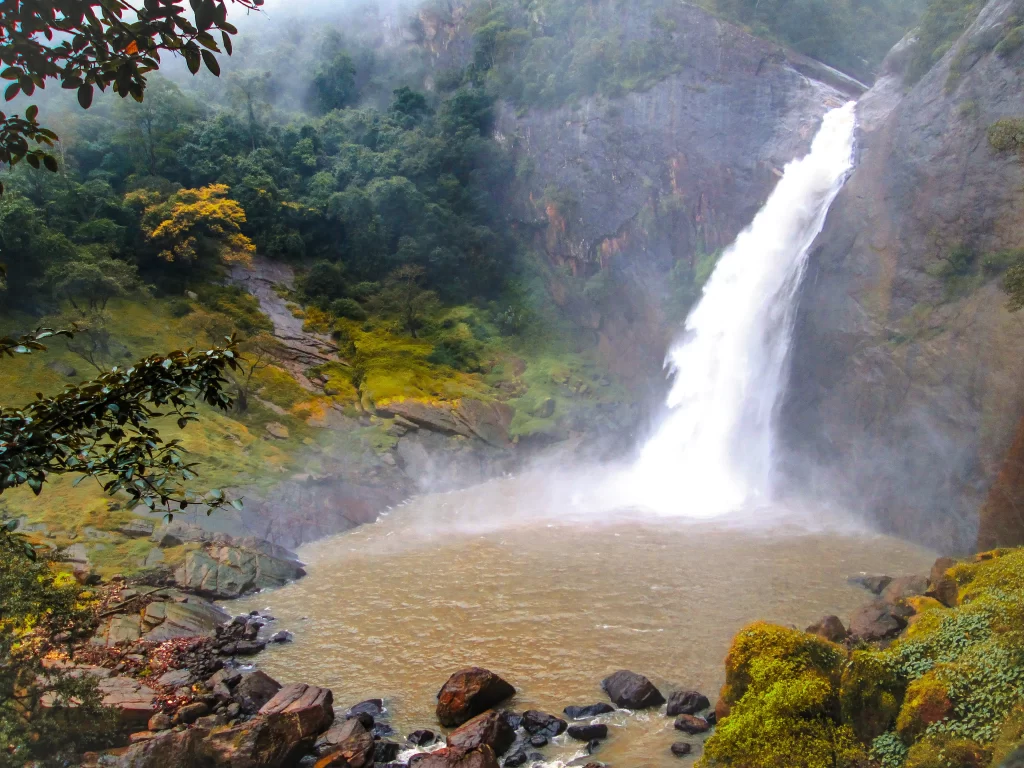
Dunhinda Falls drops 63 metres near Badulla, and the mist it throws up is where the name comes from. Dunhinda means smoky in Sinhala, and on a wet morning the whole gorge below the fall is white. It is the most theatrical of the waterfalls in Sri Lanka’s Uva heartland.
It is five kilometres from Badulla town, and the last kilometre is a walk. A ticket office at the entrance issues a small visitor ticket, then a paved path follows the Badulu Oya through dry-zone forest to a viewing platform opposite the fall.
The walk takes twenty to thirty minutes each way and is easy for most people, including older travellers. It is the gentlest approach of any of the waterfalls in Sri Lanka in this guide. Monkeys work the path and will take food from an open bag, so keep snacks closed.
What makes Dunhinda worth the detour is the shape. The water leaves a narrow lip and lands in a pool enclosed by rock, so the sound arrives before the view. It is the least photographed of the major waterfalls in Sri Lanka, and that is part of the appeal.
Do not swim. The pool is deep, the sides are smooth and the outflow is fast. This is a waterfall to look at from the platform, then walk back and eat at one of the small shops by the car park.
St Clair’s Falls and Devon Falls — The Tea-Country Pair
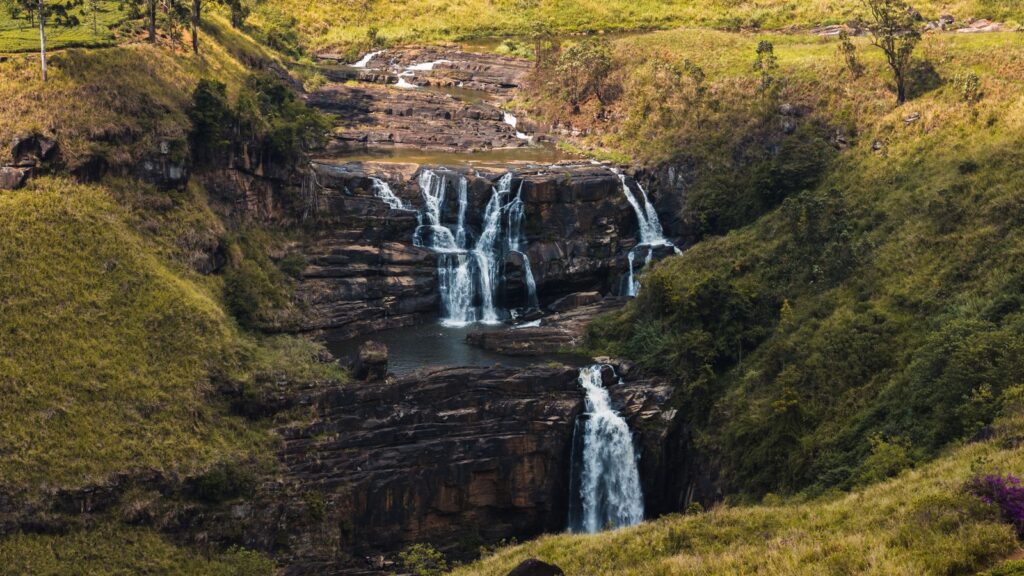
St Clair’s Falls is 80 metres of white water falling through a working tea estate near Talawakele, and it is often called the widest waterfall in the country. Devon Falls, four kilometres away, drops 97 metres in a single ribbon.
You can see both from the A7 road between Hatton and Nuwara Eliya, which makes them the easiest pair on this list. St Clair’s has a dedicated viewpoint with a small car park and a tea shop; Devon has a lay-by and a short flight of steps.
The nickname for St Clair’s is the Little Niagara of Sri Lanka, and in June and July the comparison is fair. The fall splits into cascades over the rock, and the tea bushes frame it in exactly the way the postcards promise. It is the most photographed of the waterfalls in Sri Lanka, for good reason.
Devon is the taller of the two, and the better photograph from a distance. Because the drop is one clean plunge, it reads clearly even from the road, which is why it turns up on so many tea-country itineraries. Together the pair are the easiest waterfalls in Sri Lanka to see from a car.
Both falls sit inside private estates. You may look from the road and the viewpoints freely, but walking down to the water or between the two falls needs permission from the estate office. Ask your driver-guide, and do not climb a fence. They are also the two waterfalls in Sri Lanka on this list you can see without leaving your seat.
The tea country around these falls is the reason to slow down. Our Nuwara Eliya tea plantation tour runs this road, and pairing it with the Kandy tour gives you a full hill-country day. Plenty of the waterfalls in Sri Lanka sit inside working estates, and these two are the classic example.
Baker’s Falls — Inside Horton Plains
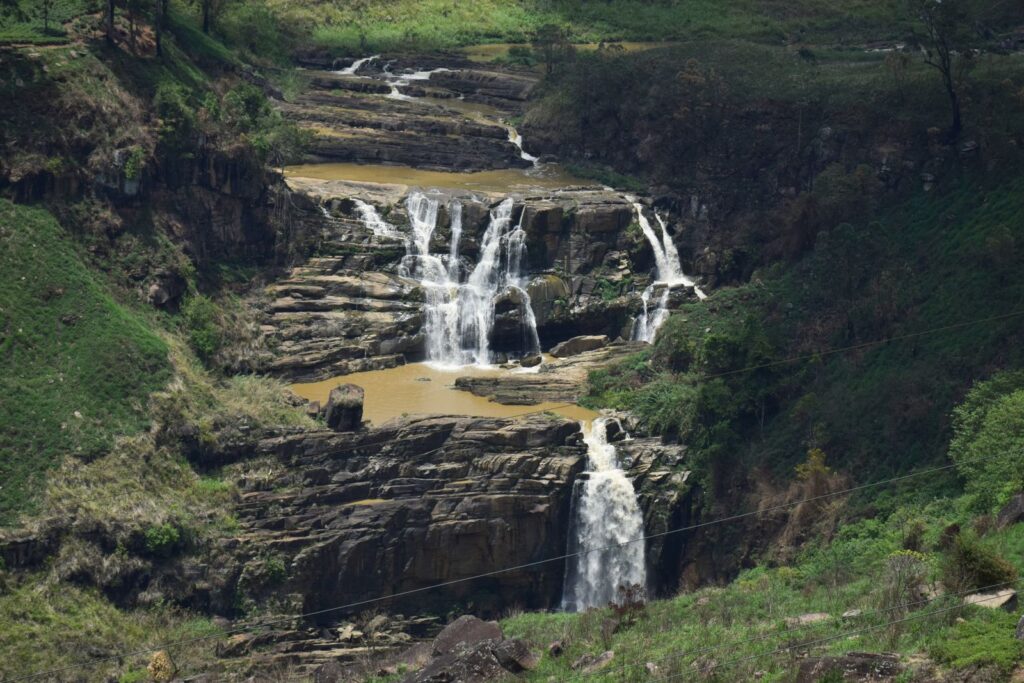
Baker’s Falls is the only one of these waterfalls in Sri Lanka you cannot drive to, because it sits inside Horton Plains National Park at 2,100 metres. It drops 20 metres through cloud forest, and the walk to reach it is the famous World’s End circuit.
The loop is about nine kilometres and takes three to four hours at a gentle pace. You pass World’s End first, then Mini World’s End, then the fall, and the path returns through grassland to the entrance.
Because the fall is short, some travellers skip it. That would be a mistake. The setting is unlike any other waterfall in Sri Lanka: mossy, cold, dripping, with endemic birds calling from the canopy and the whole gorge in shade.
Horton Plains charges a foreign-visitor entrance fee at the gate, set by the Department of Wildlife Conservation. The park closes to new arrivals in the early afternoon, so go at dawn. The plains cloud over by mid-morning and the views from World’s End disappear entirely.
Bring a fleece. At 2,100 metres it can be twelve degrees and raining while the coast is thirty degrees and sunny. That is why our Sri Lanka packing list treats the highlands as a separate climate.
Ramboda Falls — The Roadside Stop That Delivers
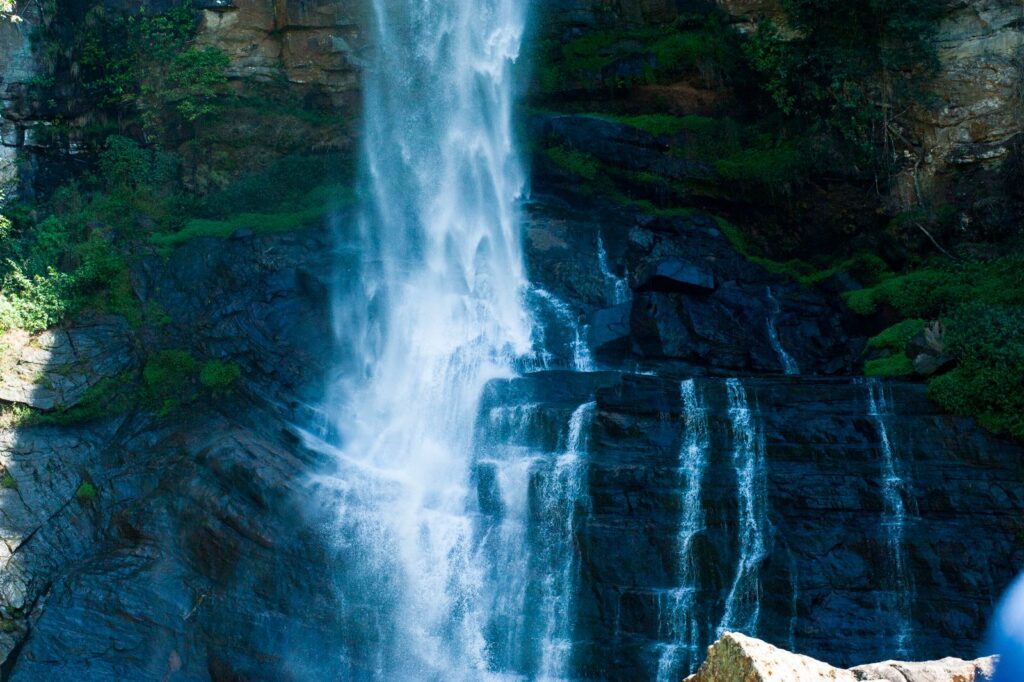
Ramboda Falls drops 109 metres beside the A5 Kandy to Nuwara Eliya road, and it is the waterfall I recommend to anyone with one free afternoon in the hill country. For waterfalls in Sri Lanka with no hike, no ticket and no planning, it is unbeatable.
There is a viewpoint on the road itself, and a lower viewing deck reached by a short flight of steps beside a hotel. The upper section is the impressive part: two tiers, the top one falling into a rock basin before the second drop.
The best light is early morning, before the valley fills with cloud. By two in the afternoon the upper tier is often half-hidden in mist, which is atmospheric but useless for photographs. Every waterfall in Sri Lanka’s hill country follows that pattern, which is why we start early.
Ramboda is on the way to Nuwara Eliya, which makes it a natural stop between Kandy and the tea estates. Allow thirty minutes, more if you want tea at the little restaurant above the road.
It is not a swimming stop. The pool at the base is fenced off and the rocks are slick. Treat Ramboda as a view and a photograph rather than a swim, and you will enjoy it far more. Half the waterfalls in Sri Lanka are better from a viewpoint, and this is one of them.
Aberdeen Falls — The One Most People Miss
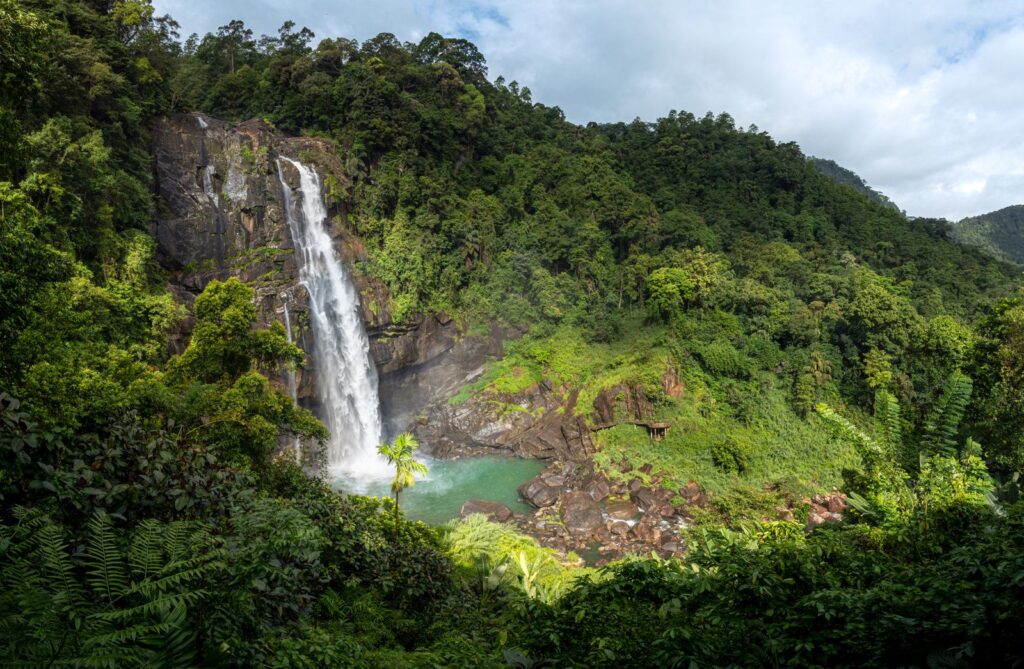
Aberdeen Falls is 98 metres in a hidden valley near Ginigathena, and it is the quietest waterfall in this guide. Almost nobody looking for waterfalls in Sri Lanka finds it by accident, which is precisely why it is here.
The turn-off is near the Aberdeen estate on the Hatton road, and from the gate you walk forty minutes through tea bushes and forest to reach the fall. The path is steep in places and rough underfoot after rain.
What you get for the walk is a single elegant drop with a pool at the bottom and no crowd, no vendors and no selfie queue. In three visits I have never seen more than six other people there, which is rare among the waterfalls in Sri Lanka that are this easy to reach.
You need a vehicle and a driver who knows the estate road, because the last stretch is not signed in English. This is the sort of place where a local guide turns a frustrating hour into a good morning.
Treat Aberdeen as the alternative to Ramboda when you want silence. Both sit on the same road, and doing one in the morning and the other on the way back is the best use of a hill-country day.
Bopath Ella — The Bo-Leaf Falls Near Ratnapura
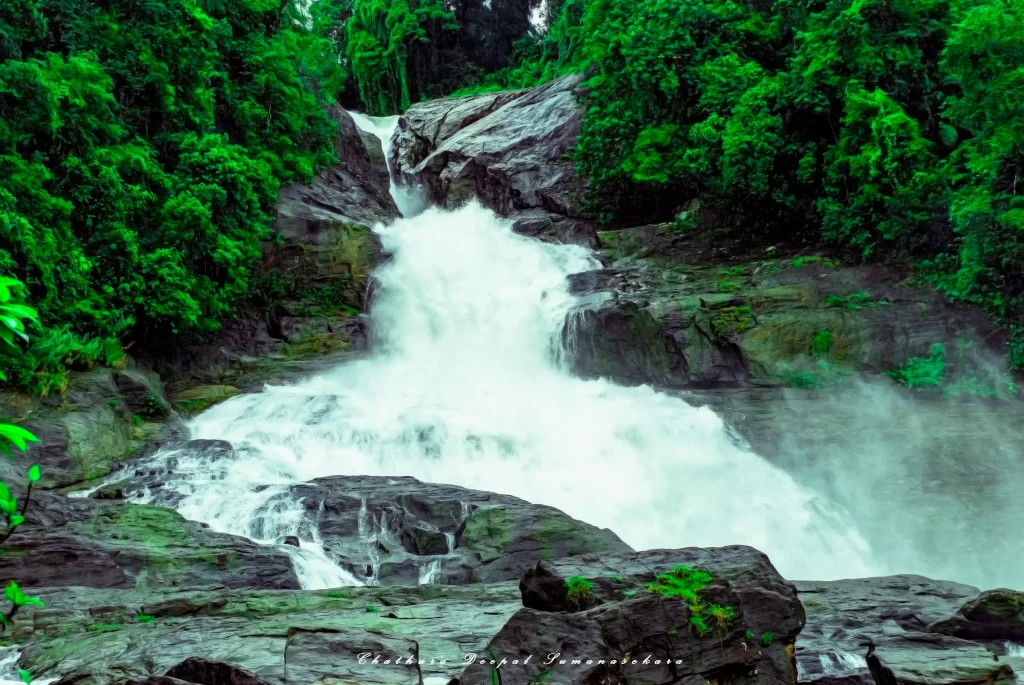
Bopath Ella is the odd one out, and that is why it belongs on a list of waterfalls in Sri Lanka. It drops 30 metres near Kuruwita in Ratnapura District, in the gem country south-east of Colombo.
The fall is famous for its shape. The water spreads over a rock lip and fans out in a curve that looks like a bo leaf, the leaf used in Buddhist offerings. It is the shape that makes Bopath one of the most recognisable waterfalls in Sri Lanka, and it holds that form through most of the year.
Access is genuinely easy. You park, walk a few minutes down steps, and you are at the base. Local families swim in the pool at weekends, and there are small shops selling tea and snacks at the top of the steps.
Go in the morning on a weekday if you want photographs. Weekends and poya days bring crowds from Colombo and Ratnapura, and the litter builds up by afternoon. Weekday mornings are the best light of any of the waterfalls in Sri Lanka close to Colombo.
Bopath is also the waterfall that fits a Colombo day trip. It is roughly two hours from the airport on the A4, so it works as a first or last stop on a loop that continues to Sinharaja or Adam’s Peak.
Which Waterfall Suits Which Traveller
Choosing between waterfalls in Sri Lanka is really a question about your group. The same fall that thrills a fit couple in their twenties is a wasted morning with a five-year-old.
| If you are… | Go to | Why |
|---|---|---|
| Travelling with young children | Ravana, Ramboda, Bopath Ella | Roadside or short walk, no scrambling, food nearby |
| Travelling with elderly parents | St Clair’s, Devon, Ramboda | Viewpoints from the road, minimal walking |
| A photographer | Bambarakanda, Dunhinda, Devon | Clean shapes, morning light, mist and atmosphere |
| A confident hiker | Diyaluma top pools, Aberdeen, Baker’s Falls | Real walks with a genuine payoff |
| Short on time | Ramboda and St Clair’s | Two falls in one drive between Kandy and Nuwara Eliya |
| Wanting solitude | Aberdeen, Dunhinda | Low visitor numbers even in high season |
If your group is mixed, pick the roadside falls for the whole party and let the hikers take one early-morning trip on their own. That single decision saves more arguments than any list of waterfalls in Sri Lanka can settle.
A Five-Day Waterfall Route That Actually Works
Most travellers see two waterfalls by accident and miss eight. This route strings the ten together in a loop that starts and ends in Colombo, and it is the order I use for waterfalls in Sri Lanka with guests.
| Day | Route | Waterfalls | Overnight |
|---|---|---|---|
| 1 | Colombo to Ratnapura | Bopath Ella | Ratnapura or Belihuloya |
| 2 | Belihuloya to Haputale | Bambarakanda Falls | Haputale |
| 3 | Haputale to Ella | Diyaluma Falls, Ravana Falls | Ella |
| 4 | Ella to Nuwara Eliya | Dunhinda Falls, Baker’s Falls | Nuwara Eliya |
| 5 | Nuwara Eliya to Kandy | Aberdeen, Devon, St Clair’s, Ramboda | Kandy |
Day five is heavy on stops but light on walking, because four of those five are views from the road. That is how you see waterfalls in Sri Lanka without exhausting anyone. Swap Aberdeen out if you are running late, and never add Diyaluma’s top pools to a day that already has a long drive.
The route also fits the classic Sri Lanka 7 day itinerary, which you can extend by two days at either end without breaking the driving times. The extra days let you add the quiet waterfalls in Sri Lanka that most tours skip.
Waterfall Hikes in Sri Lanka — What to Wear and Carry
The waterfall hikes in Sri Lanka that people remember fondly are the ones where they packed properly. The ones that go wrong usually involve flip-flops, a late start and no rain jacket.
Wear shoes with real grip. Wet Sri Lankan rock is often smooth, frequently algae-covered and always slipperier than it looks. Most injuries at these sites are falls on rock rather than anything to do with the water.
Carry a light rain jacket even on a clear morning, because the highlands make their own weather. Bring water, a dry bag for your phone, and cash for tickets and small local fees, since none of these sites take cards.
Leeches are part of the experience on wet-zone trails such as Horton Plains and the Aberdeen estate walk. Long socks and a quick check of your ankles every twenty minutes deal with them; they are unpleasant rather than dangerous.
Finally, tell someone your plan. Several of these falls have no phone signal at the base, and a driver who knows your schedule is worth more than any app on your phone.
Best Time to See Waterfalls in Sri Lanka
There is no single best month for waterfalls in Sri Lanka, because the island runs two monsoon systems and the falls sit on the boundary between them. Flow follows catchment rain, not the sky above your head.
The hill country and Uva catch rain from both the south-west monsoon between May and September and the north-east monsoon between October and January. That double dose is why the waterfalls in Sri Lanka’s highlands never dry out completely, even in a poor year. For the official trail and nature listings, see Sri Lanka Tourism’s nature trails page.
In practice, November to January is the most reliable period across all ten falls, and April to June is the second. February and March are the driest weeks, when Bambarakanda and Ravana are at their thinnest.
If your trip is fixed and you want the coast as well, read our best time to visit Sri Lanka guide. Pick the coast first, then fit the waterfalls around it. The hills are wet in both monsoons, so waterfalls in Sri Lanka rarely let you down entirely.
Staying Safe at Waterfalls in Sri Lanka
Almost every serious accident at a waterfall here happens for one reason: water arrives from rain that fell somewhere you cannot see. A catchment can extend kilometres into hills above the fall, and the surge reaches the pool minutes or hours later.
That is why the sky above you tells you nothing. A pool that was ankle-deep and calm can become waist-deep and fast while the sun is shining on your back. The debris that comes with the surge does the real damage. This is the single most important thing to understand about waterfalls in Sri Lanka.
So follow one rule above all others. Do not swim below a waterfall if it has rained anywhere in the hills that day or the night before. If the water is brown or carrying leaves and branches, a surge is already moving and you should be well clear.
The second hazard is simpler: wet rock. Do not climb beside a fall for a better photograph, and do not walk to the lip of a drop. Never let anyone in your group stand on the smooth slabs above Diyaluma’s edge.
Third, almost none of these falls are supervised. There is no lifeguard, no fence and often no signal. Rescue, where it exists at all, is slow and local. Treat any warning from someone who lives nearby as information rather than as a sales pitch, and that goes double for waterfalls in Sri Lanka in the wet season.
In heavy monsoon periods, slope stability becomes a real issue on hill-country roads. Check the National Building Research Organisation landslide warnings before a long drive, and read our Sri Lanka safety guide for the wider picture.
Waterfalls in Sri Lanka — Etiquette and What Things Cost
Most of these falls are free, because most are simply a river crossing public land. A few sit inside estates, national parks or managed sites where a ticket or a small local fee applies. Free is normal for waterfalls in Sri Lanka, and it is one of the reasons the country suits travellers on a modest budget.
Dunhinda has a ticket office at the entrance. Horton Plains charges a foreign-visitor park fee at the gate. Diyaluma collects a small conservation fee at the base, and the estate walks at Aberdeen and St Clair’s need permission rather than payment.
Rates change, so carry cash in small notes and ask before you pay. Nobody at these sites accepts cards, and the nearest ATM can be an hour away.
Two etiquette points matter more than money. Do not leave plastic behind, because litter at Bopath and Ravana is a genuine problem in high season. And dress modestly where a fall sits beside a temple or shrine, since several of the waterfalls in Sri Lanka on this list are also local places of worship.
Frequently Asked Questions
How many waterfalls are there in Sri Lanka?
Published national inventories count more than 300 named waterfalls, with the tallest concentrated along the escarpment of the central highlands. Only about a dozen are practical for a short holiday.
Which are the best waterfalls in Sri Lanka for a first trip?
Ravana, Ramboda and St Clair’s give you three genuinely impressive falls with almost no walking. Add Bambarakanda if you have a vehicle and a full day in the hill country. Together they are the easiest waterfalls in Sri Lanka to see in three days.
Can you swim at Diyaluma Falls?
You can swim in the natural pools at the top of the falls, above the drop, after a steep forty-five-minute hike. Never swim in the plunge pool below, and never approach the lip of the fall.
How hard is the hike to the top of Diyaluma Falls?
It is short but steep, taking forty-five minutes to an hour through grass and scrub, with some scrambling. It is fine for a reasonably fit adult and unsuitable for young children or anyone uneasy on rough ground.
Are there waterfalls near Ella within walking distance?
Ravana Falls is about six kilometres from Ella town, so most people take a tuk-tuk rather than walk. The tuk-tuk ride is part of the fun, and the driver will usually wait. It is the closest of the waterfalls in Sri Lanka to a hotel bed, which is why it is so busy.
What is the tallest waterfall in Sri Lanka?
Bambarakanda Falls at 263 metres is the tallest, near Kalupahana in Badulla District. Some older indexes quote slightly different figures, but 263 metres is the accepted national figure.
When is the best time to see waterfalls in Sri Lanka?
November to January gives the most reliable flow across the hill country, with April to June a close second. February and March are the driest weeks. Across the hill country, November is the most dependable single window for waterfalls in Sri Lanka.
Do I need a guide for waterfall hikes in Sri Lanka?
Not for roadside falls such as Ramboda, Devon, St Clair’s and Ravana. A local guide genuinely helps at Diyaluma’s top pools and on the Aberdeen estate road, where the paths are unclear. For the rest of the waterfalls in Sri Lanka here, your driver-guide is enough.
Is it safe to swim at Sri Lankan waterfalls?
Only at a few, and only when the catchment is dry. Most injuries come from slipping on wet rock, and sudden surges from upstream rain are the real danger at every waterfall in Sri Lanka on this list.
Can I visit waterfalls in Sri Lanka in the rainy season?
Yes, and that is when they are at their most spectacular. Just avoid swimming, expect leeches on forest trails, and build in flexibility for wet road conditions in the highlands.
Are the waterfalls in Sri Lanka suitable for children?
The roadside falls are ideal for children: Ravana, Ramboda, St Clair’s, Devon and Bopath Ella all involve minimal walking. Save Diyaluma’s upper pools and Baker’s Falls for older children.
What should I wear to a waterfall in Sri Lanka?
Shoes with grip, quick-drying clothes and a light rain jacket. Flip-flops are the single most common mistake, and wet rock here is far more slippery than it appears.
How do I combine waterfalls with a Sri Lanka itinerary?
Build the route around the Kandy to Ella corridor and add a night in Haputale for Bambarakanda. Our team can place the falls on the days when the driving and the light both work.
Plan Your Waterfall Trip with Amazing Escapes Tours
A good waterfall day is a logistics problem before it is a scenery problem. The right order, the right start time and the right base town decide whether you see four waterfalls in Sri Lanka in a day or spend it in the car.
We are a Sri Lanka based operator, not a reseller. Every route below is driven by our own guides, and we time the hikes around the weather rather than a fixed schedule. That local timing is the difference between seeing waterfalls in Sri Lanka at full flow and photographing a wet rock face.
What is included in every waterfall itinerary we design:
- Private air-conditioned vehicle with an English-speaking driver-guide
- Routes timed to the season, so you see flow rather than dry rock
- Hotel and guesthouse bookings in Haputale, Ella and Nuwara Eliya
- Local guides at Diyaluma, Aberdeen and the estate viewpoints
- Airport transfers and a local contact number throughout your trip
Tell us your dates and how much walking you actually want, and we will build the route around it. Start with a free quote through request your custom waterfall itinerary today, or look at our custom Sri Lanka tour itinerary service to see how a tailor-made trip works.
About the author: Dhanushika Hewa Paththinige is a Sri Lanka travel expert with over 8 years of experience designing custom tours for international visitors. As the founder of Amazing Escapes Tours, she has guided travellers across the hill country, the Cultural Triangle and both coastlines. Her favourite waterfalls in Sri Lanka run from the infinity pools above Diyaluma to the quiet drop at Aberdeen. Her expertise covers island-wide itinerary design, hill-country hiking, wildlife travel and family holidays.